


The minimal clinically important difference (MCID) of the Olerud Molander Ankle Score (OMAS) in patients with unstable ankle fracture
- PMID: 35821429
- PMCID: PMC10192184
- DOI: 10.1007/s00402-022-04533-y
The minimal clinically important difference (MCID) of the Olerud Molander Ankle Score (OMAS) in patients with unstable ankle fracture
Abstract
Introduction: The Olerud Molander Ankle Score (OMAS) is a widely used validated Patient Reported Outcome Measure (PROM). For clinical research, it is important to determine the Minimal Clinically Important Difference (MCID). The objective of this study was to determine the MCID of the OMAS at several moments in the follow-up, in a cohort of patients that underwent open reduction and internal fixation of unstable ankle fractures with syndesmotic injury.
Materials and methods: Data for this descriptive study were extracted from a prospective randomized controlled trial, the RODEO trial. The Dutch version of the OMAS was completed at 3, 6 and 12-month follow-up and estimated at baseline. The used anchor-based methods were: mean change and ROC curve. The distribution-based methods were: 0.5SD and minimal detectable change (MDC).
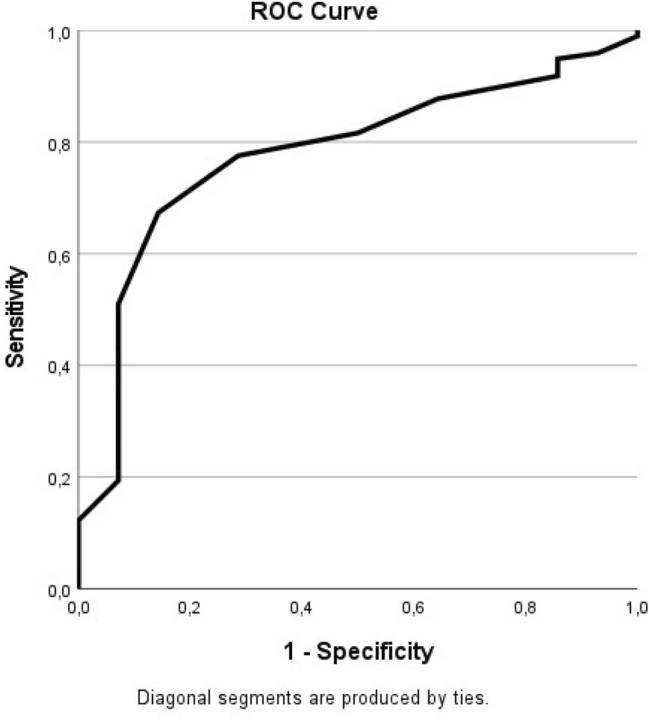
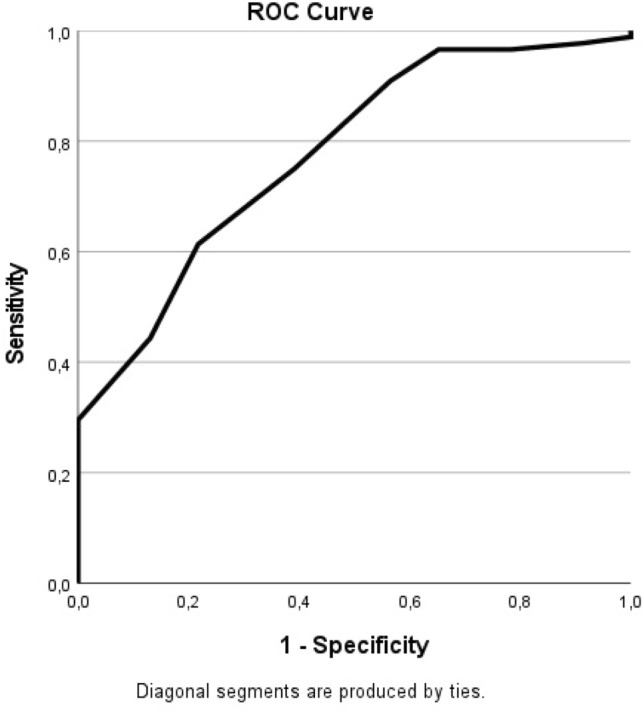
Results: This cohort included 148 patients. The mean OMAS score in the group with minimal improvement between 3 and 6 months was 15.0 (SD 17.5, 95%CI 9.4-20.6) and between 6 and 12 months 9.5 (SD 17.1, 95% CI 3.1-15.9). The ROC curve between 3 and 6 months resulted in a MCID of 12.5 (AUC 0.72) and between 6 and 12 months, the MCID was 7.5 (AUC 0.78). Using 0.5 SD, the MCID was 10.52 (SD 21.04) at 3 months, 11.37 (SD 22.73) at 6 months and 10.47 (SD 20.94) at 12 months. The MDC was 4.72 at 3 months, 5.20 at 6 months and 4.71 at 12 months.
Conclusions: The calculated MCID in patients following surgery for unstable ankle fractures ranges from 10.5 to 15.0 at 3-6-month follow-up and from 7.5 to 11.4 at 6-12-month follow-up, depending on moment and method.
Keywords: Ankle fracture; Measurement properties; Minimal clinical important difference; Olerud Molander ankle score; Patient-reported outcomes.
© 2022. The Author(s).
Conflict of interest statement
The authors have no relevant financial or non-financial interests to disclose.
Figures
References
-
- Boyle MJ, Gao R, Frampton CM, Coleman B. Removal of the syndesmotic screw after the surgical treatment of a fracture of the ankle in adult patients does not affect one-year outcomes: a randomised controlled trial. Bone Joint J. 2014;96(12):1699–1705. doi: 10.1302/0301-620X.96B12.34258. - DOI - PubMed
-
- Fitzpatrick R, Davey C, Buxton M, Jones D (1998) Evaluating patient-based outcome measures for use in clinical trials: a review. Health Technol Assess 2(14). 10.3310/hta2140 - PubMed
Publication types
MeSH terms
Grants and funding
LinkOut - more resources
Full Text Sources
Medical
