Review
. 2022 Jul;18(7):e11017.
doi: 10.15252/msb.202211017.

Computational estimation of quality and clinical relevance of cancer cell lines

Affiliations
Review

Computational estimation of quality and clinical relevance of cancer cell lines

Lucia Trastulla et al. Mol Syst Biol. 2022 Jul.

Abstract

Immortal cancer cell lines (CCLs) are the most widely used system for investigating cancer biology and for the preclinical development of oncology therapies. Pharmacogenomic and genome-wide editing screenings have facilitated the discovery of clinically relevant gene-drug interactions and novel therapeutic targets via large panels of extensively characterised CCLs. However, tailoring pharmacological strategies in a precision medicine context requires bridging the existing gaps between tumours and in vitro models. Indeed, intrinsic limitations of CCLs such as misidentification, the absence of tumour microenvironment and genetic drift have highlighted the need to identify the most faithful CCLs for each primary tumour while addressing their heterogeneity, with the development of new models where necessary. Here, we discuss the most significant limitations of CCLs in representing patient features, and we review computational methods aiming at systematically evaluating the suitability of CCLs as tumour proxies and identifying the best patient representative in vitro models. Additionally, we provide an overview of the applications of these methods to more complex models and discuss future machine-learning-based directions that could resolve some of the arising discrepancies.

Keywords: cancer cell lines; computational biology; drug discovery; personalised medicine; pharmacogenomics.


Figures

Figure 1
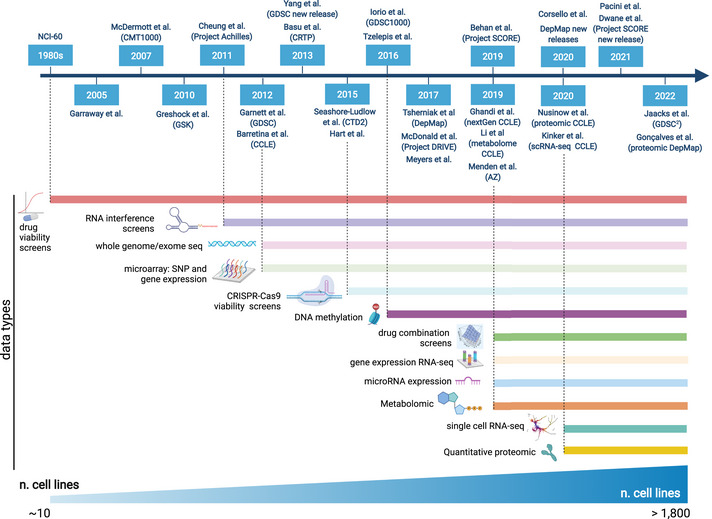
Figure 1. Major public cell line‐based data sets with corresponding omics and reference publications
The horizontal bars indicate the data type/omic type availability. Created with BioRender.com.
Figure 2
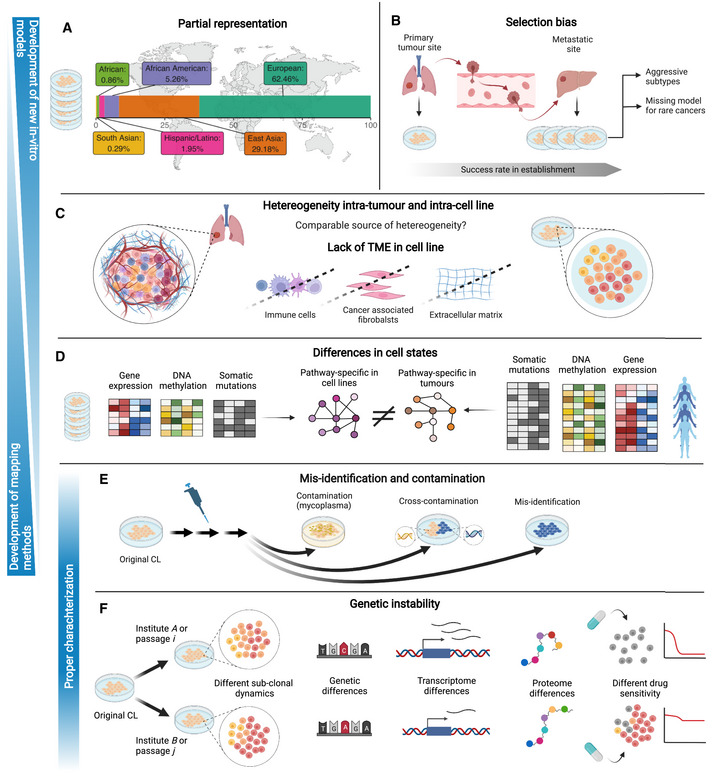
Figure 2. Factors hampering the faithfulness of CCLs as tumour models
Panels A to E show issues that can be addressed by establishing new in vitro models (top to bottom) or by developing cell line‐tumour mapping methods (bottom to top). (A) Cell line biobanks are mostly derived from European and east Asian ancestries (data from Dutil et al, 2019). (B) Ease in establishing cell lines from more aggressive subtypes. (C) Intra‐tumour and intra‐cell lines dynamics, possibly reduced heterogeneity in cell lines that additionally do not include tumour microenvironment. (D) Differences in cell states among cell lines and tumour biobanks in terms of genetic, transcriptional, epigenomic and proteomic features that lead to differentially regulated pathways. (E) Contamination and mis‐identification due to lab conditions. Cells in blue represent a different donor. (F) Genetic instability in the same cell line due to different culture conditions or passaging can lead to divergences in genetic features, transcriptional and proteomic states and consequentially drug response. Created with BioRender.com.
Figure 3
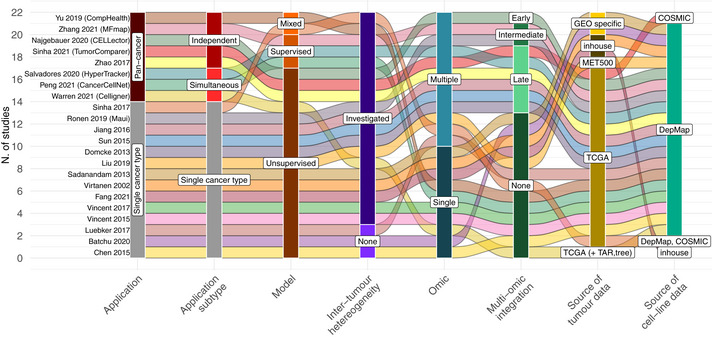
Figure 3. Number of studies classified based on the characteristic displayed on the x‐axis
Each spline (alluvium) corresponds to a study in Table 2. “TAR” and “tree” abbreviations refer to TARGET and treehouse data set, respectively.
Figure 4
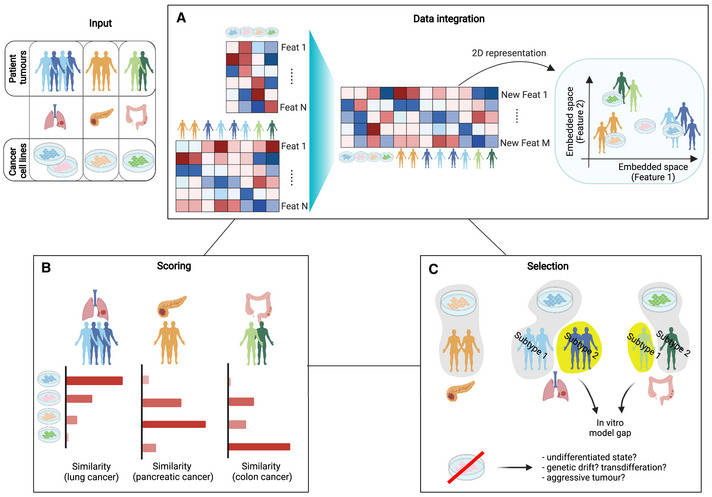
Figure 4. Aims of the major computational approaches proposed so far
(A) Integration of cell lines and tumour in a common, comparable and visualisable feature space. (B) Scoring of cancer cell lines (CCLs) in terms of suitability in modelling a certain tumour population. (C) Selection of CCLs as proper model for tumour type/subtypes. Pursuing this objective can also highlight tumour populations lacking representative in vitro models and CCLs that diverge extensively from all the considered tumour populations. Created with BioRender.com.

References

    1. Aran D, Sirota M, Butte AJ (2015) Systematic pan‐cancer analysis of tumour purity. Nat Commun 6: 8971 - PMC - PubMed
    1. Argelaguet R, Arnol D, Bredikhin D, Deloro Y, Velten B, Marioni JC, Stegle O (2020) MOFA+: a statistical framework for comprehensive integration of multi‐modal single‐cell data. Genome Biol 21: 111 - PMC - PubMed
    1. Baghban R, Roshangar L, Jahanban‐Esfahlan R, Seidi K, Ebrahimi‐Kalan A, Jaymand M, Kolahian S, Javaheri T, Zare P (2020) Tumor microenvironment complexity and therapeutic implications at a glance. Cell Commun Signal 18: 59 - PMC - PubMed
    1. Bairoch A (2018) The Cellosaurus, a cell‐line knowledge resource. J Biomol Tech 29: 25–38 - PMC - PubMed
    1. Barretina J, Caponigro G, Stransky N, Venkatesan K, Margolin AA, Kim S, Wilson CJ, Lehár J, Kryukov GV, Sonkin D et al (2012) The Cancer Cell Line Encyclopedia enables predictive modelling of anticancer drug sensitivity. Nature 483: 603–607 - PMC - PubMed

Publication types