. 2022 Jul 13;20(1):250.
doi: 10.1186/s12916-022-02450-w.

Your height affects your health: genetic determinants and health-related outcomes in Taiwan

Affiliations

Your height affects your health: genetic determinants and health-related outcomes in Taiwan

Jian-Shiun Chiou et al. BMC Med. .

Abstract

Background: Height is an important anthropometric measurement and is associated with many health-related outcomes. Genome-wide association studies (GWASs) have identified hundreds of genetic loci associated with height, mainly in individuals of European ancestry.

Methods: We performed genome-wide association analyses and replicated previously reported GWAS-determined single nucleotide polymorphisms (SNPs) in the Taiwanese Han population (Taiwan Biobank; n = 67,452). A genetic instrument composed of 251 SNPs was selected from our GWAS, based on height and replication results as the best-fit polygenic risk score (PRS), in accordance with the clumping and p-value threshold method. We also examined the association between genetically determined height (PRS251) and measured height (phenotype). We performed observational (phenotype) and genetic PRS251 association analyses of height and health-related outcomes.

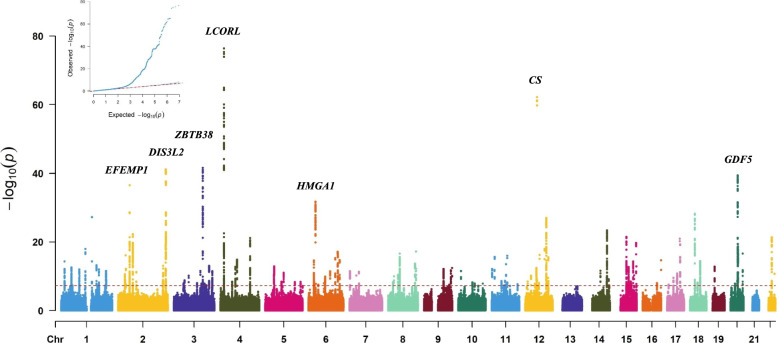
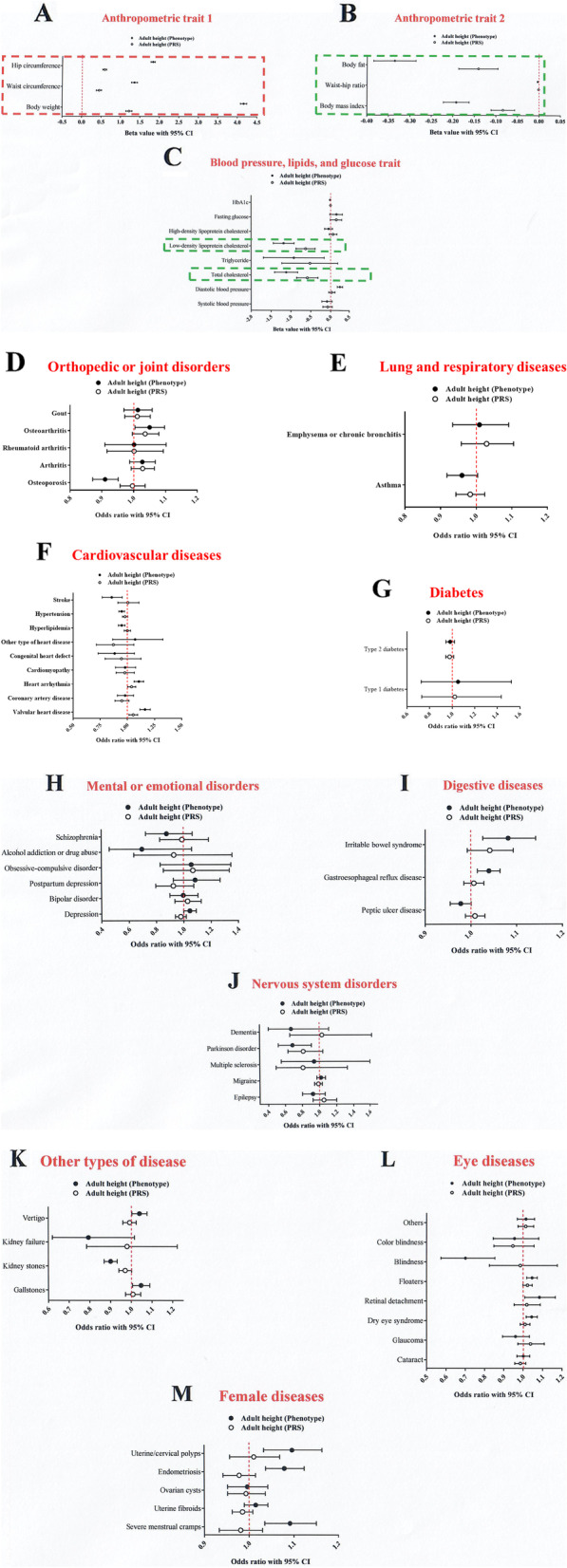
Results: GWAS identified 6843 SNPs in 89 genomic regions with genome-wide significance, including 18 novel loci. These were the most strongly associated genetic loci (EFEMP1, DIS3L2, ZBTB38, LCORL, HMGA1, CS, and GDF5) previously reported to play a role in height. There was a positive association between PRS251 and measured height (p < 0.001). Of the 14 traits and 49 diseases analyzed, we observed significant associations of measured and genetically determined height with only eight traits (p < 0.05/[14 + 49]). Height was positively associated with body weight, waist circumference, and hip circumference but negatively associated with body mass index, waist-hip ratio, body fat, total cholesterol, and low-density lipoprotein cholesterol (p < 0.05/[14 + 49]).

Conclusions: This study contributes to the understanding of the genetic features of height and health-related outcomes in individuals of Han Chinese ancestry in Taiwan.

Keywords: Genetic single nucleotide polymorphisms; Genome-wide association studies; Health-related outcomes; Height; Polygenic risk score.


Conflict of interest statement

The authors declare that they have no competing interests.

Figures
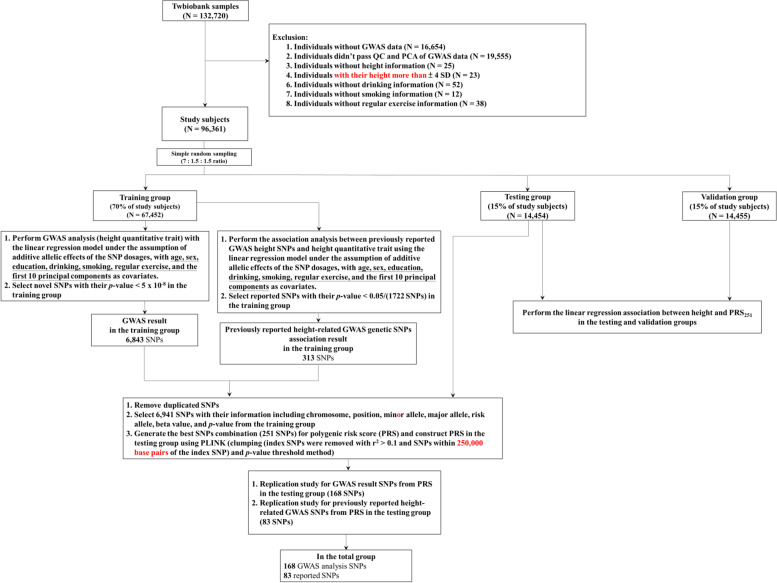
Fig. 1
Fig. 1
Flowchart of the study design and analysis process
Fig. 2
Fig. 2
Manhattan plot for height with Han Chinese ancestry
Fig. 3
Fig. 3
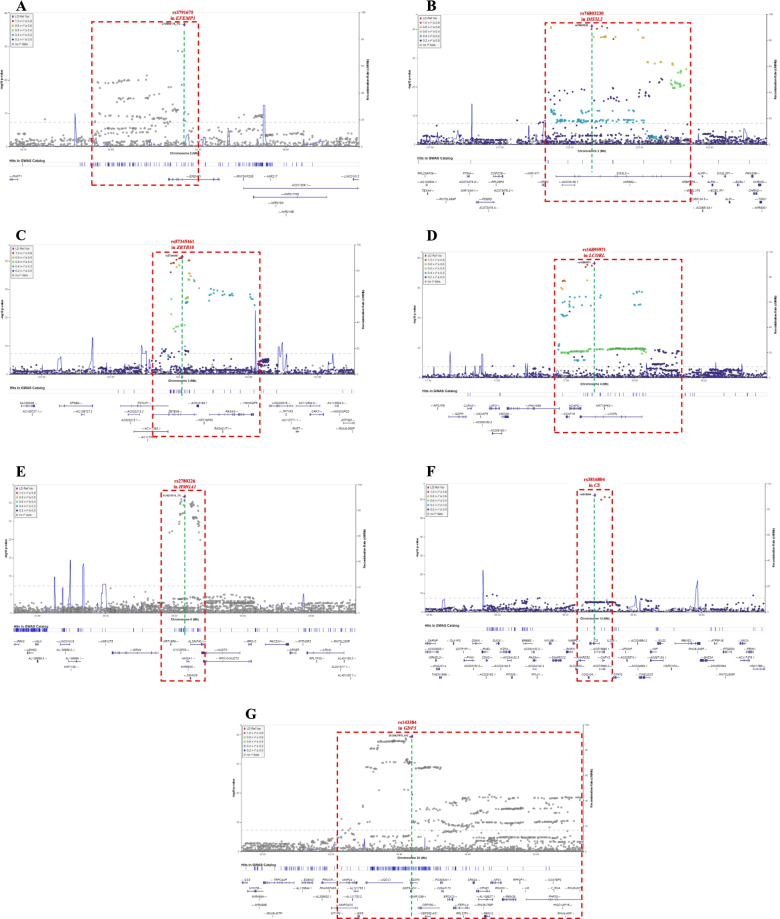
Regional plots for the independent signals at seven genetic loci for height in individuals with Han Chinese ancestry. A rs3791675 in EGF containing fibulin extracellular matrix protein 1 (EFEMP1). B rs76803230 in DIS3 like 3′-5′ exoribonuclease 2 (DIS3L2). C rs57345461 in zinc finger and BTB domain containing 38 (ZBTB38). D rs16895971 in ligand dependent nuclear receptor corepressor like (LCORL). E rs2780226 in high mobility group AT-hook 1 (HMGA1). F rs3816804 in citrate synthase (CS). G rs143384 in growth differentiation factor 5 (GDF5). Each plot shows the –log10 p-value on the y-axis for each SNP and the SNP position in the genome region on the x-axis. The top significant SNP is shown by a purple diamond; genes in its proximity are shown below each plot. LD with nearby SNPs is measured using R2 values, according to the 1000 Genomes Project Phase 3 East Asia Summit data, and is indicated by the color of each circle
Fig. 4
Fig. 4
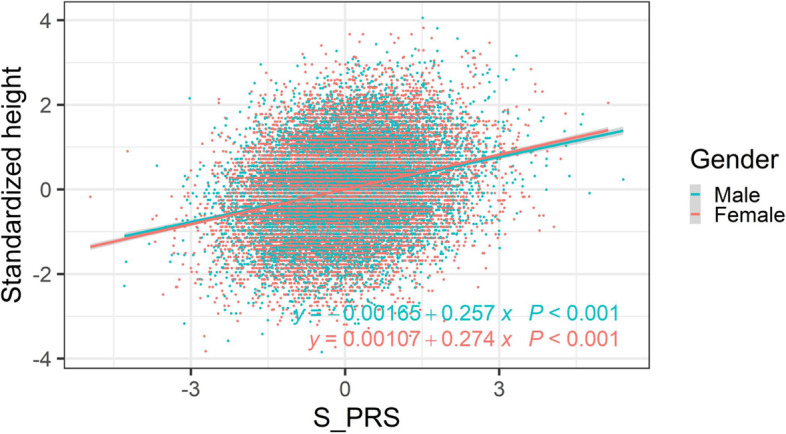
Association between genetically determined height (PRS251) and measured height (phenotype). Measured height (cm) and calculated polygenic risk score (PRS) for height in the testing and validation groups were stratified by sex, mean-centered, and normalized to one standard deviation (SD), respectively (males, N = 10,919; females, N = 17,990). The normalized measured height is shown on the y-axis and normalized genetically determined height (PRS251) is shown on the x-axis
Fig. 5
Fig. 5
Observational (phenotype) and genetic PRS251 associations of height with 63 health-related outcomes. Beta value and 95% confidence interval (CI) per standard deviation (SD) increase in height are shown for A anthropometric trait 1 (hip circumference, waist circumference, and body weight), B anthropometric trait 2 (body fat, waist-hip ratio, and body mass index), and C blood pressure, blood lipid level, and blood glucose level (including systolic blood pressure (SBP), diastolic blood pressure (DBP), total cholesterol (TC), triglyceride (TG), low-density lipoprotein cholesterol (LDL-C), high-density lipoprotein cholesterol (HDL-C), fasting glucose, and HbA1c). Odds ratio and 95% CI per SD increase in height are shown for D orthopedic or joint disorders (osteoporosis, arthritis, rheumatoid arthritis, osteoarthritis, and gout), E lung and respiratory diseases (asthma and emphysema or chronic bronchitis), F cardiovascular diseases (valvular heart disease, coronary artery disease, heart arrhythmia, cardiomyopathy, congenital heart defect, other type of heart disease, hyperlipidemia, hypertension, and stroke), G diabetes (type 1 diabetes and type 2 diabetes), H mental or emotional disorders (depression, bipolar disorder, postpartum depression, obsessive-compulsive disorder, alcohol addiction or drug abuse, and schizophrenia), I digestive diseases (peptic ulcer disease, gastroesophageal reflux disease, and irritable bowel syndrome), J nervous system disorders (epilepsy, migraine, multiple sclerosis, Parkinson’s disorder, and dementia), K other types of disease (gallstones, kidney stones, kidney failure, and vertigo), L eye diseases (cataract, glaucoma, dry eye syndrome, retinal detachment, floaters, blindness, color blindness, and others), and M female diseases (severe menstrual cramps, uterine fibroids, ovarian cysts, endometriosis, and Uterine/cervical polyps)

References

    1. Dubois L, Ohm Kyvik K, Girard M, Tatone-Tokuda F, Perusse D, Hjelmborg J, Skytthe A, Rasmussen F, Wright MJ, Lichtenstein P, et al. Genetic and environmental contributions to weight, height, and BMI from birth to 19 years of age: an international study of over 12,000 twin pairs. PLoS One. 2012;7(2):e30153. doi: 10.1371/journal.pone.0030153. - DOI - PMC - PubMed
    1. Jelenkovic A, Hur YM, Sund R, Yokoyama Y, Siribaddana SH, Hotopf M, et al. Genetic and environmental influences on adult human height across birth cohorts from 1886 to 1994. Elife. 2016;5:e20320. - PMC - PubMed
    1. Jelenkovic A, Sund R, Hur YM, Yokoyama Y, Hjelmborg JV, Moller S, Honda C, Magnusson PK, Pedersen NL, Ooki S, et al. Genetic and environmental influences on height from infancy to early adulthood: an individual-based pooled analysis of 45 twin cohorts. Sci Rep. 2016;6:28496. doi: 10.1038/srep28496. - DOI - PMC - PubMed
    1. Tyrrell J, Jones SE, Beaumont R, Astley CM, Lovell R, Yaghootkar H, Tuke M, Ruth KS, Freathy RM, Hirschhorn JN, et al. Height, body mass index, and socioeconomic status: mendelian randomisation study in UK Biobank. BMJ. 2016;352:i582. doi: 10.1136/bmj.i582. - DOI - PMC - PubMed
    1. Magnusson PK, Rasmussen F, Gyllensten UB. Height at age 18 years is a strong predictor of attained education later in life: cohort study of over 950,000 Swedish men. Int J Epidemiol. 2006;35(3):658–663. doi: 10.1093/ije/dyl011. - DOI - PubMed

Publication types

LinkOut - more resources