


On the road to explainable AI in drug-drug interactions prediction: A systematic review
- PMID: 35832629
- PMCID: PMC9092071
- DOI: 10.1016/j.csbj.2022.04.021
On the road to explainable AI in drug-drug interactions prediction: A systematic review
Abstract
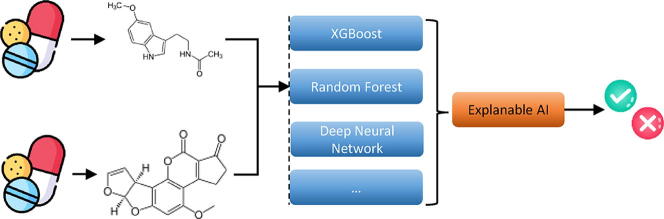
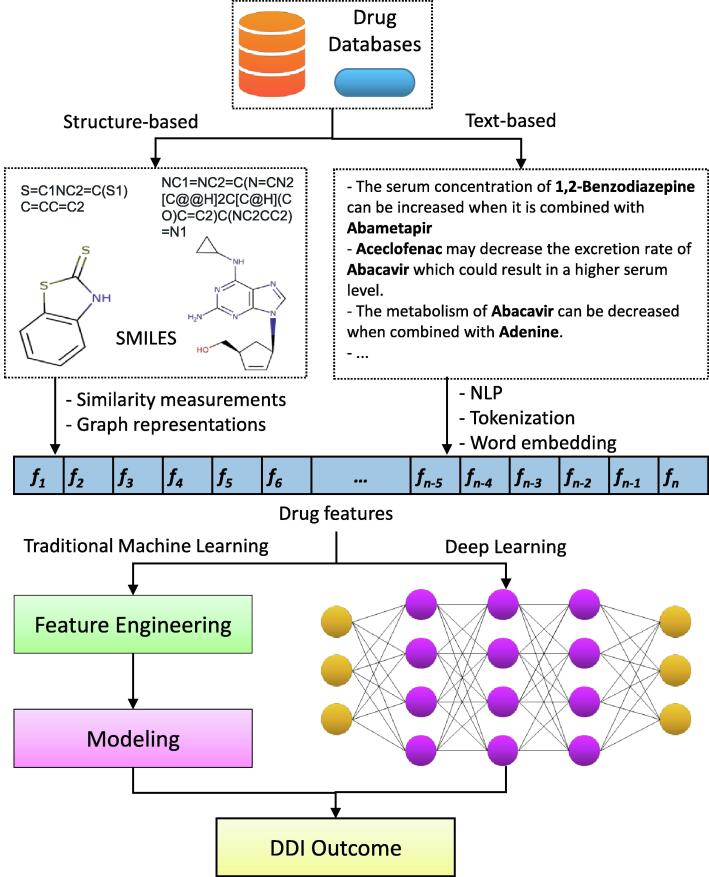
Over the past decade, polypharmacy instances have been common in multi-diseases treatment. However, unwanted drug-drug interactions (DDIs) that might cause unexpected adverse drug events (ADEs) in multiple regimens therapy remain a significant issue. Since artificial intelligence (AI) is ubiquitous today, many AI prediction models have been developed to predict DDIs to support clinicians in pharmacotherapy-related decisions. However, even though DDI prediction models have great potential for assisting physicians in polypharmacy decisions, there are still concerns regarding the reliability of AI models due to their black-box nature. Building AI models with explainable mechanisms can augment their transparency to address the above issue. Explainable AI (XAI) promotes safety and clarity by showing how decisions are made in AI models, especially in critical tasks like DDI predictions. In this review, a comprehensive overview of AI-based DDI prediction, including the publicly available source for AI-DDIs studies, the methods used in data manipulation and feature preprocessing, the XAI mechanisms to promote trust of AI, especially for critical tasks as DDIs prediction, the modeling methods, is provided. Limitations and the future directions of XAI in DDIs are also discussed.
Keywords: Chemical structures; Deep learning; Drug-drug interaction; Explainable artificial intelligence; Machine learning; Natural language processing.
© 2022 The Author(s).
Conflict of interest statement
The authors declare that they have no known competing financial interests or personal relationships that could have appeared to influence the work reported in this paper.
Figures
References
-
- Askari M., et al. Frequency and nature of drug-drug interactions in the intensive care unit. Pharmacoepidemiol Drug Saf. 2013;22(4):430–437. - PubMed
-
- Raschetti R., et al. Suspected adverse drug events requiring emergency department visits or hospital admissions. Eur J Clin Pharmacol. 1999;54(12):959–963. - PubMed
-
- Budnitz D.S., et al. National surveillance of emergency department visits for outpatient adverse drug events. JAMA. 2006;296(15):1858–1866. - PubMed
-
- Reis A.M., Cassiani S.H. Evaluation of three brands of drug interaction software for use in intensive care units. Pharm World Sci. 2010;32(6):822–828. - PubMed
-
- Vonbach P., et al. Evaluation of frequently used drug interaction screening programs. Pharm World Sci. 2008;30(4):367–374. - PubMed
Publication types
LinkOut - more resources
Full Text Sources
Other Literature Sources
Miscellaneous