Esthesioneuroblastoma (Olfactory Neuroblastoma): Overview and Extent of Surgical Approach and Skull Base Resection
- PMID: 35832684
- PMCID: PMC9272014
- DOI: 10.1055/s-0042-1753519
Esthesioneuroblastoma (Olfactory Neuroblastoma): Overview and Extent of Surgical Approach and Skull Base Resection
Abstract
Esthesioneuroblastoma is a rare malignancy originating from the olfactory epithelium. Treatment consists of surgical resection with strong consideration for adjuvant treatment in advanced Kadish stage and high Hyams grade. In the modern era, overall outcomes for esthesioneuroblastoma are favorable compared with many other sinonasal malignancies with 5-year overall survival estimated to be 80%. When selecting the optimal surgical approach, the surgeon must consider the approach that will allow for a negative margin resection and adequate reconstruction. In appropriately selected patients, endoscopic outcomes appear at least equivalent to open approaches and unilateral endoscopic approach may be used in select olfactory preservation cases.
Keywords: craniofacial resection; endoscopic; esthesioneuroblastoma; neuroblastoma; olfactory.
The Author(s). This is an open access article published by Thieme under the terms of the Creative Commons Attribution-NonDerivative-NonCommercial License, permitting copying and reproduction so long as the original work is given appropriate credit. Contents may not be used for commercial purposes, or adapted, remixed, transformed or built upon. ( https://creativecommons.org/licenses/by-nc-nd/4.0/ ).
Conflict of interest statement
Conflict of Interest None declared.
Figures
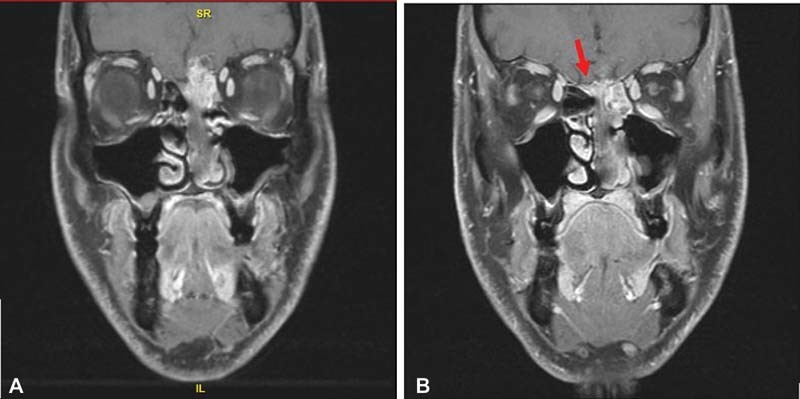
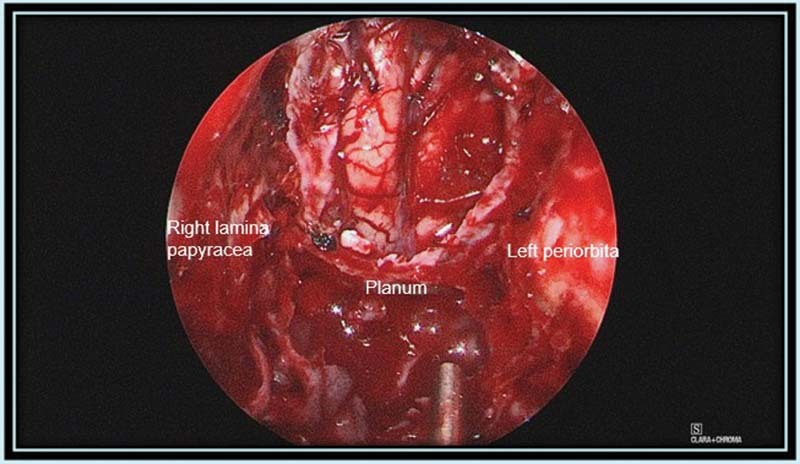
References
-
- Wang E W, Zanation A M, Gardner P Aet al.ICAR: endoscopic skull-base surgery Int Forum Allergy Rhinol 20199(S3):S145–S365. - PubMed
-
- Harvey R J, Nalavenkata S, Sacks R et al.Survival outcomes for stage-matched endoscopic and open resection of olfactory neuroblastoma. Head Neck. 2017;39(12):2425–2432. - PubMed