


Corticotroph isolation from Pomc-eGFP mice reveals sustained transcriptional dysregulation characterising a mouse model of glucocorticoid-induced suppression of the hypothalamus-pituitary-adrenal axis
- PMID: 35833423
- PMCID: PMC9539609
- DOI: 10.1111/jne.13165
Corticotroph isolation from Pomc-eGFP mice reveals sustained transcriptional dysregulation characterising a mouse model of glucocorticoid-induced suppression of the hypothalamus-pituitary-adrenal axis
Abstract
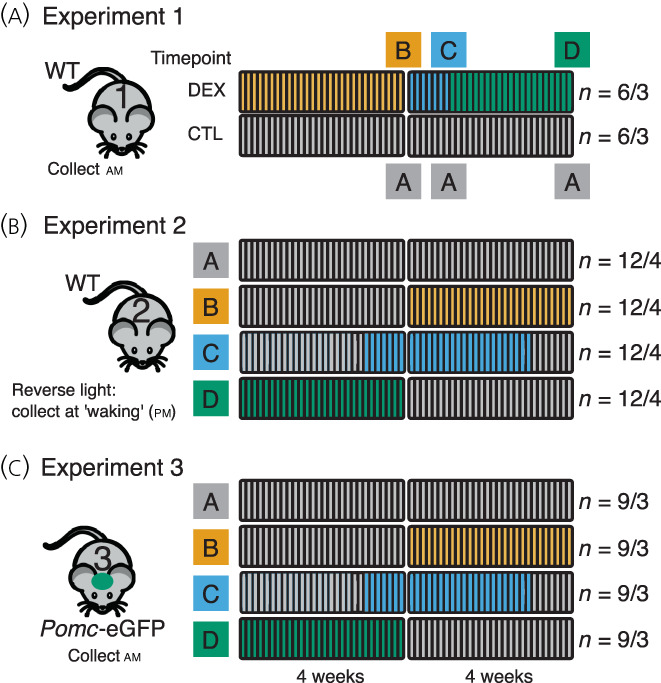
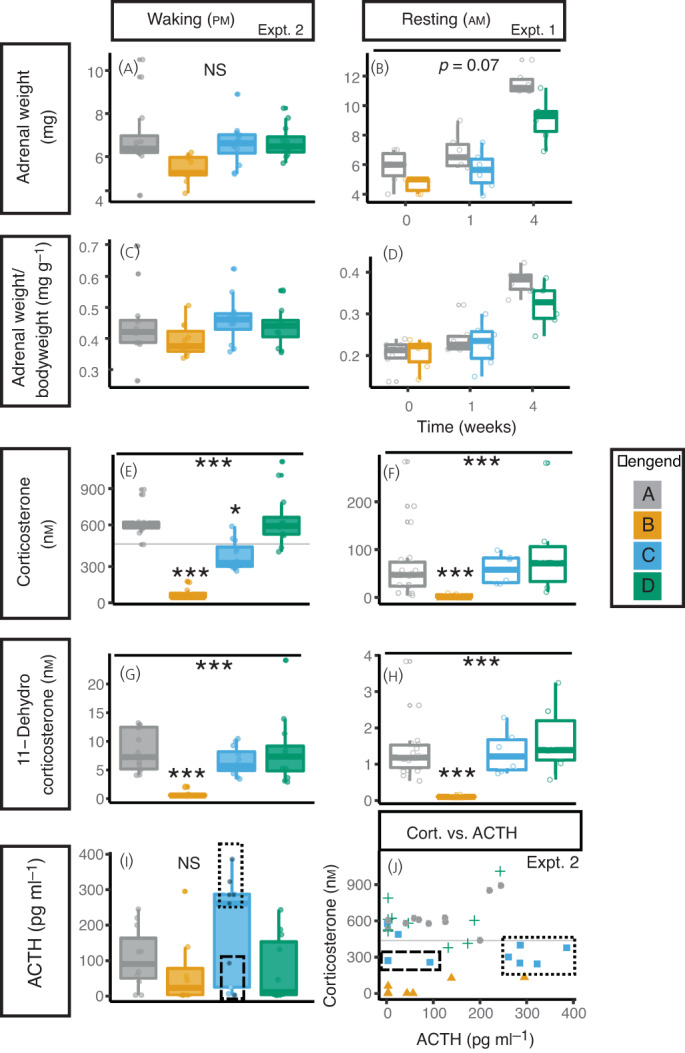
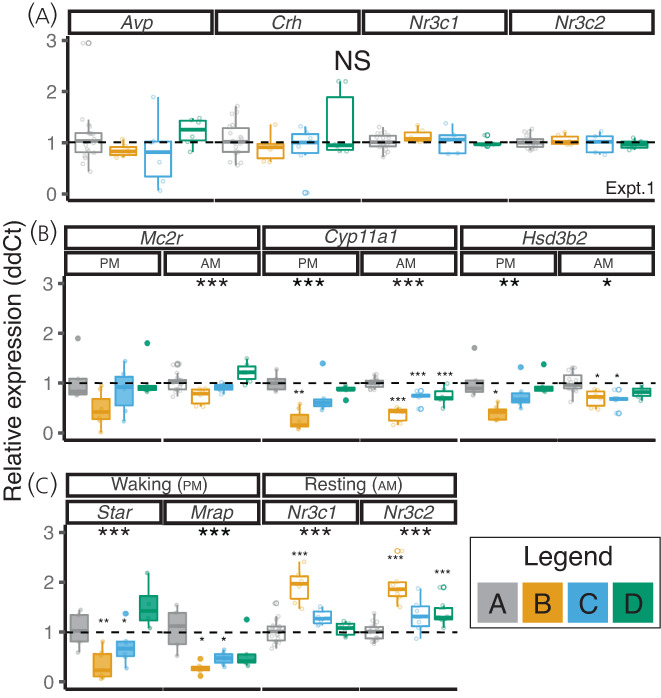
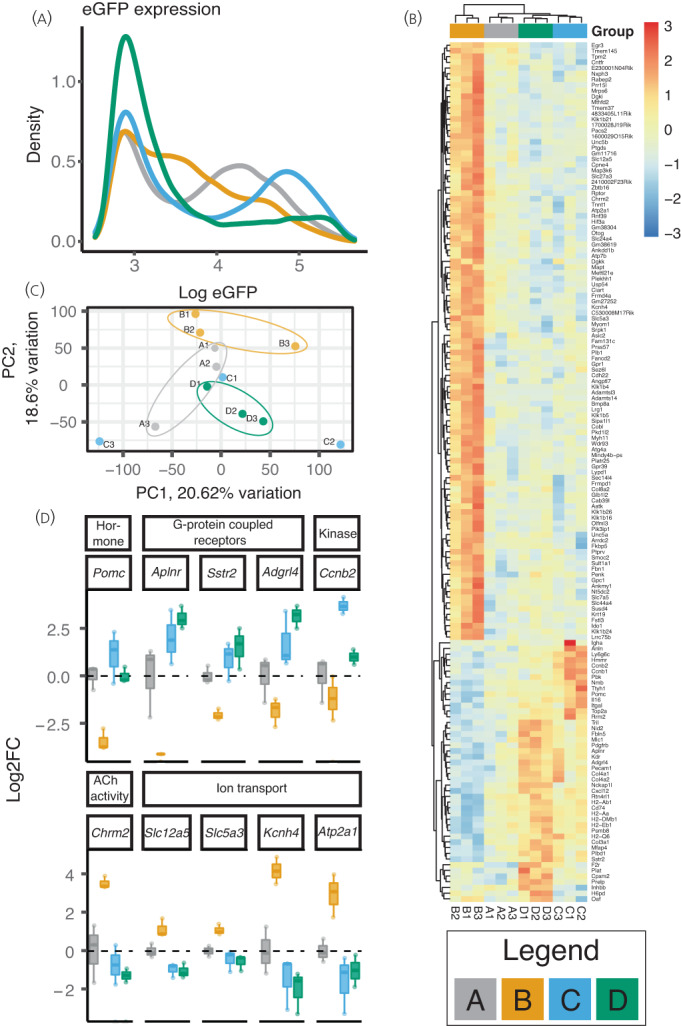
Glucocorticoids (GC) are prescribed for periods > 3 months to 1%-3% of the UK population; 10%-50% of these patients develop hypothalamus-pituitary-adrenal (HPA) axis suppression, which may last over 6 months and is associated with morbidity and mortality. Recovery of the pituitary and hypothalamus is necessary for recovery of adrenal function. We developed a mouse model of dexamethasone (DEX)-induced HPA axis dysfunction aiming to further explore recovery in the pituitary. Adult male wild-type C57BL6/J or Pomc-eGFP transgenic mice were randomly assigned to receive DEX (approximately 0.4 mg kg-1 bodyweight day-1 ) or vehicle via drinking water for 4 weeks following which treatment was withdrawn and tissues were harvested after another 0, 1, and 4 weeks. Corticotrophs were isolated from Pomc-eGFP pituitaries using fluorescence-activated cell sorting, and RNA extracted for RNA-sequencing. DEX treatment suppressed corticosterone production, which remained partially suppressed at least 1 week following DEX withdrawal. In the adrenal, Hsd3b2, Cyp11a1, and Mc2r mRNA levels were significantly reduced at time 0, with Mc2r and Cyp11a1 remaining reduced 1 week following DEX withdrawal. The corticotroph transcriptome was modified by DEX treatment, with some differences between groups persisting 4 weeks following withdrawal. No genes supressed by DEX exhibited ongoing attenuation 1 and 4 weeks following withdrawal, whereas only two genes were upregulated and remained so following withdrawal. A pattern of rebound at 1 and 4 weeks was observed in 14 genes that increased following suppression, and in six genes that were reduced by DEX and then increased. Chronic GC treatment may induce persistent changes in the pituitary that may influence future response to GC treatment or stress.
Keywords: HPA axis; chronic; glucocorticoid; recovery.
© 2022 The Authors. Journal of Neuroendocrinology published by John Wiley & Sons Ltd on behalf of British Society for Neuroendocrinology.
Conflict of interest statement
The authors declare that no conflicts of interest. TJGC has received a speaker honorarium from Astellas Pharma Inc.
Figures
References
-
- Fardet L, Petersen I, Nazareth I. Prevalence of long‐term oral glucocorticoid prescriptions in the UKover the past 20 years. Rheumatology (Oxford). 2011;50:1982‐1990. - PubMed
-
- Fraser CG, Preuss FS, Bigford WD. Adrenal atrophy and irreversible shock associated with cortisone therapy. JAMA. 1952;149:1542‐1543. - PubMed
Publication types
MeSH terms
Substances
Grants and funding
LinkOut - more resources
Full Text Sources
Molecular Biology Databases
Miscellaneous
