Review
. 2022 Sep;28(9):770-780.
doi: 10.1016/j.molmed.2022.06.004. Epub 2022 Jul 12.

Particulate matter and Alzheimer's disease: an intimate connection

Affiliations
Review

Particulate matter and Alzheimer's disease: an intimate connection

Devin R O'Piela et al. Trends Mol Med. 2022 Sep.

Abstract

The environmental role in disease progression has been appreciated for decades; however, understanding how airborne toxicant exposure can affect organs beyond the lungs is an underappreciated area of scientific inquiry. Particulate matter (PM) includes various gases, liquids, and particles in suspension and is produced by industrial activities such as fossil fuel combustion and natural events including wildfires and volcanic eruptions. Although agencies have attempted to reduce acceptable airborne particulate levels, with urbanization and population growth, these policies have been only moderately effective in mitigating disease progression. A growing area of research is focused on the role of PM exposure in the progression of Alzheimer's disease (AD). This review will summarize the knowns and unknowns of this expanding field.

Keywords: Alzheimer’s disease; air pollution; neurodegenerative disease; particulate matter.


Conflict of interest statement

Declaration of interests The authors have no interests to declare.

Figures
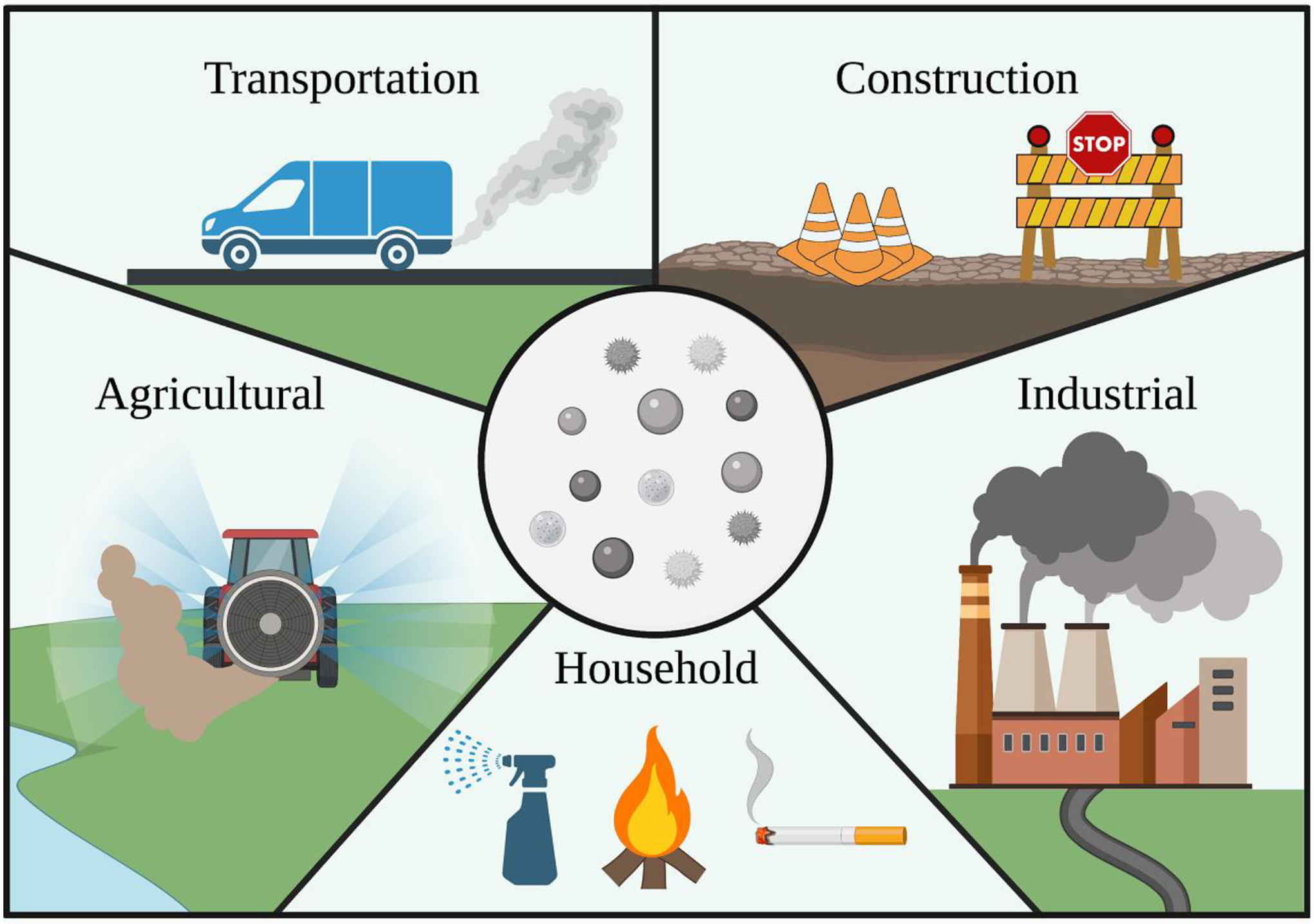
Figure I.
Figure I.. Anthropogenic Sources of Particulate Matter.
The common sources of human-derived particulate matter (PM) are transportation, construction, agricultural, industrial, and household pollutants. Agricultural sources of PM result from spraying crops with pesticides and fertilizers, combusting fossil fuels to power equipment, and aerosolizing dust during the movement of equipment and harvesting of crops. Industrial sources of PM originate mainly from the emissions of combusted fuels used to power manufacturing processes. Household sources of PM predominately affect the composition of interior air and are mainly derived from activities like cooking, using cleaning products, burning candles and fires, and smoking. Construction introduces various types of PM into the atmosphere through activities such as grinding and resurfacing roads, grinding metals, welding, cutting materials, excavating, moving materials, and emitting combustion fumes from construction equipment. Lastly, transportation sources of PM derive from brake dust, train and subway wheelsets interacting with rails, tires and pavement interacting, and fuel combustion associated powering the transporters.
Figure 1. Key Figure.
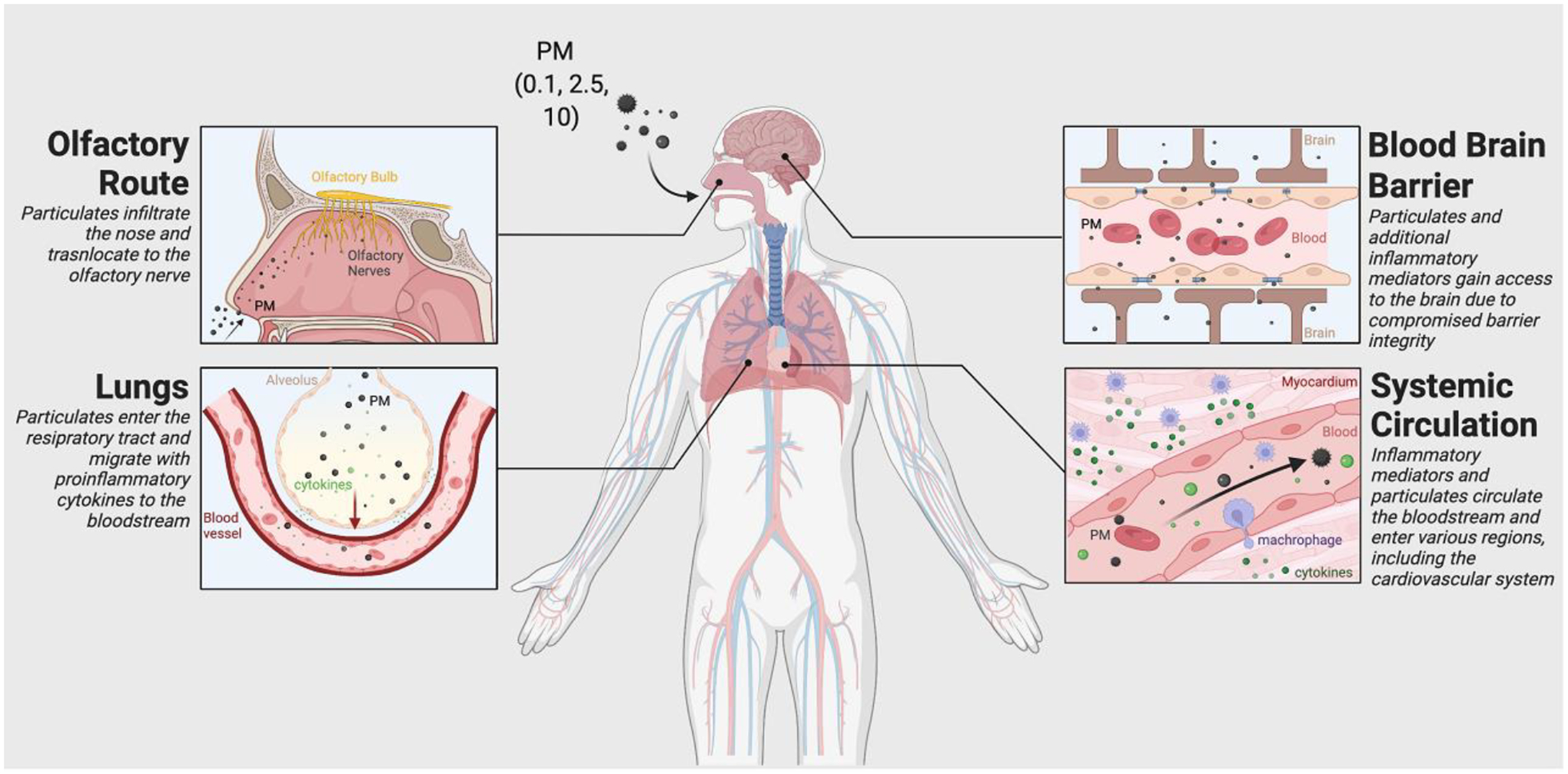
Figure 1. Key Figure.. PM Route to the Brain.
Particulate matter of various sizes (PM2.5, PM10, PM0.1) is inhaled through the nose and can directly affect the olfactory bulb or follow a peripheral route through the lungs. Upon entering the olfactory system, particulates may infiltrate the olfactory nerve and translocate to the brain. When PM follows the peripheral route, it navigates the respiratory tract and eventually reaches the lungs. Here, PM elicits an inflammatory response; proinflammatory cytokines and particulates subsequently migrate to the bloodstream and into the systemic circulation. After entering the bloodstream, PM and other inflammatory mediators can travel throughout the body and cross the BBB due to compromised barrier integrity. PM may also reach the cardiovascular system, where a localized inflammatory response may occur, thus releasing additional inflammatory mediators into the circulation. This reaction may amplify systemic inflammation and ultimately contribute to chronic inflammation in AD patients.

References

    1. Kim K-H et al. (2015) A review on the human health impact of airborne particulate matter. Environment International 74, 136–143 - PubMed
    1. Hadei M and Naddafi K (2020) Cardiovascular effects of airborne particulate matter: A review of rodent model studies. Chemosphere 242, 125204. - PubMed
    1. Block ML and Calderón-Garcidueña. (2009) L. Air pollution: mechanisms of neuroinflammation and CNS disease. Trends in Neurosciences 32, 506–516 - PMC - PubMed
    1. Kioumourtzoglou MA et al. (2016) Long-term PM2.5 exposure and neurological hospital admissions in the northeastern United States. Environmental Health Perspectives 124, 23–29 - PMC - PubMed
    1. Lafaille-Magnan M-E et al. (2017) Odor identification as a biomarker of preclinical AD in older adults at risk. Neurology 89, 327–335 - PMC - PubMed

Publication types