


ST-T segment changes in prehospital emergency physicians in the field: a prospective observational trial
- PMID: 35841049
- PMCID: PMC9288087
- DOI: 10.1186/s13049-022-01033-1
ST-T segment changes in prehospital emergency physicians in the field: a prospective observational trial
Abstract
Aims: Due to time-critical decision-making, physical strain and the uncontrolled environment, prehospital emergency management is frequently associated with high levels of stress in medical personnel. Stress has been known to cause ischemia like changes in electrocardiograms (ECGs), including arrhythmias and deviations in ST-T segments. There is a lack of knowledge regarding the occurrence of changes in ST-T segments in prehospital emergency physicians. We hypothesized that ST-T segment deviations occur in prehospital emergency physicians in the field.
Methods: In this prospective observational trial, ST-T segments of emergency physicians were recorded using 12-lead Holter ECGs. The primary outcome parameter was defined as the incidence of ST-T segment changes greater than 0.1 mV in two corresponding leads for more than 30 s per 100 rescue missions. The secondary outcomes included T-wave inversions and ST-segment changes shorter than 30 s or smaller than 0.1 mV. Surrogate parameters of stress were measured using the NASA-Task Load Index and cognitive appraisal, and their correlation with ST-T segment changes were also assessed.
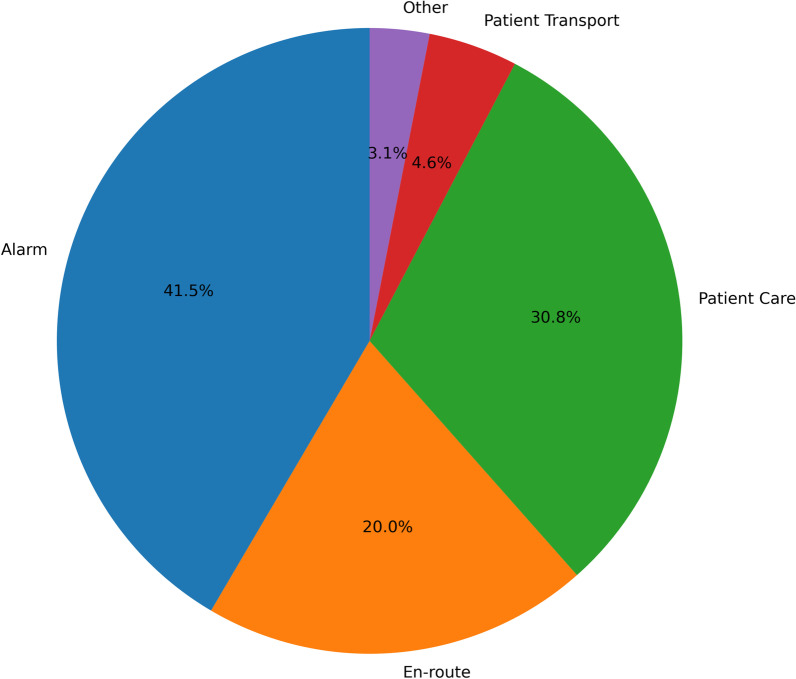
Results: Data from 20 physicians in 36 shifts (18 days, 18 nights) including 208 missions were analysed. Seventy percent of previously healthy emergency physicians had at least one ECG abnormality; the mean duration of these changes was 30 s. Significantly more missions with ECG changes were found during night than day shifts (39 vs. 17%, p < 0.001). Forty-nine ECG changes occurred between missions. No ST-T segment changes > 30 s and > 0.1 mV were found. Two ST-T segment changes < 30 s or < 0.1 mV (each during missions) and 122 episodes of T-wave inversions (74 during missions) were identified. ECG changes were found to be associated with alarms when asleep and NASA task load index.
Conclusion: ECG changes are frequent and occur in most healthy prehospital emergency physicians. Even when occurring for less than 30 s, such changes are important signs for high levels of stress. The long-term impact of these changes needs further investigation. Trial registration The trial was registered at ClinicalTrials.gov (NCT04003883) on 1.7.2019: https://clinicaltrials.gov/ct2/show/NCT04003883?term=emergency+physician&rank=2.
Keywords: Critical care; Emergency; Prehospital; ST-T segment; Stress.
© 2022. The Author(s).
Conflict of interest statement
The Authors declare that there is no conflict of interest.
Figures


References
-
- Ho RC, Neo LF, Chua AN, Cheak AA, Mak A. Research on psychoneuroimmunology: does stress influence immunity and cause coronary artery disease? Ann Acad Med Singapore. 2010;39(3):191–196. - PubMed
Publication types
MeSH terms
Associated data
LinkOut - more resources
Full Text Sources
Medical
