


Systematic review of the association between isolated musculoskeletal hypermobility and adolescent idiopathic scoliosis
- PMID: 35841409
- PMCID: PMC10192177
- DOI: 10.1007/s00402-022-04508-z
Systematic review of the association between isolated musculoskeletal hypermobility and adolescent idiopathic scoliosis
Abstract
Introduction: Adolescent idiopathic scoliosis (AIS) affects 1-3% of the population, but its pathogenesis remains unclear. The coexistence of musculoskeletal hypermobility and scoliosis in many inherited syndromes raises the possibility that isolated musculoskeletal hypermobility may contribute to AIS development or progression.
Methods: We performed a systematic review of the evidence for a relationship between isolated musculoskeletal hypermobility and AIS. A meta-analysis was planned, but if not possible, a narrative evidence synthesis was planned.
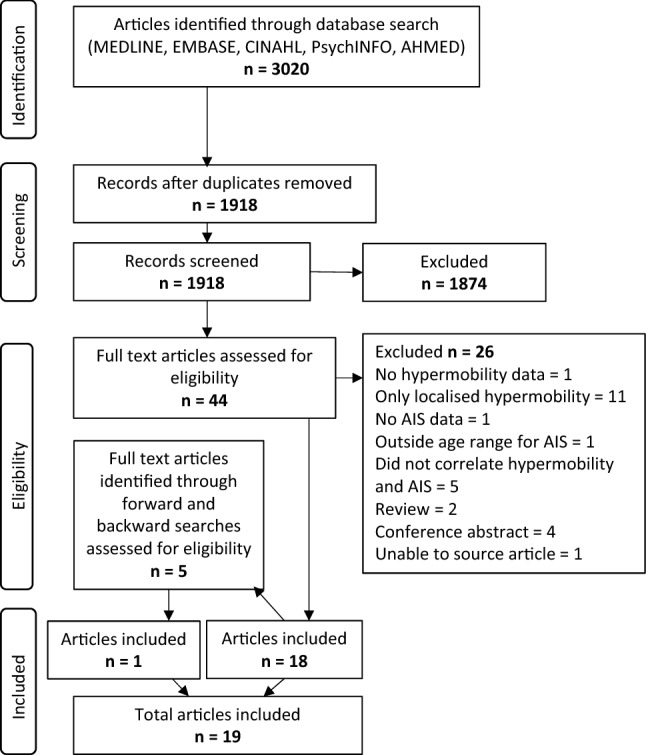
Results: Nineteen studies met eligibility criteria for inclusion. One study was excluded due to insufficient quality. Substantial heterogeneity in study design and methodology negated meta-analysis, so a narrative review was performed. Of the 18 studies included, seven suggested a positive association and eight found no association. Three reported the prevalence of musculoskeletal hypermobility in individuals with AIS. Overall, there was no convincing population-based evidence for an association between musculoskeletal hypermobility and AIS, with only two case-control studies by the same authors presenting compelling evidence for an association. Although populations at extremes of hypermobility had a high prevalence of spinal curvature, these studies were at high risk of confounding. Wide variation in methods of measuring musculoskeletal hypermobility and the challenge of assessing AIS in population-based studies hinder study comparison.
Conclusions: There is a paucity of high-quality evidence examining the association between isolated musculoskeletal hypermobility and AIS. Large-scale prospective studies with adequate adjustment for potential confounding factors could clarify the relationship between musculoskeletal hypermobility and AIS to elucidate its role in the pathogenesis of AIS.
Keywords: Adolescent idiopathic scoliosis; Musculoskeletal hypermobility; Systematic review.
© 2022. The Author(s).
Conflict of interest statement
The authors have no conflicts of interest to declare.
Figures
References
-
- Weinstein SL, Dolan LA, Cheng JC, Danielsson A, Morcuende JA. Adolescent idiopathic scoliosis. Lancet. 2008;371(9623):1527–1537. - PubMed
-
- Tones M, Moss N, Polly DW., Jr A review of quality of life and psychosocial issues in scoliosis. Spine (Phila Pa 1976) 2006;31(26):3027–3038. - PubMed
-
- Johnston CE, Richards BS, Sucato DJ, Bridwell KH, Lenke LG, Erickson M. Correlation of preoperative deformity magnitude and pulmonary function tests in adolescent idiopathic scoliosis. Spine (Phila Pa 1976) 2011;36(14):1096–1102. - PubMed
-
- Clark EM, Taylor HJ, Harding I, Hutchinson J, Nelson I, Deanfield JE, et al. Association between components of body composition and scoliosis: a prospective cohort study reporting differences identifiable before the onset of scoliosis. J Bone Miner Res. 2014;29(8):1729–1736. - PubMed
Publication types
MeSH terms
Grants and funding
LinkOut - more resources
Full Text Sources
Medical
Miscellaneous
