


Immature excitatory neurons in the amygdala come of age during puberty
- PMID: 35841648
- PMCID: PMC9289873
- DOI: 10.1016/j.dcn.2022.101133
Immature excitatory neurons in the amygdala come of age during puberty
Abstract
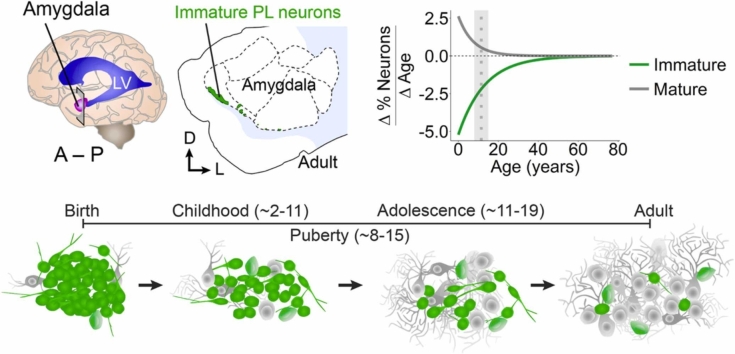
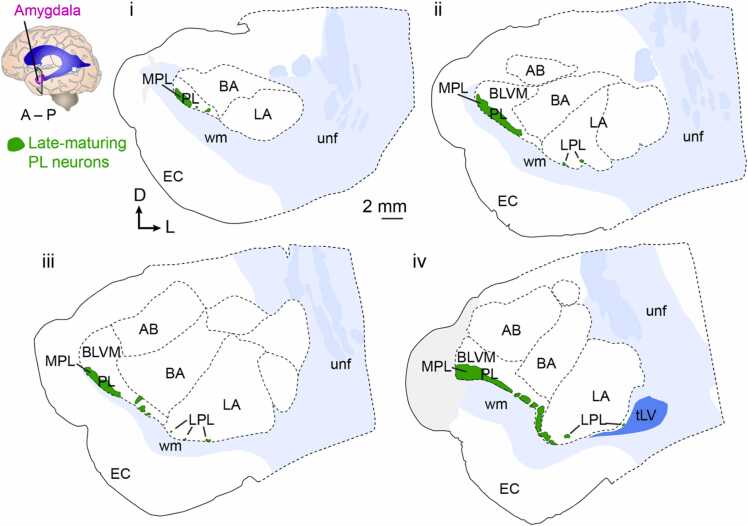
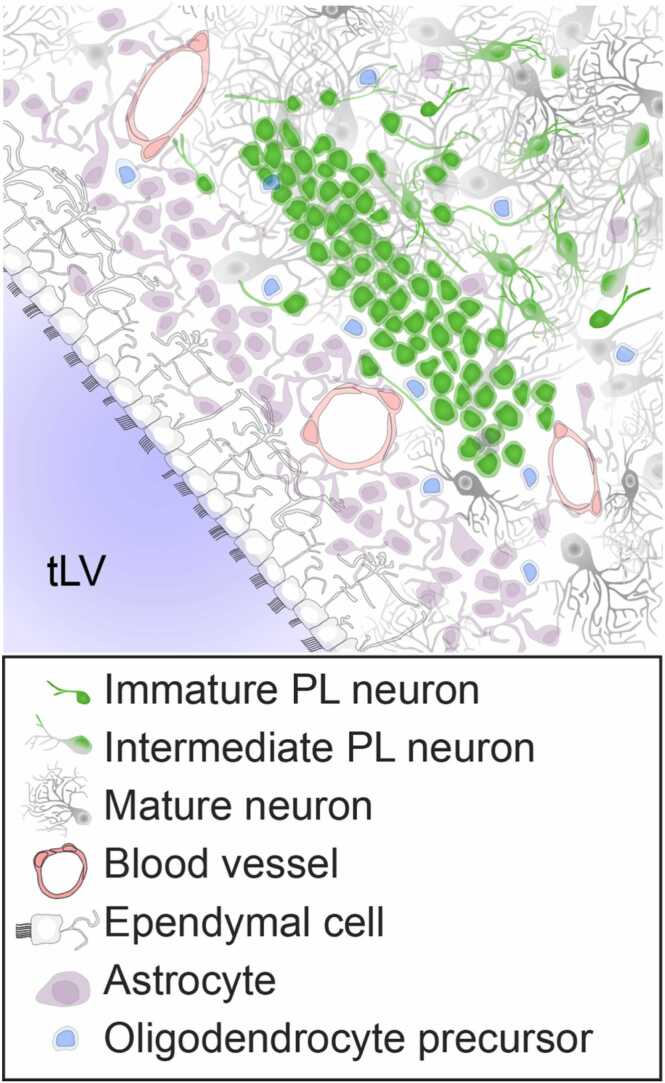
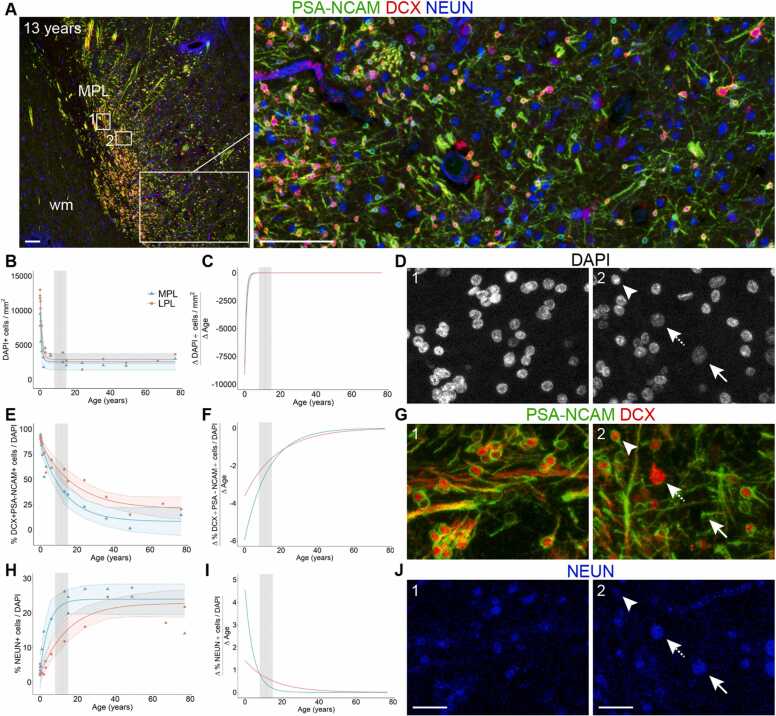
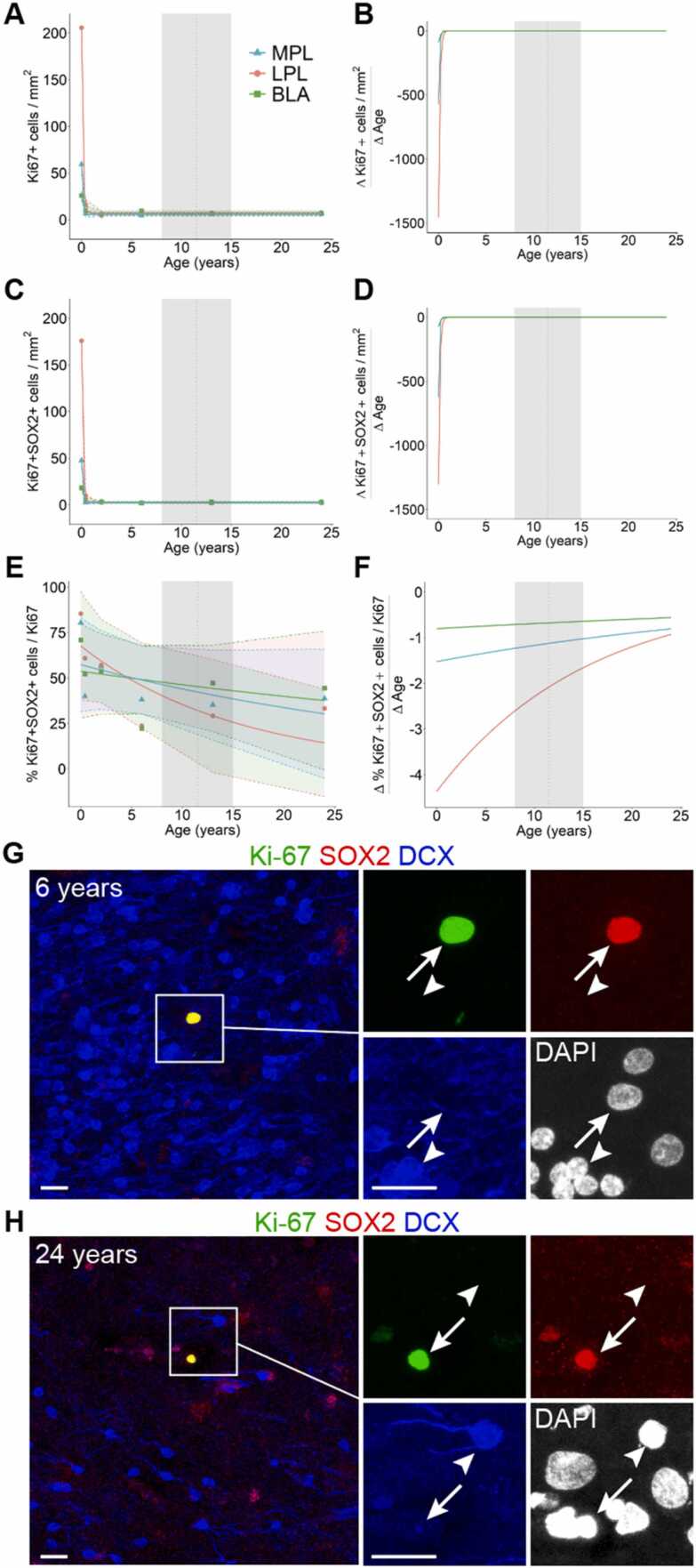
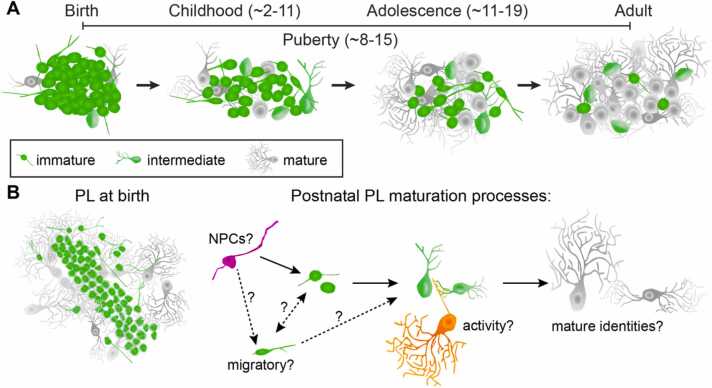
The human amygdala is critical for emotional learning, valence coding, and complex social interactions, all of which mature throughout childhood, puberty, and adolescence. Across these ages, the amygdala paralaminar nucleus (PL) undergoes significant structural changes including increased numbers of mature neurons. The PL contains a large population of immature excitatory neurons at birth, some of which may continue to be born from local progenitors. These progenitors disappear rapidly in infancy, but the immature neurons persist throughout childhood and adolescent ages, indicating that they develop on a protracted timeline. Many of these late-maturing neurons settle locally within the PL, though a small subset appear to migrate into neighboring amygdala subnuclei. Despite its prominent growth during postnatal life and possible contributions to multiple amygdala circuits, the function of the PL remains unknown. PL maturation occurs predominately during late childhood and into puberty when sex hormone levels change. Sex hormones can promote developmental processes such as neuron migration, dendritic outgrowth, and synaptic plasticity, which appear to be ongoing in late-maturing PL neurons. Collectively, we describe how the growth of late-maturing neurons occurs in the right time and place to be relevant for amygdala functions and neuropsychiatric conditions.
Keywords: Amygdala; Development; Migration; Neurogenesis; Paralaminar nucleus; Primates.
Copyright © 2022 The Authors. Published by Elsevier Ltd.. All rights reserved.
Conflict of interest statement
The authors declare that they have no known competing financial interests or personal relationships that could have appeared to influence the work reported in this paper.
Figures
References
-
- Amaral D.G., Insausti R. Retrograde transport of D-[3H]-aspartate injected into the monkey amygdaloid complex. Exp. Brain Res. 1992;88:375–388. - PubMed
Publication types
MeSH terms
Grants and funding
LinkOut - more resources
Full Text Sources
