


Olfactory placode generates a diverse population of neurons expressing GnRH, somatostatin mRNA, neuropeptide Y, or calbindin in the chick forebrain
- PMID: 35844047
- PMCID: PMC9796302
- DOI: 10.1002/cne.25389
Olfactory placode generates a diverse population of neurons expressing GnRH, somatostatin mRNA, neuropeptide Y, or calbindin in the chick forebrain
Abstract
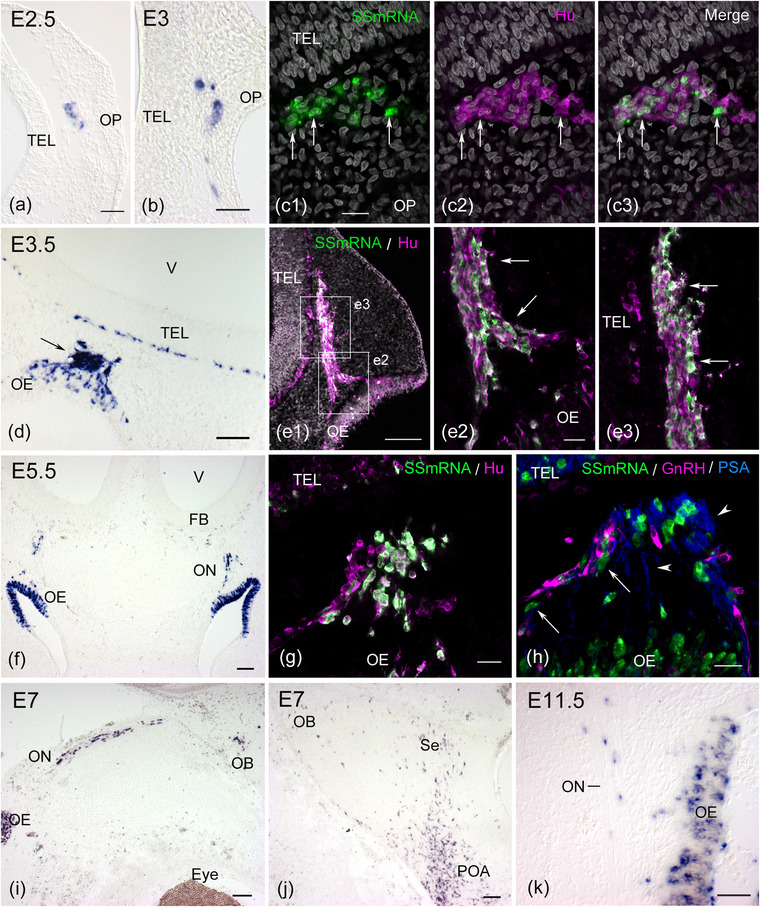
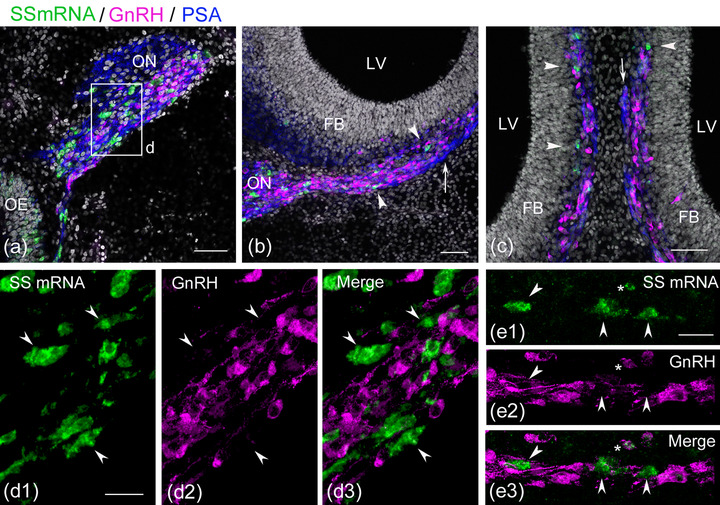
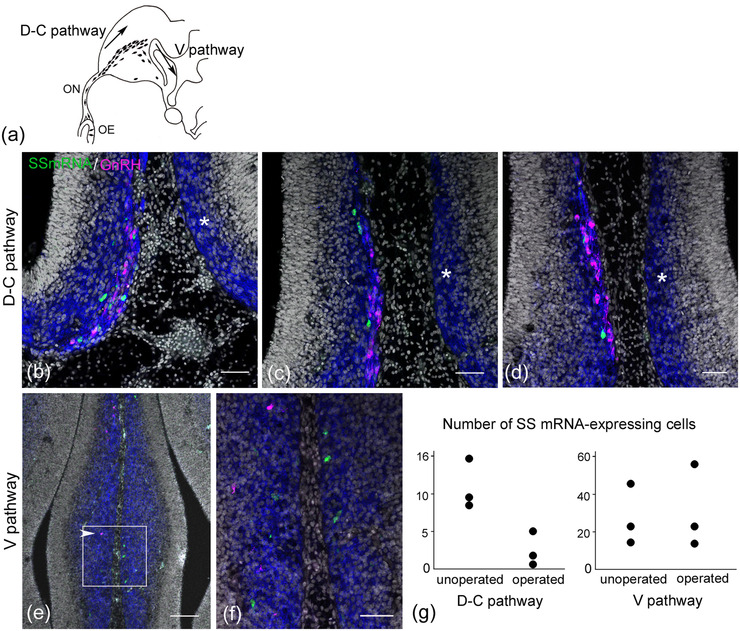
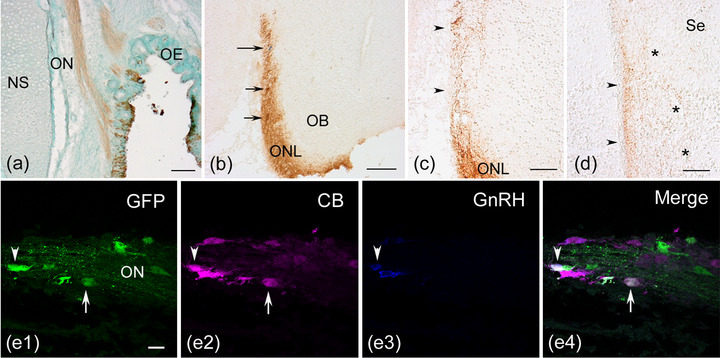
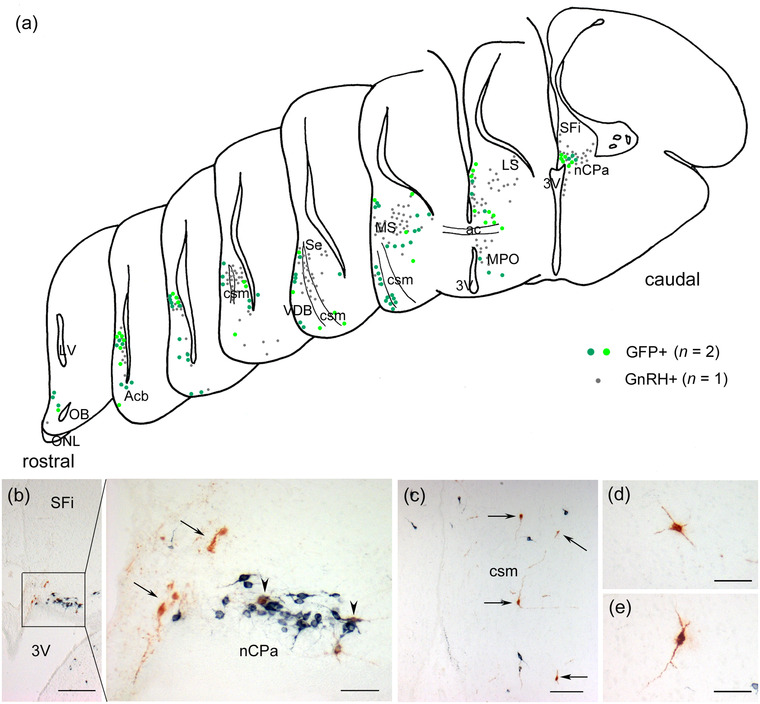
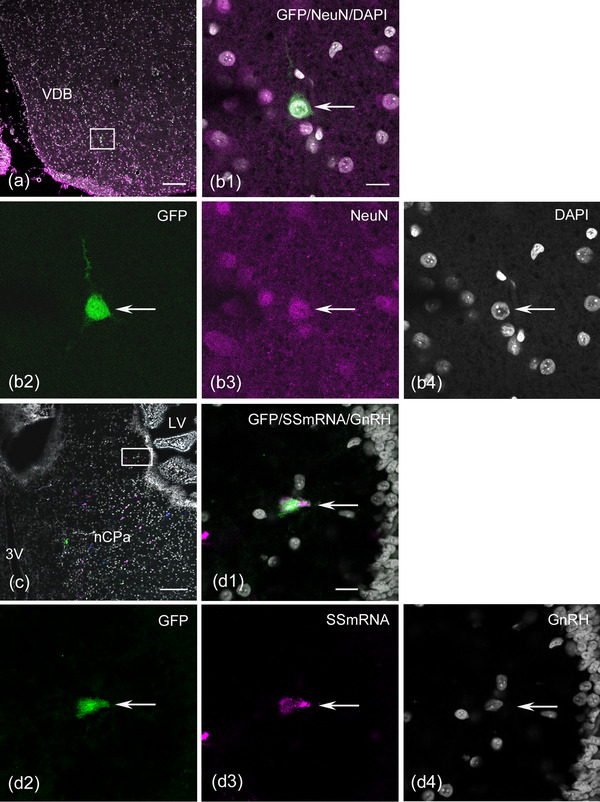
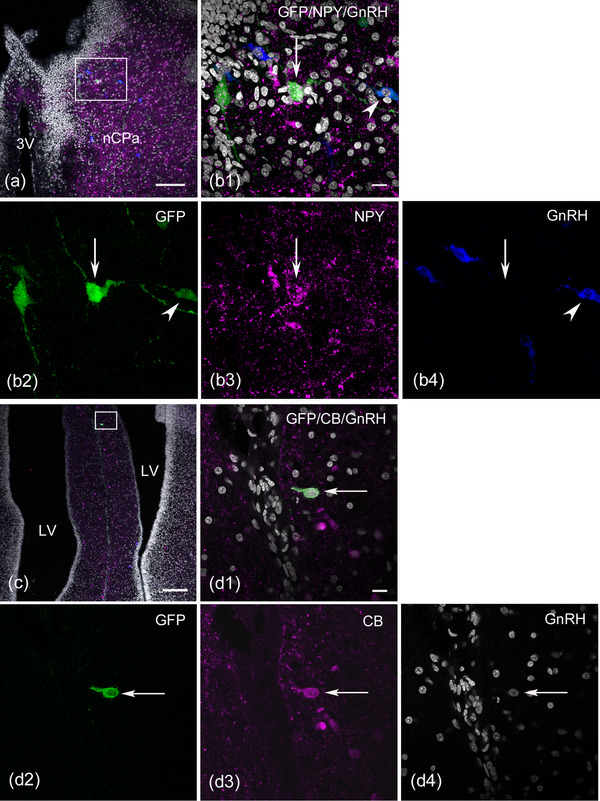
The olfactory placode (OP) of vertebrates generates several classes of migrating cells, including hypothalamic gonadotropin-releasing hormone (GnRH)-producing neurons, which play essential roles in the reproduction system. Previous studies using OP cell labeling have demonstrated that OP-derived non-GnRH cells enter the developing forebrain; however, their final fates and phenotypes are less well understood. In chick embryos, a subpopulation of migratory cells from the OP that is distinct from GnRH neurons transiently expresses somatostatin (SS). We postulated that these cells are destined to develop into brain neurons. In this study, we examined the expression pattern of SS mRNA in the olfactory-forebrain region during development, as well as the destination of OP-derived migratory cells, including SS mRNA-expressing cells. Utilizing the Tol2 genomic integration system to induce long-term fluorescent protein expression in OP cells, we found that OP-derived migratory cells labeled at embryonic day (E) 3 resided in the olfactory nerve and medial forebrain at E17-19. A subpopulation of green fluorescent protein (GFP)-labeled GnRH neurons that remained in the olfactory nerve was considered to comprise terminal nerve neurons. In the forebrain, GFP-labeled cells showed a distribution pattern similar to that of GnRH neurons. A large proportion of GFP-labeled cells expressed the mature neuronal marker NeuN. Among the GFP-labeled cells, the percentage of GnRH neurons was low, while the remaining GnRH-negative neurons either expressed SS mRNA, neuropeptide Y, or calbindin D-28k or did not express any of them. These results indicate that a diverse population of OP-derived neuronal cells, other than GnRH neurons, integrates into the chick medial forebrain.
Keywords: GnRH neurons; Tol2-transposon; forebrain; neuronal migration; olfactory placode; somatostatin mRNA; terminal nerve.
© 2022 The Authors. The Journal of Comparative Neurology published by Wiley Periodicals LLC.
Conflict of interest statement
The authors declare no conflict of interest.
Figures
References
-
- Akutsu, S. , Takada, M. , Ohki‐Hamazaki, H. , Murakami, S. , & Arai, Y. (1992). Origin of luteinizing hormone‐releasing hormone (LHRH) neurons in the chick embryo: Effect of the olfactory placode ablation. Neuroscience Letters, 142, 241–244. - PubMed
-
- Airaksinen, M. S. , Eilers, J. , Garaschuk, O. , Thoenen, H. , Konnerth, A. , & Meyer, M. (1997). Ataxia and altered dendritic calcium signaling in mice carrying a targeted null mutation of the calbindin D28k gene. Proceedings of the National Academy of Sciences of the United State of America, 94, 1488–1493. - PMC - PubMed
-
- Baimbridge, K. G. , Celio, M. R. , & Rogers, J. H. (1992). Calcium‐binding proteins in the nervous system. Trends in Neuroscience, 15, 303–308. - PubMed
-
- Blähser, S. (1984). Peptidergic pathways in the avian brain. The Journal of Experimental Zoology, 232, 397–403. - PubMed
Publication types
MeSH terms
Substances
Grants and funding
LinkOut - more resources
Full Text Sources
Miscellaneous
