


Factors Affecting Breast Myopathies in Broiler Chickens and Quality of Defective Meat: A Meta-Analysis
- PMID: 35846009
- PMCID: PMC9283645
- DOI: 10.3389/fphys.2022.933235
Factors Affecting Breast Myopathies in Broiler Chickens and Quality of Defective Meat: A Meta-Analysis
Abstract
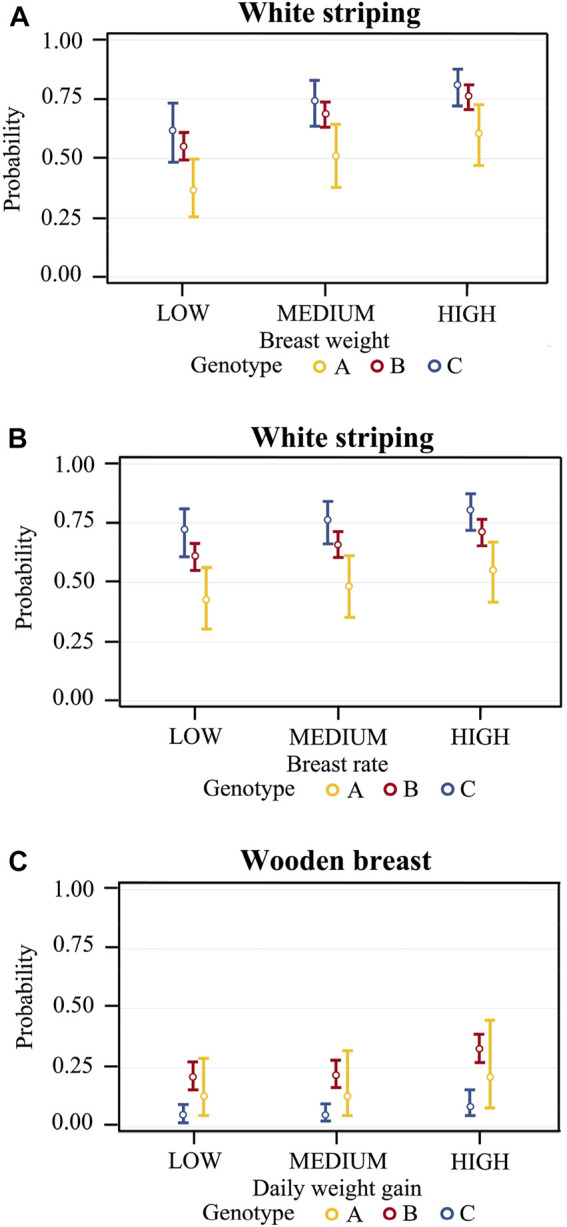
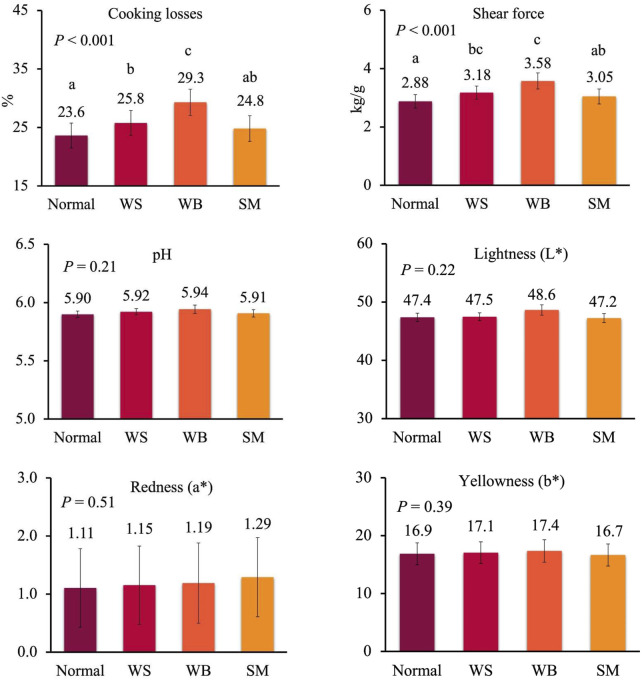
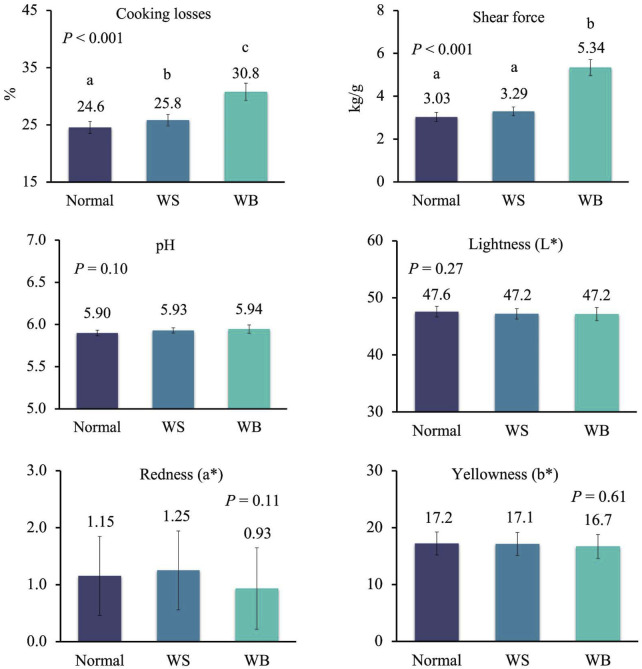
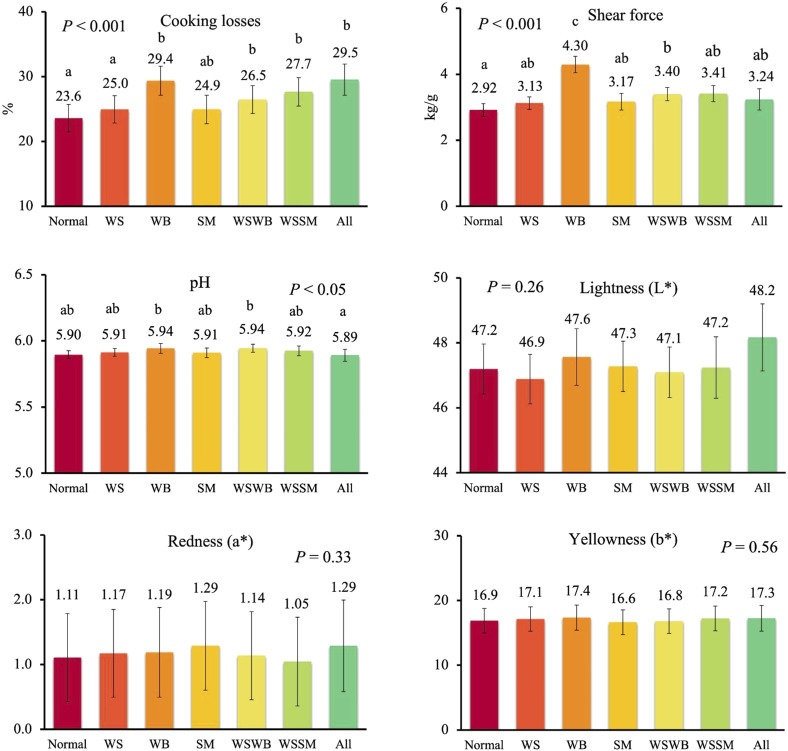
Fast-growing broiler chickens are subjected to breast myopathies such as white striping (WS), wooden breast (WB), and spaghetti meat (SM). Available studies about risk factors for myopathy occurrence often used flock data whereas a few reports evaluated chicken individual data. Thus, the present study aimed to elucidate the effect of growth and slaughter traits, besides sex and genotype on myopathy occurrence. Data were obtained from eight experimental trials, which used a total of 6,036 broiler chickens. Sex, genotype, daily weight gain, slaughter weight, and breast yield were evaluated as potential risk factors by logistic regression analyses. Then, the effects of myopathy and sex were evaluated on meat rheological traits (pH, colour, cooking losses and shear force). Based on a logistic regression, WS occurrence was associated with genotype, breast weight, and breast yield. Compared with chickens with intermediate breast weight and breast yield, higher odds of having WS were found in chickens with high breast weight (OR: 1.49) and yield (OR: 1.27), whereas lower odds were found in those with low breast weight (OR: 0.57) and yield (OR: 0.82). As for WB and SM, females had lower odds of having WB (OR: 0.55) and higher odds of showing SM (OR: 15.4) compared to males. In males, higher odds of having WB were found in chickens with a high daily weight gain (OR: 1.75) compared to those with an intermediate daily weight gain. In females, higher odds of having SM were associated to a high slaughter weight (OR: 2.10) while lower odds to a low slaughter weight (OR: 0.87). As for meat quality, only WB meat was clearly different for some technological and sensorial properties, which can play a major role also in meat processing. In conclusion, our analysis identified breast development as a potential risk factor for WS, while a high growth was the risk factor for WB and SM. A different probability of having WB or SM in females and male was found.
Keywords: breast yield; cooking losses; pH; risk factor; sex; spaghetti meat; white striping; wooden breast.
Copyright © 2022 Bordignon, Xiccato, Boskovic Cabrol, Birolo and Trocino.
Conflict of interest statement
The authors declare that the research was conducted in the absence of any commercial or financial relationships that could be construed as a potential conflict of interest.
Figures
References
-
- Aguirre M. E., Leyva-Jimenez H., Travis R., Lee J. T., Athrey G., Alvarado C. Z. (2020). Evaluation of Growth Production Factors as Predictors of the Incidence and Severity of White Striping and Woody Breast in Broiler Chickens. Poult. Sci. 99, 3723–3732. 10.1016/j.psj.2020.03.026 - DOI - PMC - PubMed
-
- Alnahhas N., Berri C., Chabault M., Chartrin P., Boulay M., Bourin M. C., et al. (2016). Genetic Parameters of White Striping in Relation to Body Weight, Carcass Composition, and Meat Quality Traits in Two Broiler Lines Divergently Selected for the Ultimate pH of the Pectoralis Major Muscle. BMC Genet. 17, 61. 10.1186/s12863-016-0369-2 - DOI - PMC - PubMed
LinkOut - more resources
Full Text Sources
Research Materials
