


The Essential Role of Body Weight in Adjusting Gn Dosage to Prevent High Ovarian Response for Women With PCOS During IVF: A Retrospective Study
- PMID: 35846308
- PMCID: PMC9283682
- DOI: 10.3389/fendo.2022.922044
The Essential Role of Body Weight in Adjusting Gn Dosage to Prevent High Ovarian Response for Women With PCOS During IVF: A Retrospective Study
Abstract
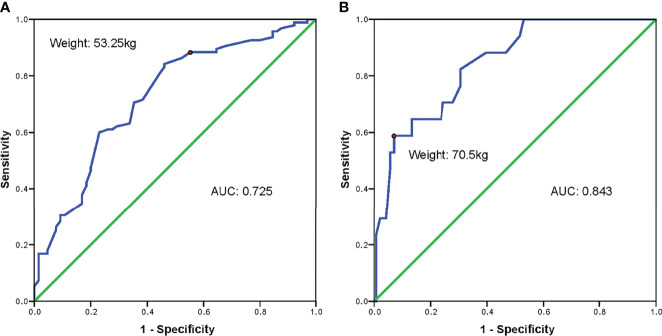
Polycystic ovarian syndrome (PCOS) is the major cause of anovulatory infertility. Since women with PCOS are often accompanied by increased body weight and hyper response to controlled ovarian stimulation, individualized gonadotropin (Gn) dose is required to achieve a therapeutic effect while minimizing the risk of ovarian hyperstimulation simultaneously. We aimed to investigate the essential role of body weight in optimizing initial Gn dosage for PCOS patients during in vitro fertilization (IVF). We retrospectively included 409 infertile PCOS patients who used gonadotropin-releasing hormone (GnRH)-antagonist fixed protocol and underwent their first cycle of IVF in West China Second University Hospital from January 2019 to June 2021. Baseline characteristics controlled ovarian stimulation parameters, and reproductive outcomes were compared between patients with different body weights and different ovarian responses. Multivariable linear regression analyses were adopted to investigate the relationship between body weight and initial Gn dosage. Receiver operating characteristic (ROC) curves were drawn to find the optimal cut-off value of body weight in predicting the starting Gn dosage so as to prevent high ovarian response (HOR). We found that luteinizing hormone (LH) level and Anti-Mullerian hormone (AMH) level were lowest in the group with body weight over 70 kg and was highest in the group with body weight less than 50 kg. Increased body weight was significantly correlated to the rise of initial Gn dosage (Beta = 0.399, t = 8.921, p < 0.001). Normal ovarian response (NOR) patients had significantly less fresh cycle cancel rate and ovarian hyperstimulation syndrome (OHSS) rate which outweighed the fewer embryos compared with HOR patients. Using ROC curves, 53.25 kg (sensitivity, 84.2%; specificity, 53.8%) and 70.5 kg (sensitivity, 58.8%; specificity, 93.0%) were identified as the optimal cut-off values to predict the initial Gn dosage of no more than 150 IU and 225 IU, respectively. In conclusion, adjusting the initial Gn dosage based on body weight is crucial to preventing ovarian hyperstimulation while not influencing reproductive outcomes for PCOS patients during IVF.
Keywords: body weight; gonadotropin; in vitro fertilization; ovarian response; polycystic ovarian syndrome.
Copyright © 2022 Zeng, Chen, Zeng and Qin.
Conflict of interest statement
The authors declare that the research was conducted in the absence of any commercial or financial relationships that could be construed as a potential conflict of interest.
Figures
References
-
- Franks S, Hardy K. What Causes Anovulation in Polycystic Ovary Syndrome? Curr Opin Endocr Metab Res (2020) 12:59–65. doi: 10.1016/j.coemr.2020.03.001 - DOI
Publication types
MeSH terms
Substances
LinkOut - more resources
Full Text Sources
Medical
