


Molecular characterization of chlorpyrifos degrading bacteria isolated from contaminated dairy farm soils in Nakuru County, Kenya
- PMID: 35846483
- PMCID: PMC9280583
- DOI: 10.1016/j.heliyon.2022.e09176
Molecular characterization of chlorpyrifos degrading bacteria isolated from contaminated dairy farm soils in Nakuru County, Kenya
Abstract
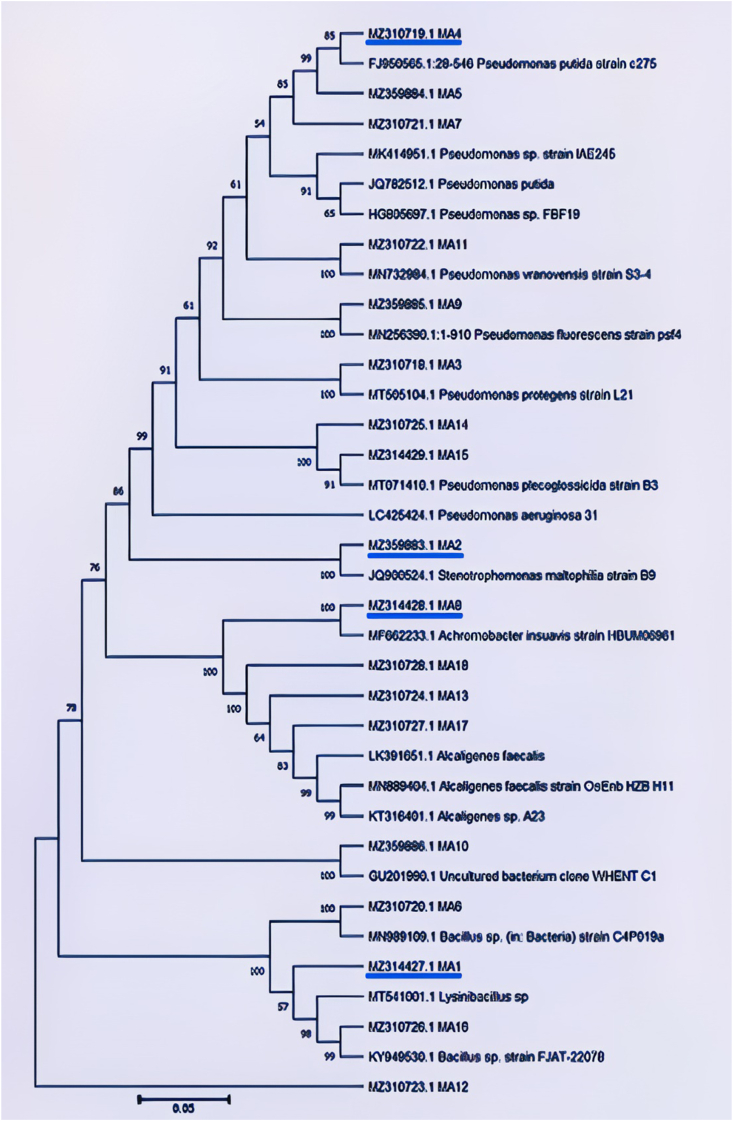
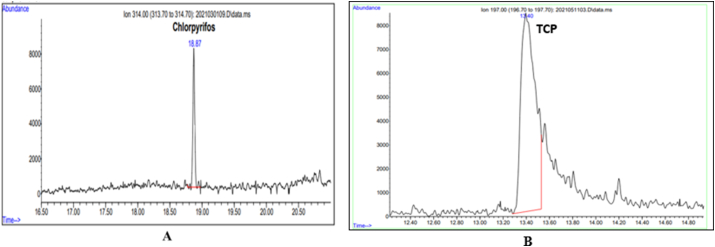
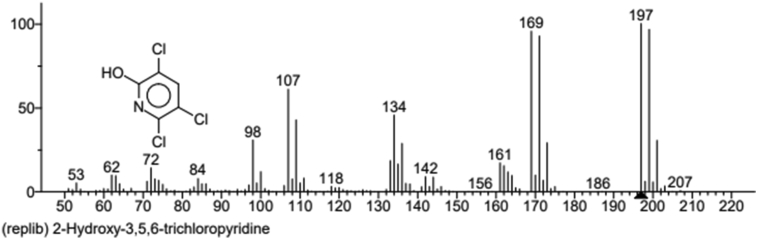
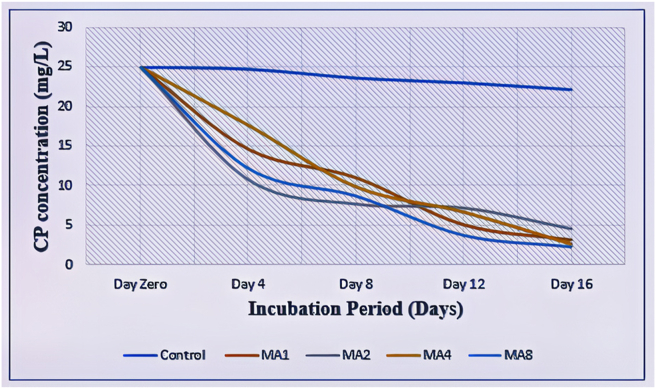
Chlorpyrifos (CP) is an organophosphate widely used as an insecticide and acaricide. Extensive application of CP contaminates ecosystems, polluting the environment and food products, creating health complications to humans due to its neurotoxicity. The study evaluated CP bioremediation by bacteria isolated from dairy farm soils in Nakuru County, Kenya, through enrichment culture technique. The growth response of the bacteria and degradation of chlorpyrifos was monitored every five days using UV-VIS Spectrophotometer (600nm). Enrichment culture technique led to the isolation of eighteen (MA1-MA18) potential CP degraders belonging to the genera Pseudomonas, Stenotrophomonas, Bacillus, Alicaligenes, and Achromobacter. The efficacy of four (4) strains was further investigated using Gas Chromatography-Mass Spectrometry (GC-MS) analysis. The results showed that all four strains significantly degraded chlorpyrifos in Minimum Salt Medium (MSM): Lysinibacillus sp.HBUM206408 (87.16 %), Stenotrophomonas maltophilia (82.04 %), Pseudomonas putida (89.52 %), and Achromobacter insuavis (91.08 %) within 16 days, producing 2-Hydroxy-3, 5, 6-trichloropyridine (TCP) as the main metabolite. Therefore, these strains can be used to degrade chlorpyrifos in contaminated soil. There is a need for further studies to determine the possible mechanisms and other metabolites of chlorpyrifos degradation by the isolates obtained in the study. Besides, future studies should explore the efficacy and survival of the organisms in the contaminated environment.
Keywords: Biodegradation; Bioremediation; Chlorpyrifos; Metabolite; Organophosphate; Spectrophotometer.
© 2022 The Author(s).
Conflict of interest statement
The authors declare no conflict of interest.
Figures
References
-
- Abdel-Wareth M.T.A., Abd El-Hamid R.M. Mycoremediation of chlorpyrifos and lambda-cyhalothrin by two species of filamentous fungi. Int. J. Environ. Stud. 2016;73(6):974–987.
-
- Akhdiya A., Wartono, Sulaeman E. Degradation of chlorpyrifoschlorpyrifos and BPMC by the bacteria isolated from contaminated shallot farm soil. IOP Conf. Ser. Earth Environ. Sci. 2020;457
-
- Ambreen S., Yasmin A. Novel degradation pathways for ChlorpyrifosChlorpyrifos and 3, 5, 6-Trichloro-2-pyridinol degradation by bacterial strain Bacillus thuringiensis MB497 isolated from agricultural fields of Mianwali, Pakistan. Pestic. Biochem. Physiol. 2021;172:104750. - PubMed
-
- Anode S.O., Magoma G., Onguso J., Abraha T. Bioremediation of xenobiotic pesticides by bacterial species isolated from flower farm soil around lake naivasha, Kenya. J. Biorem. Biodegrad. 2018;9(5)
LinkOut - more resources
Full Text Sources
Miscellaneous
