Characterization of human tear proteome reveals differentially abundance proteins in thyroid-associated ophthalmopathy
- PMID: 35846879
- PMCID: PMC9285480
- DOI: 10.7717/peerj.13701
Characterization of human tear proteome reveals differentially abundance proteins in thyroid-associated ophthalmopathy
Abstract
Background: Thyroid-associated ophthalmopathy (TAO) is a common orbital inflammatory disease, but the abnormal expression of proteins in tears of TAO patients has not been systematically studied. The purpose of this study is to compare and analyze the total tear protein profile of TAO patients and to provide protein cues for TAO pathogenesis.
Methods: Tear samples were isolated from 30 TAO patients with obvious ocular surface damage and 30 healthy control subjects. Tear samples from 30 individuals were mixed and divided into three sample pools. Easy nano-scale LC-MS/MS based on labeling-free quantitative technology was utilized to profile tear proteome.
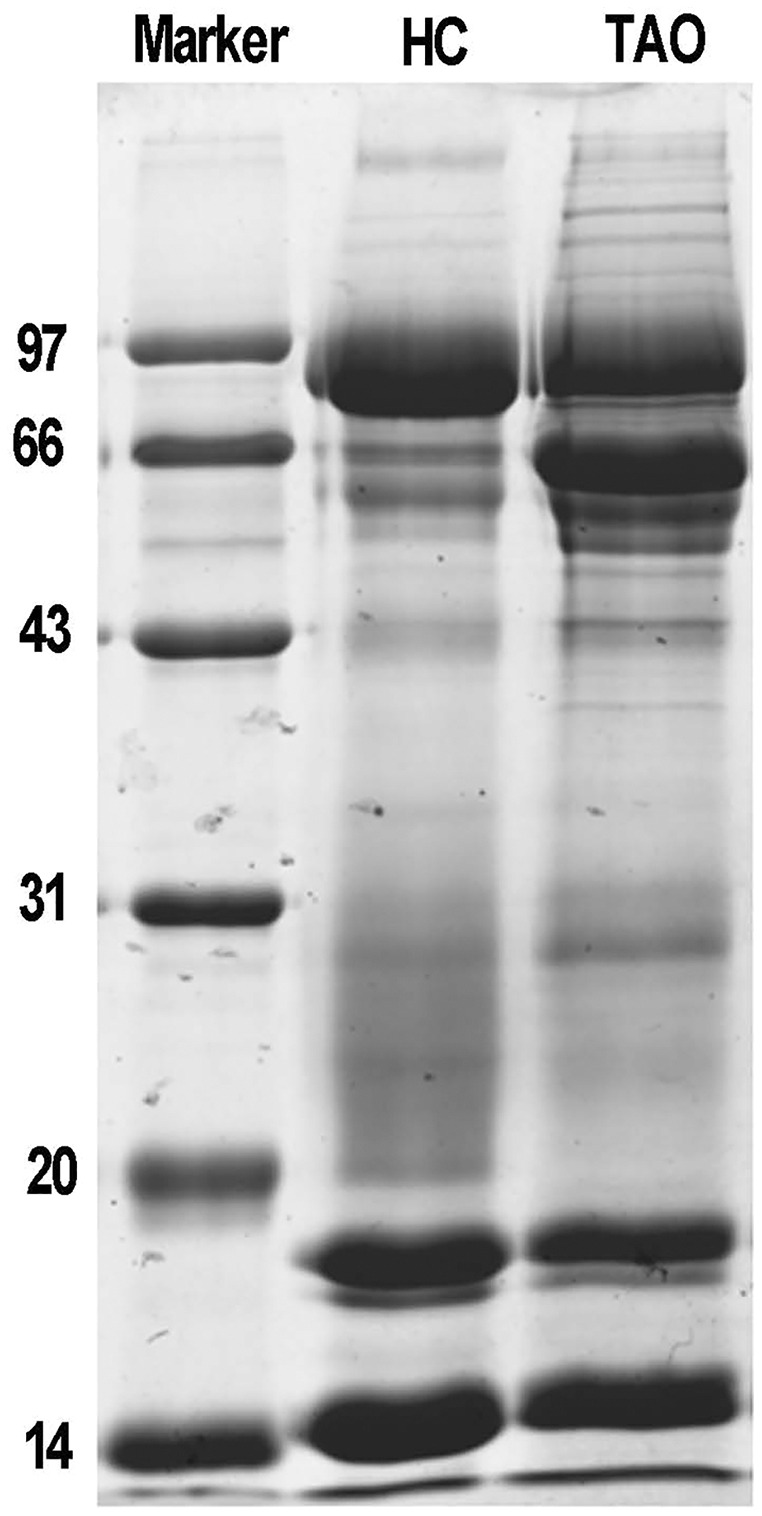
Results: Here, electrospray ionization mass spectra and SDS-PAGE results confirmed the good parallelisms among samples. A total of 313 proteins were obtained from six tear pools, among them, 103 differential abundance proteins (DAPs) were identified, including 99 up-regulated DAPs (including APOA1, HV103, IGH, and Transferrin variant) and four down-regulated DAPs (including FABA, VCC1, NUCB2, and E-cadherin) in the TAO group compared with the control group. GO analysis showed that up-regulated DAPs were mainly enriched in lipid metabolism and platelet molecular function, and down-regulated DAPs were involved in binding, cell junction, and cellular process. KEGG results indicated that DAPs were involved in 117 kinds of signal transduction pathways, among which the immune-related pathway of complement and coagulation cascades had the greatest relevance.
Conclusion: In conclusion, label-free LC-MS/MS is an effective strategy for profiling tear proteins component. Our study provides proteins and pathways altered in TAO and provides protein cues for further study on the precise mechanism of TAO pathogenesis.
Keywords: Complement and coagulation cascades; Hyroid-associated ophthalmopathy; Label-free LC-MS/MS; Proteomics analysis; Tears.
© 2022 Zhou et al.
Conflict of interest statement
The authors declare that they have no competing interests.
Figures


References
-
- Annamalai B, Parsons N, Nicholson C, Joseph K, Coughlin B, Yang X, Jones BW, Tomlinson S, Rohrer B. Natural immunoglobulin M-based delivery of a complement alternative pathway inhibitor in mouse models of retinal degeneration. Experimental Eye Research. 2021;207:108583. doi: 10.1016/j.exer.2021.108583. - DOI - PMC - PubMed
-
- Antonelli A, Palla R, Casarosa L, Fallahi P, Baschieri L. IgG, IgA and C3 deposits in the extra-thyroidal manifestations of autoimmune Graves’ disease: their in vitro solubilization by intravenous immunoglobulin. Clinical and Experimental Rheumatology. 1996;14(Suppl 15):S31–S35. - PubMed
Publication types
MeSH terms
Substances
LinkOut - more resources
Full Text Sources
Miscellaneous