


Mycotoxin Contamination of Feeds and Raw Materials in China in Year 2021
- PMID: 35847652
- PMCID: PMC9281542
- DOI: 10.3389/fvets.2022.929904
Mycotoxin Contamination of Feeds and Raw Materials in China in Year 2021
Abstract
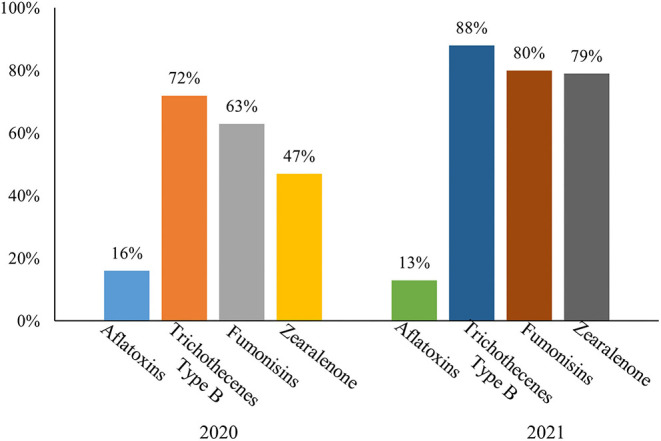
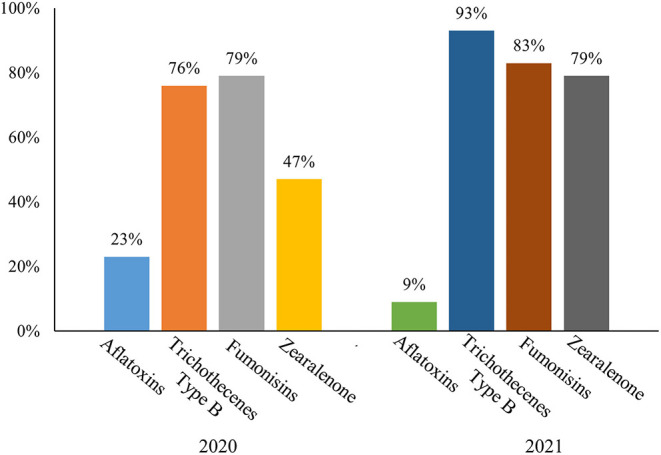
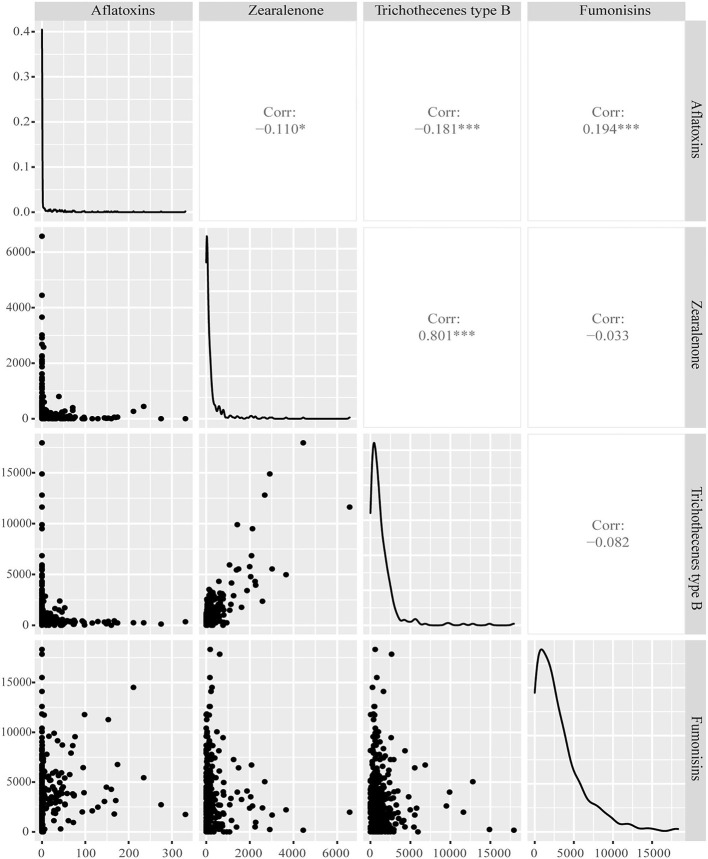
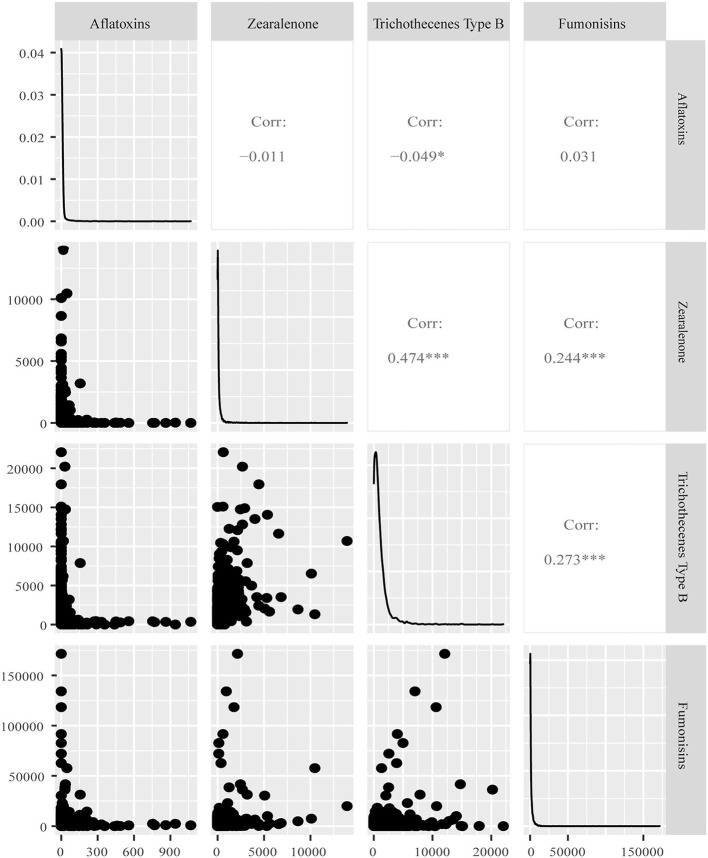
In this research, we performed a large-scale survey of mycotoxin contamination in several feed commodities and assessed regional differences in mycotoxin occurrence in maize across China in 2021. Concentrations of aflatoxins, zearalenone (ZEN), fumonisins, and trichothecenes type B were analyzed in 2,643 raw material and compound feed samples collected from eight provinces. Generally, trichothecenes type B, fumonisins, and ZEN were most prevalent and detected in averages of positive concentrations at 1,167, 1,623, and 204 μg/kg, respectively. In the new season maize, samples were also seriously infested with trichothecenes type B, fumonisins, and ZEN, and their averages of positive concentrations were 1,302, 2,518, and 225 μg/kg, respectively. Wheat was commonly contaminated with trichothecenes type B and ZEN, and the highest concentration levels of trichothecenes type B, fumonisins, and ZEN were all detected in the samples from maize by-products. Among the different geographical regions, distinct trends were observed in new season maize. Samples from Shandong province were highly contaminated with trichothecenes type B, fumonisins, and ZEN, while special attention should be paid to aflatoxins and fumonisins in Anhui and Jiangsu provinces in East China. In addition, the present survey showed that compound feeds and raw materials are commonly contaminated by multiple mycotoxins. Trichothecenes type B and ZEN concentrations were correlated significantly in this survey.
Keywords: China; feed; maize; mycotoxin contamination; raw material.
Copyright © 2022 Hao, Li, Wang, An and Guan.
Conflict of interest statement
WH, AL, JW, and GA was employed by DSM (China) Co., Ltd. SG was employed by DSM Singapore Industrial Pte Ltd.
Figures
References
-
- Binder EM. Managing the risk of mycotoxins in modern feed production. Anim Feed Sci Technol. (2007) 133:149–66. 10.1016/j.anifeedsci.2006.08.008 - DOI
-
- Kumar V, Basu MS, Rajendran TP. Mycotoxin research and mycoflora in some commercially important agricultural commodities. Crop Prot. (2008) 27:891–905. 10.1016/j.cropro.2007.12.011 - DOI
LinkOut - more resources
Full Text Sources
