


Emotion regulation in substance use disorders: a systematic review and meta-analysis
- PMID: 35851975
- PMCID: PMC10087816
- DOI: 10.1111/add.16001
Emotion regulation in substance use disorders: a systematic review and meta-analysis
Abstract
Background and aims: The ability to regulate emotions effectively has been associated with resilience to psychopathology. Individuals with substance use disorders (SUDs) have been shown to have higher levels of negative emotionality, with some evidence suggesting impairment in emotion regulation compared with individuals without SUDs. However, no previous attempt has been made to systematically review the literature to assess the magnitude of this difference. We aimed to assess the association between SUD diagnosis and emotion regulation as measured by the Difficulties in Emotion Regulation Scale (DERS) and Emotion Regulation Questionnaire (ERQ) through a systematic review and meta-analysis of existing findings.
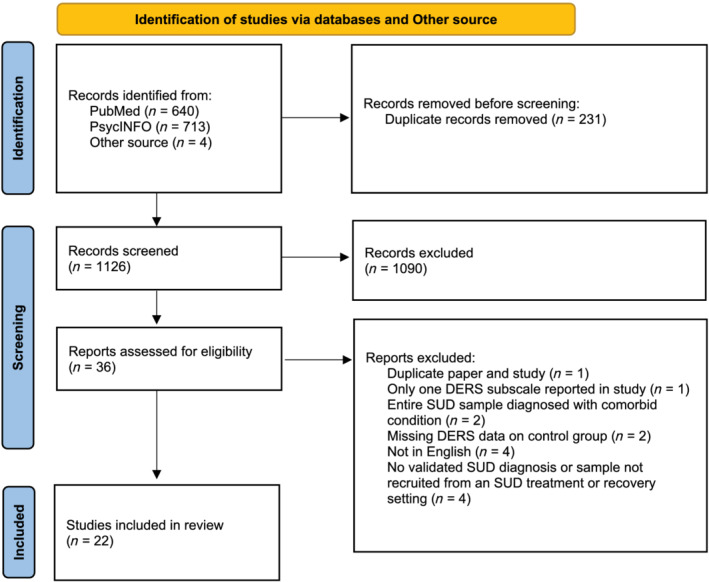
Methods: The systematic review was conducted using PubMed, PsycINFO and Embase. We examined cross-sectional studies that compared a SUD group with a control group and measured emotion regulation using the DERS or the ERQ. The primary analysis focused on papers using the DERS, as this was the predominant instrument in the literature.
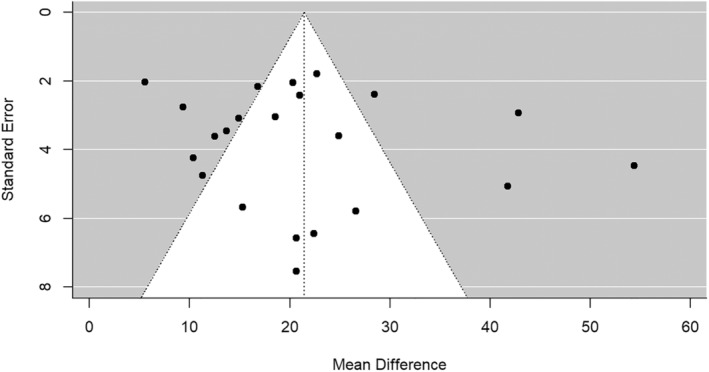
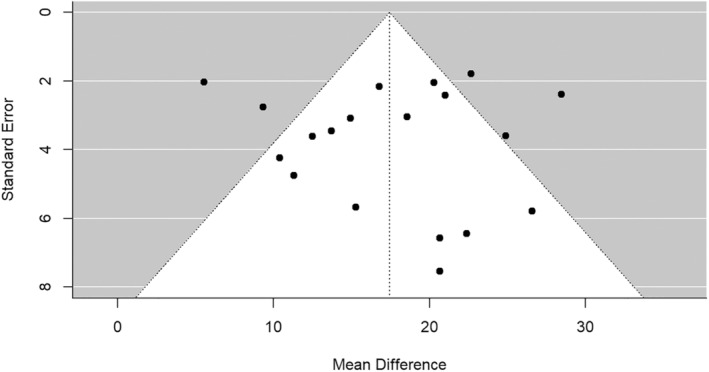
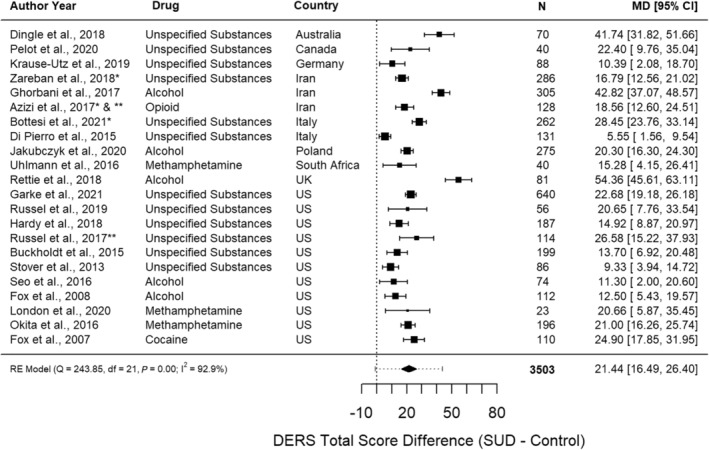
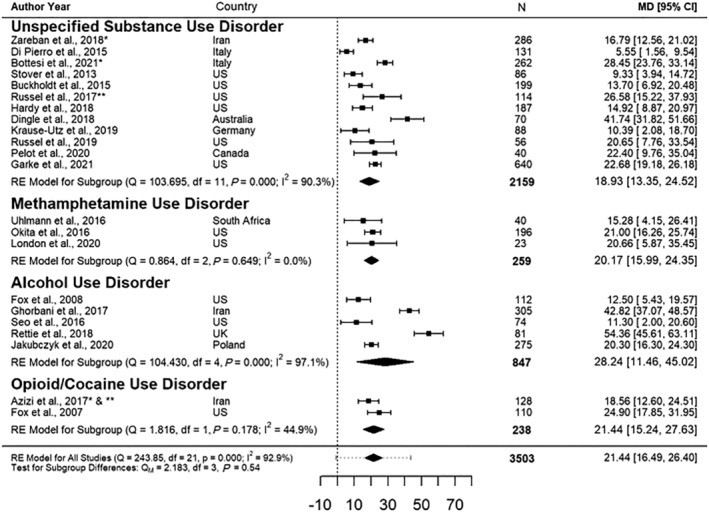
Results: Twenty-two studies met our primary analysis criteria, representing 1936 individuals with a SUD and 1567 controls. Individuals with SUDs relative to controls had significantly greater DERS scores, with a mean difference of 21.44 [95% confidence interval (CI) = 16.49-26.40, P < 0.001] and Hedges' g = 1.05 (95% CI = 0.86-1.24, P < 0.001). The difference was robust, remaining significant after removing outliers and studies with high risk of bias. Individuals with SUDs demonstrated poorer emotion regulation on each subscale of the DERS, with the largest deficits in the Strategies and Impulse subscales. The ERQ analysis revealed greater use of expressive suppression in those with SUDs relative to controls (Hedges' g = 0.76, 95% CI = 0.25-1.28, P = 0.004).
Conclusions: People with substance use disorders appear to have greater difficulties in emotion regulation than people without substance use disorders.
Keywords: Alcohol use disorder; cocaine addiction; emotion regulation; methamphetamine; opioid use disorder; substance use disorders.
© 2022 The Authors. Addiction published by John Wiley & Sons Ltd on behalf of Society for the Study of Addiction.
Conflict of interest statement
None.
Figures

References
-
- Carvalho AF, Heilig M, Perez A, Probst C, Rehm J. Alcohol use disorders. Lancet. 2019;394:781–92. - PubMed
-
- United Nations Office on Drugs and Crime (UNODC) . World Drug Report Executive Summary. Vienna, Austria: UNODC; 2019.
-
- Wellman RJ, Chaiton M, Morgenstern M, O’Loughlin J. Untangling influences in the longitudinal relationship between depressive symptoms and drinking frequency in high school. J Adolesc Health. 2020;66:308–14. - PubMed
-
- Wellman RJ, Contreras GA, Dugas EN, O’Loughlin EK, O’Loughlin JL. Determinants of sustained binge drinking in young adults. Alcohol Clin Exp Res. 2014;38:1409–15. - PubMed
-
- Kenneson A, Funderburk JS, Maisto SA. Substance use disorders increase the odds of subsequent mood disorders. Drug Alcohol Depend. 2013;133:338–43. - PubMed
Publication types
MeSH terms
LinkOut - more resources
Full Text Sources
Medical
Miscellaneous
