


Long-term outcomes after aneurysmal subarachnoid hemorrhage: A prospective observational cohort study
- PMID: 35852005
- PMCID: PMC9796482
- DOI: 10.1111/ane.13674
Long-term outcomes after aneurysmal subarachnoid hemorrhage: A prospective observational cohort study
Abstract
Objectives: The survival rates for patients affected by aneurysmal subarachnoid hemorrhage (aSAH) have increased in recent years; however, many patients continue to develop cognitive dysfunctions that affect their quality of life. The commonly used outcome measures often fail to identify these cognitive dysfunctions. This study aimed to evaluate the long-term outcomes at 1 and 3 years after aSAH to assess changes over time and relate outcomes to patient characteristics and events during the acute phase.
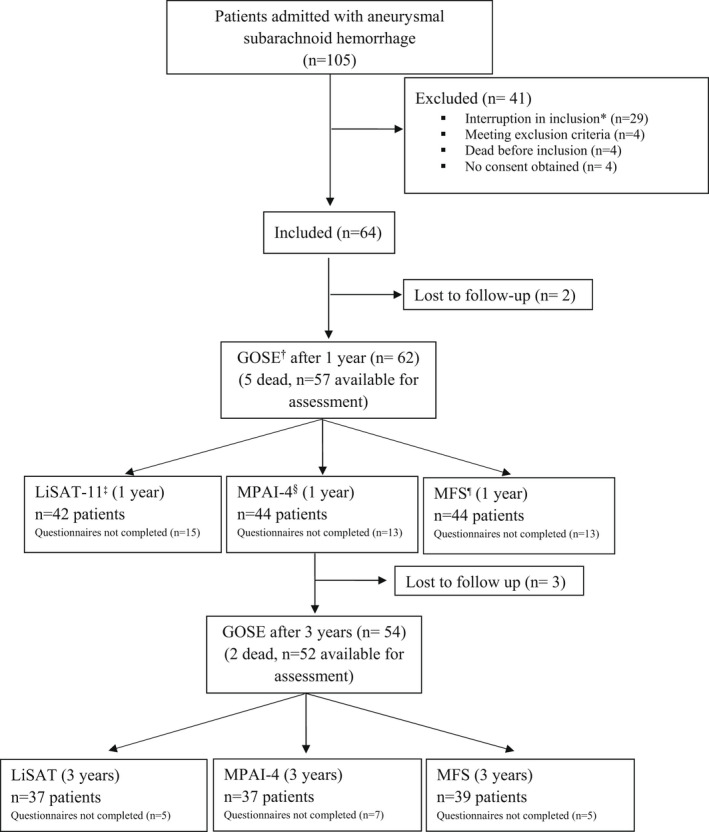
Materials and methods: This prospective observational study included patients that experienced aSAH. Patients were assessed according to the extended Glasgow Outcome Scale, Life Satisfaction Questionnaire, Mayo-Portland Adaptability inventory-4, and Mental Fatigue scale.
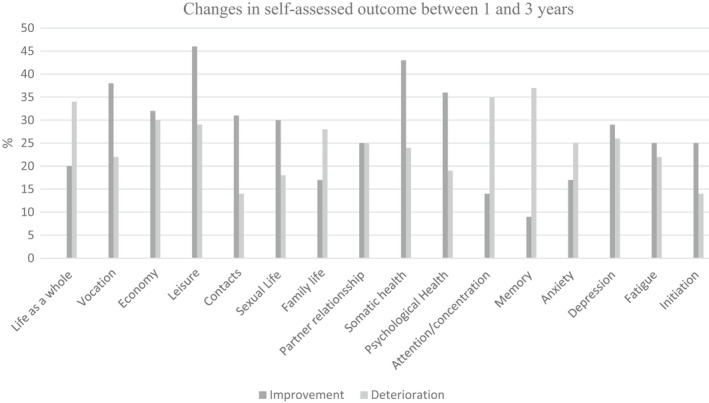
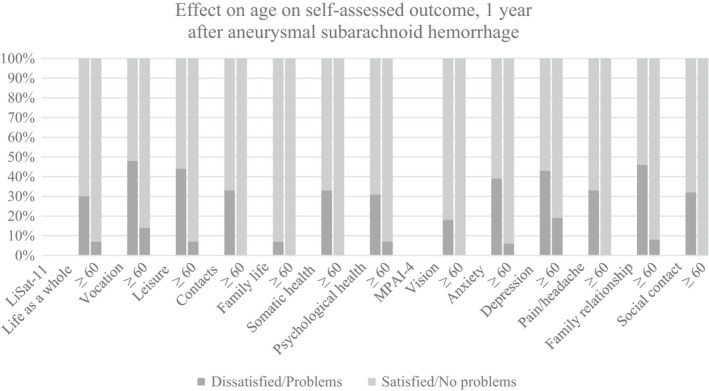
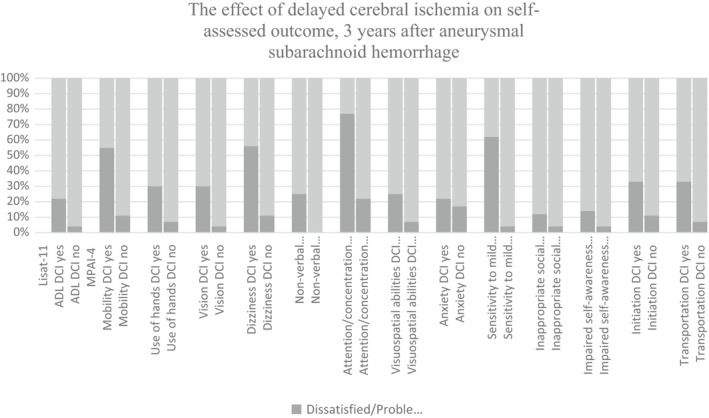
Results: Patients were assessed after 1 year (n = 62) and 3 years (n = 54). At 3 years, the extended Glasgow Outcome Scale score improved in 15% and worsened in 12% of the patients. Mental fatigue was observed in 57% of the patients at 1 year. Patients <60 years of age at the time of aSAH had more self-assessed problems, including pain/headache (p < .01), than patients >60 years of age. Patients with delayed cerebral ischemia during the acute phase reported more dissatisfaction at 3 years, whereas no significant result was seen at 1 year.
Conclusions: Cognitive dysfunction, especially mental fatigue, is common in patients with aSAH, which affects quality of life and recovery. Patient outcome is a dynamic process developing throughout years after aSAH, involving both improvement and deterioration. This study indicates the importance of longer follow-up periods with broad outcome assessments.
Keywords: aneurysmal subarachnoid hemorrhage; cognitive dysfunction; long-term outcome; mental fatigue.
© 2022 The Authors. Acta Neurologica Scandinavica published by John Wiley & Sons Ltd.
Conflict of interest statement
The authors declare that there are no conflicts of interest.
Figures
References
-
- Neifert SN, Chapman EK, Martini ML, et al. Aneurysmal subarachnoid hemorrhage: the last decade. Transl Stroke Res. 2021;12(3):428‐446. - PubMed
-
- Macdonald RL, Schweizer TA. Spontaneous subarachnoid haemorrhage. Lancet. 2017;389(10069):655‐666. - PubMed
-
- Jaja BNR, Saposnik G, Lingsma HF, et al. Development and validation of outcome prediction models for aneurysmal subarachnoid haemorrhage: the SAHIT multinational cohort study. BMJ. 2018;360:j5745. - PubMed
Publication types
MeSH terms
LinkOut - more resources
Full Text Sources
