Strongyloides hyperinfection syndrome due to corticosteroid therapy after resection of meningioma: illustrative case
- PMID: 35855010
- PMCID: PMC9274291
- DOI: 10.3171/CASE21667
Strongyloides hyperinfection syndrome due to corticosteroid therapy after resection of meningioma: illustrative case
Abstract
Background: Strongyloidiasis is an underdiagnosed and preventable life-threatening disease caused by infection with the helminth Strongyloides stercoralis. Chronic asymptomatic infection can be sustained for decades, and immunosuppression can lead to disseminated infection, with a mortality rate of 70%-100%. In the neurosurgical population, corticosteroids are the most consistent cause of hyperinfection.
Observations: The authors present the case of a 33-year-old woman of Paraguayan origin who was diagnosed with sphenoid planum meningioma and treated with a high dose of corticosteroids on the basis of the diagnosis. She underwent surgery, and pathological anatomy reflected grade I meningioma. After the surgery, she started with a history of dyspnea, productive cough, fever, and urticarial rash. Later, she presented with intestinal pseudo-obstruction and bacterial meningitis with hydrocephalus. Serology was positive for Strongyloides (enzyme-linked immunosorbent assay), and she was diagnosed with hyperinfection syndrome. Ivermectin 200 µg/kg daily was established.
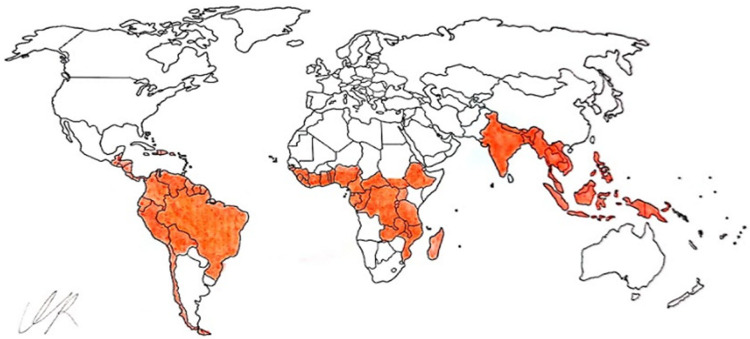
Lessons: It may be of interest to rule out a chronic Strongyloides infection in patients from risk areas (immigrants or those returning from recent trips) before starting treatment with corticosteroids.
Keywords: CSF = cerebrospinal fluid; CT = computed tomography; ELISA = enzyme-linked immunosorbent assay; IgG = immunoglobulin G; MRI = magnetic resonance imaging; Strongyloides stercoralis; corticosteroids; hydrocephalus; meningioma; meningitis.
© 2022 The authors.
Conflict of interest statement
Disclosures The authors report no conflict of interest concerning the materials or methods used in this study or the findings specified in this paper.
Figures



References
-
- Marcos LA, Terashima A, Dupont HL, Gotuzzo E. Strongyloides hyperinfection syndrome: an emerging global infectious disease. Trans R Soc Trop Med Hyg. 2008;102(4):314–318. - PubMed
-
- Fardet L, Généreau T, Cabane J, Kettaneh A. Severe strongyloidiasis in corticosteroid-treated patients. Clin Microbiol Infect. 2006;12(10):945–947. - PubMed
Publication types
LinkOut - more resources
Full Text Sources