


The Senologic International Society Survey on Ductal Carcinoma In Situ: Present and Future
- PMID: 35855198
- PMCID: PMC9255660
- DOI: 10.4274/ejbh.galenos.2022.2022-4-3
The Senologic International Society Survey on Ductal Carcinoma In Situ: Present and Future
Abstract
Objective: Therapeutic management of ductal carcinoma in situ (DCIS) is heterogeneous among countries worldwide, and some treatment indications are still controversial. To investigate DCIS management in different countries; identify both consensual practices and controversial topics; and survey opinions about the future management of DCIS.
Materials and methods: The Senologic International Society network members participated to an online survey using a questionnaire, between November 2021 and February 2022.
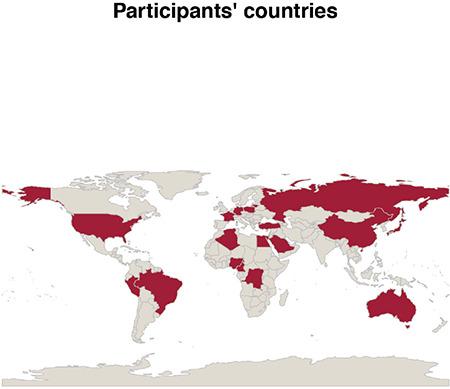
Results: Twenty-two responses from 20 different countries showed that organized breast cancer screening programs were present for 87% participants, and DCIS cases represented 13.7% of all breast cancers. Most participants used the grade classification (100%), the morphological classification (78%) and performed immunohistochemistry assays (73%). In case of conservative treatment, the mean re-excision rate was 10.3% and clear margins of mean 2.5 mm were considered healthy. Radical mastectomy rate was 35.5% with a breast reconstruction rate of 53%. Tumor bed boost indications were heterogeneous, and 73% of participants indicated hormone therapy for hormone-positive DCIS. Surgery and radiotherapy omission for some low-risk DCIS were considered by 73% of participants. Multigene assays were used by 43% of participants. Concerning future changes in DCIS management, participants mostly answered surgical de-escalation (48%), radiotherapy de-escalation (35) and/or active surveillance for some cases (22%).
Conclusion: This survey provided an overview of the current practices of DCIS management worldwide. It showed that some areas are rather consensual: incidence increases over time, treatment in young women, pathological classifications, definition of healthy margins, the skin-sparing mastectomy and immediate breast reconstruction. However, some topics are still debated and result in heterogeneous practices, such as evolution in the age of diagnosis, the benefit of de-escalation in low-risk DCIS among elderly women, indications for hormone therapy, radiotherapy omission, or multigene assays. Further evidence is needed to reach consensus on these points, and innovative approaches are still under evaluation in clinical trials. The International Senologic Society, by its members, encourages precision medicine and personalized treatments for DCIS, to avoid overtreatment and overdiagnosis, and provide better healthcare to women with DCIS.
Keywords: Ductal carcinoma in situ; clinical practices; innovative approaches; precision medicine; survey; treatment de-escalation.
©Copyright 2022 by the the Turkish Federation of Breast Diseases Societies / European Journal of Breast Health published by Galenos Publishing House.
Conflict of interest statement
Conflict of Interest: No conflict of interest was declared by the authors.
References
-
- Cserni G, Chmielik E, Cserni B, Tot T. The new TNM-based staging of breast cancer. Virchows Arch. 2018;472:697–703. - PubMed
-
- Virnig BA, Tuttle TM, Shamliyan T, Kane RL. Ductal carcinoma in situ of the breast: a systematic review of incidence, treatment, and outcomes. J Natl Cancer Inst. 2010;102:170–178. - PubMed
-
- Sørum R, Hofvind S, Skaane P, Haldorsen T. Trends in incidence of ductal carcinoma in situ: the effect of a population-based screening programme. Breast. 2010;19:499–505. - PubMed
-
- Puig-Vives M, Pollan M, Rue M, Osca-Gelis G, Saez M, Izquierdo A, et al. Rapid increase in incidence of breast ductal carcinoma in situ in Girona, Spain 1983-2007. Breast. 2012;21:646–651. - PubMed
LinkOut - more resources
Full Text Sources
