


Autistic people outperform neurotypicals in a cartoon version of the Reading the Mind in the Eyes
- PMID: 35855595
- PMCID: PMC9543219
- DOI: 10.1002/aur.2782
Autistic people outperform neurotypicals in a cartoon version of the Reading the Mind in the Eyes
Abstract
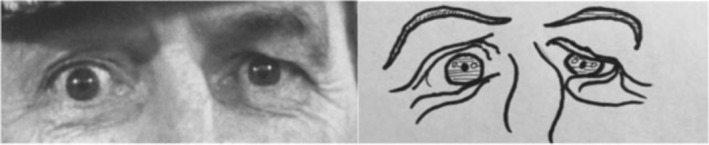
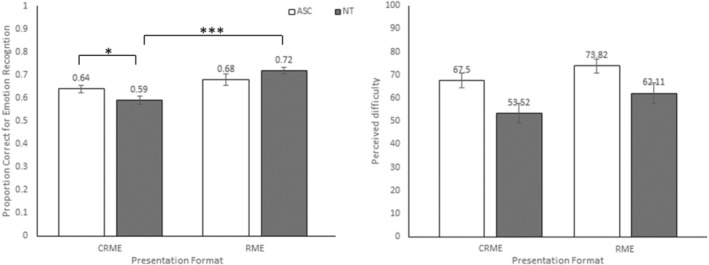
Prior research suggests that while autistic people may demonstrate poorer facial emotion recognition when stimuli are human, these differences lessen when stimuli are anthropomorphic. To investigate this further, this work explores emotion recognition in autistic and neurotypical adults (n = 196). Groups were compared on a standard and a cartoon version of the Reading the Mind in the Eyes test. Results indicated that autistic individuals were not significantly different from neurotypicals on the standard version. However, autistic people outperformed neurotypicals on the cartoon version. The implications for these findings regarding emotion recognition deficits and the social motivation account of autism are discussed and support the view of socio-cognitive differences rather than deficits in this population. LAY SUMMARY: The Reading the Mind in the Eyes test and a cartoon version were tested on autistic and neurotypical adults. Autistic adults were not significantly different on the original test compared to neurotypicals, but they outperformed neurotypical adults on the cartoon version.
Keywords: Reading the Mind in the Eyes; anthropomorphism; autism; cartoon; emotion recognition.
© 2022 The Authors. Autism Research published by International Society for Autism Research and Wiley Periodicals LLC.
Conflict of interest statement
The authors have no conflicts of interest to declare. All co‐authors have seen and agree with the manuscript's contents, and there is no financial interest to report. We certify that the submission is original work and is not under review at any other publication.
Figures
References
-
- Atherton, G. , Lummis, B. , Day, S. X. , & Cross, L. (2018). What am I thinking? Perspective‐taking from the perspective of adolescents with autism. Autism, 23(5), 1186–1200. - PubMed
