


Estimating the number of diseases - the concept of rare, ultra-rare, and hyper-rare
- PMID: 35856030
- PMCID: PMC9287598
- DOI: 10.1016/j.isci.2022.104698
Estimating the number of diseases - the concept of rare, ultra-rare, and hyper-rare
Abstract
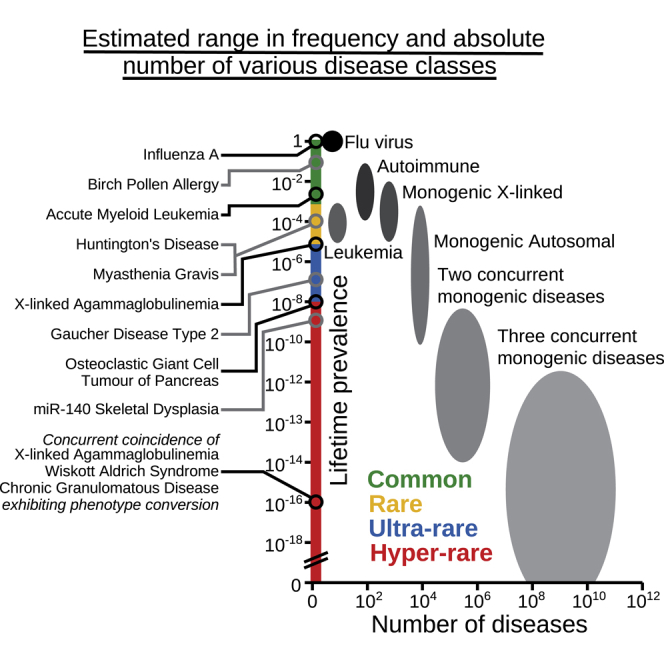
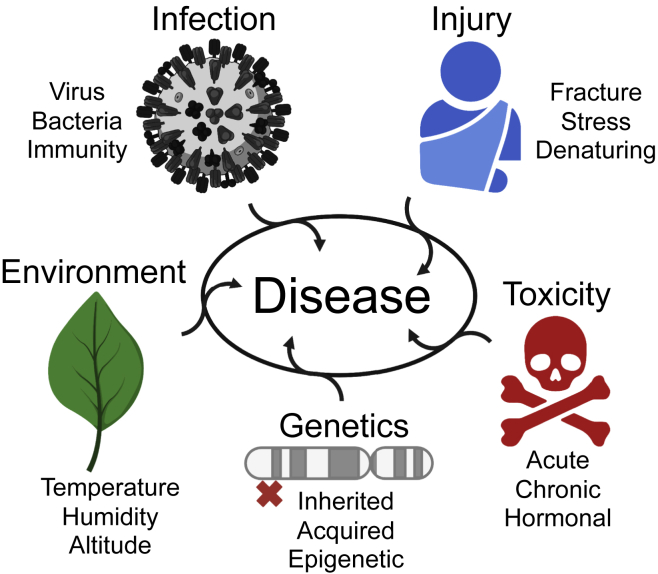
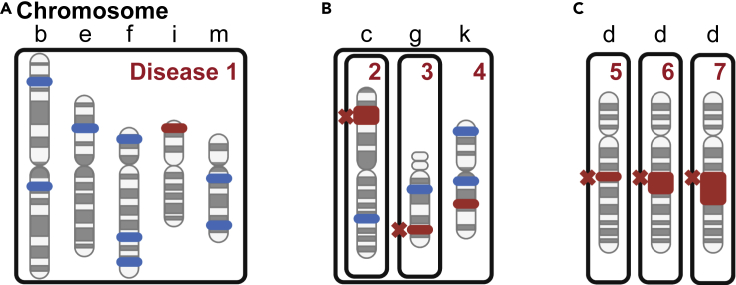
At the dawn of the personalized medicine era, the number of rare diseases has been estimated at 10,000. By considering the influence of environmental factors together with genetic variations and our improved diagnostic capabilities, an assessment suggests a considerably larger number. The majority would be extremely rare, and hence, we introduce the term "hyper-rare," defined as affecting <1/108 individuals. Such disorders would potentially outnumber all currently known rare diseases. Because autosomal recessive disorders are likely concentrated in consanguineous populations, and rare toxicities in rural areas, establishing their existence necessitates a greater reach than is currently viable. Moreover, the randomness of X-linked and gain-of-function mutations greatly compound this challenge. However, whether concurrent diseases actually cause a distinct illness will depend on if their pathological mechanisms interact (phenotype conversion) or not (phenotype maintenance). The hyper-rare disease concept will be important in precision medicine with improved diagnosis and treatment of rare disease patients.
Keywords: Biological sciences; Clinical genetics; Genetics Disease; Health sciences; Human genetics.
© 2022 The Author(s).
Conflict of interest statement
The authors declare no competing interests.
Figures
References
-
- Abate G., Miörner H., Ahmed O., Hoffner S.E. Drug resistance in Mycobacterium tuberculosis strains isolated from re-treatment cases of pulmonary tuberculosis in Ethiopia: susceptibility to first-line and alternative drugs. Int. J. Tubercul. Lung Dis. 1998;2:580–584. - PubMed
-
- Blixt L., Bogdanovic G., Buggert M., Gao Y., Hober S., Healy K., Johansson H., Kjellander C., Mravinacova S., Muschiol S., et al. Covid-19 in patients with chronic lymphocytic leukemia: clinical outcome and B- and T-cell immunity during 13 monthsin consecutive patients. Leukemia. 2022;36:476–481. doi: 10.1038/s41375-021-01424-w. - DOI - PMC - PubMed
Publication types
LinkOut - more resources
Full Text Sources
Other Literature Sources
