


An unexplored angle: T cell antigen discoveries reveal a marginal contribution of proteasome splicing to the immunogenic MHC class I antigen pool
- PMID: 35858315
- PMCID: PMC9303865
- DOI: 10.1073/pnas.2119736119
An unexplored angle: T cell antigen discoveries reveal a marginal contribution of proteasome splicing to the immunogenic MHC class I antigen pool
Abstract
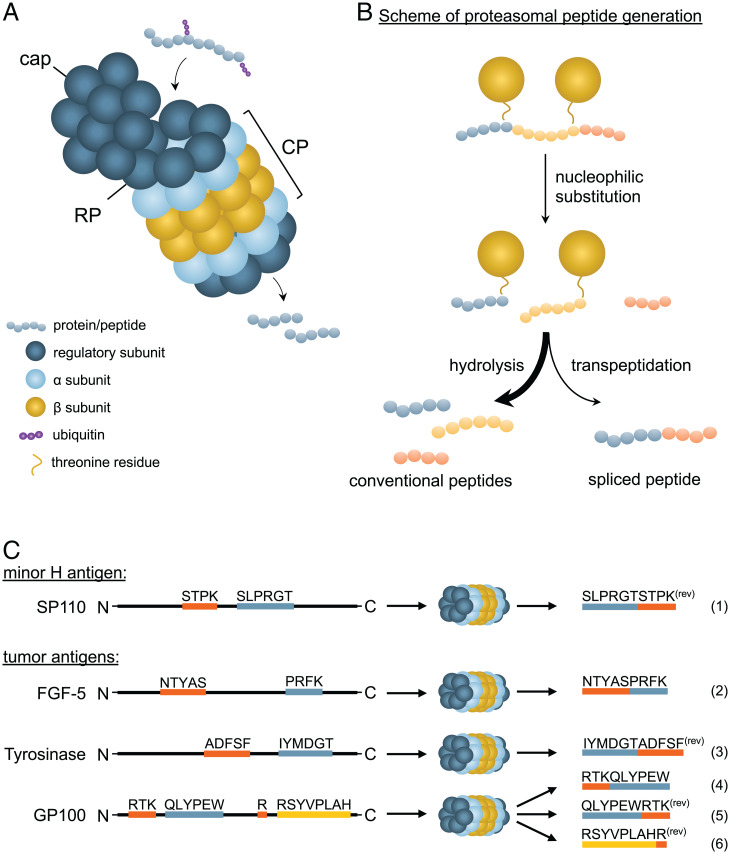
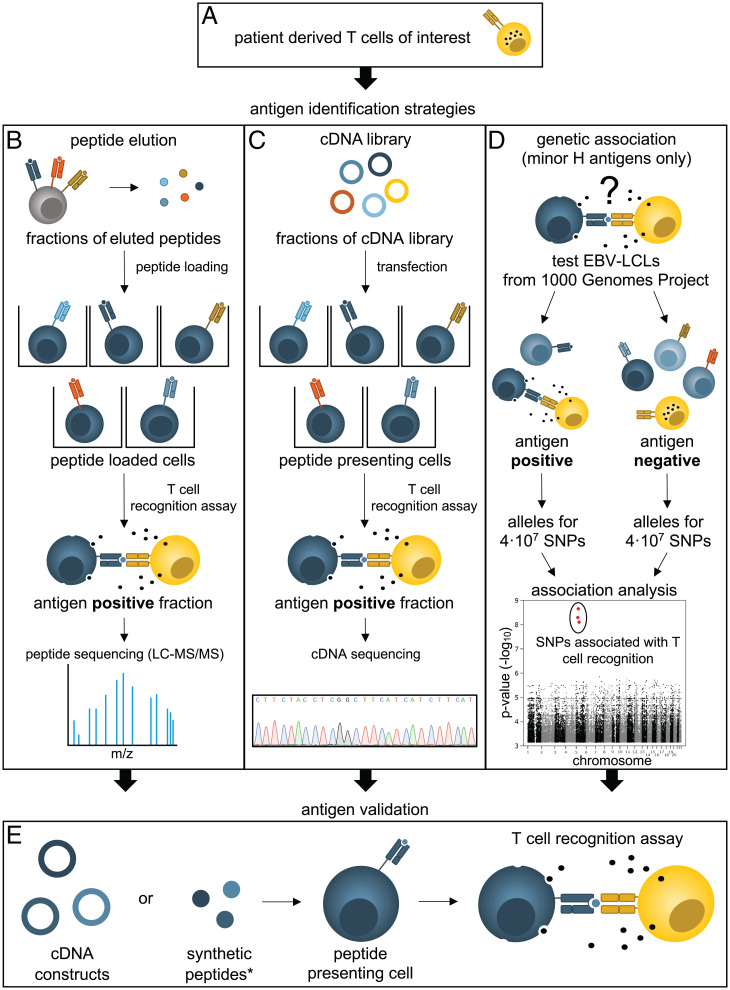
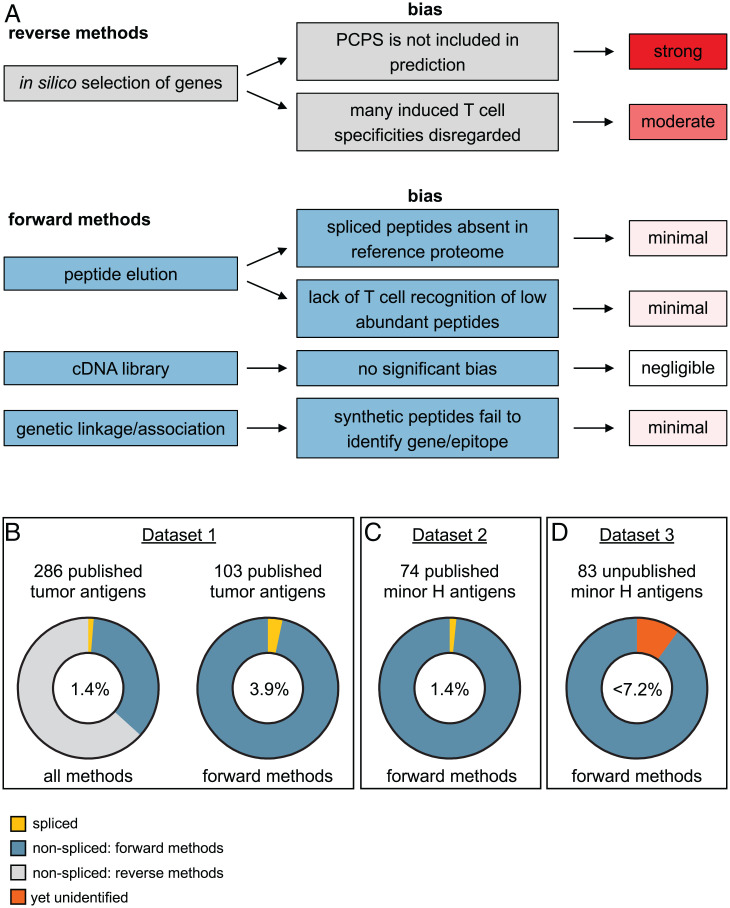
In the current era of T cell-based immunotherapies, it is crucial to understand which types of MHC-presented T cell antigens are produced by tumor cells. In addition to linear peptide antigens, chimeric peptides are generated through proteasome-catalyzed peptide splicing (PCPS). Whether such spliced peptides are abundantly presented by MHC is highly disputed because of disagreement in computational analyses of mass spectrometry data of MHC-eluted peptides. Moreover, such mass spectrometric analyses cannot elucidate how much spliced peptides contribute to the pool of immunogenic antigens. In this Perspective, we explain the significance of knowing the contribution of spliced peptides for accurate analyses of peptidomes on one hand, and to serve as a potential source of targetable tumor antigens on the other hand. Toward a strategy for mass spectrometry independent estimation of the contribution of PCPS to the immunopeptidome, we first reviewed methodologies to identify MHC-presented spliced peptide antigens expressed by tumors. Data from these identifications allowed us to compile three independent datasets containing 103, 74, and 83 confirmed T cell antigens from cancer patients. Only 3.9%, 1.4%, and between 0% and 7.2% of these truly immunogenic antigens are produced by PCPS, therefore providing a marginal contribution to the pool of immunogenic tumor antigens. We conclude that spliced peptides will not serve as a comprehensive source to expand the number of targetable antigens for immunotherapies.
Keywords: PCPS; spliced antigens; tumor antigens.
Conflict of interest statement
Competing interest statement: R.M.S. now works as principal scientist at Neogene Therapeutics BV, which may be perceived as a competing interest.
Figures
References
-
- Warren E. H., et al. , An antigen produced by splicing of noncontiguous peptides in the reverse order. Science 313, 1444–1447 (2006). - PubMed
-
- Hanada K., Yewdell J. W., Yang J. C., Immune recognition of a human renal cancer antigen through post-translational protein splicing. Nature 427, 252–256 (2004). - PubMed
-
- Vigneron N., Ferrari V., Stroobant V., Habib J. A., Van Den Eynde B. J., An antigenic peptide produced by peptide splicing in the proteasome. Science 304, 587–590 (2004). - PubMed
Publication types
MeSH terms
Substances
LinkOut - more resources
Full Text Sources
Other Literature Sources
Medical
Research Materials
