This is a preprint.
Human Epidemiology and RespOnse to SARS-CoV-2 (HEROS): Objectives, Design and Enrollment Results of a 12-City Remote Observational Surveillance Study of Households with Children using Direct-to-Participant Methods
- PMID: 35860216
- PMCID: PMC9298141
- DOI: 10.1101/2022.07.09.22277457
Human Epidemiology and RespOnse to SARS-CoV-2 (HEROS): Objectives, Design and Enrollment Results of a 12-City Remote Observational Surveillance Study of Households with Children using Direct-to-Participant Methods
Update in
-
Human Epidemiology and Response to SARS-CoV-2 (HEROS): objectives, design, and enrollment results of a 12-city remote observational surveillance study of households with children, using direct-to-participant methods.Am J Epidemiol. 2024 Oct 7;193(10):1329-1338. doi: 10.1093/aje/kwae077. Am J Epidemiol. 2024. PMID: 38775275 Free PMC article.
Abstract
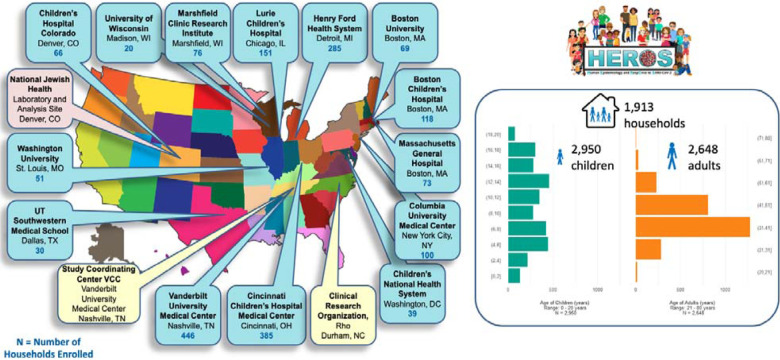
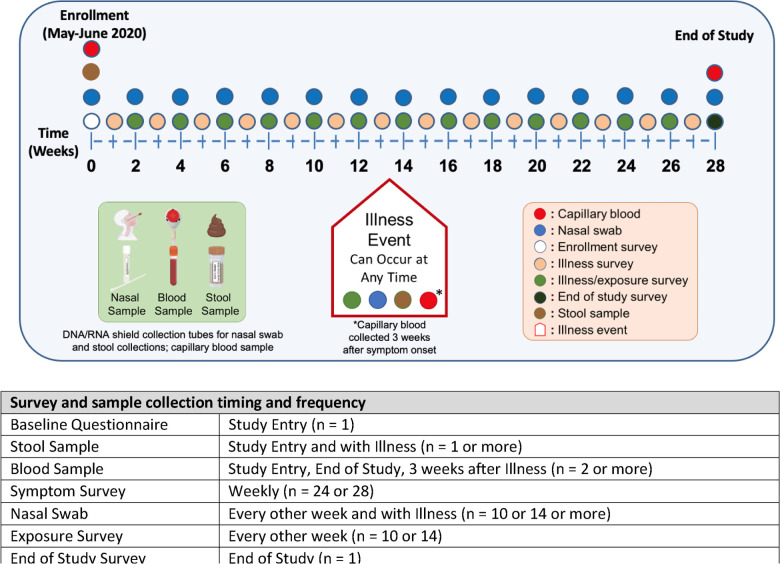
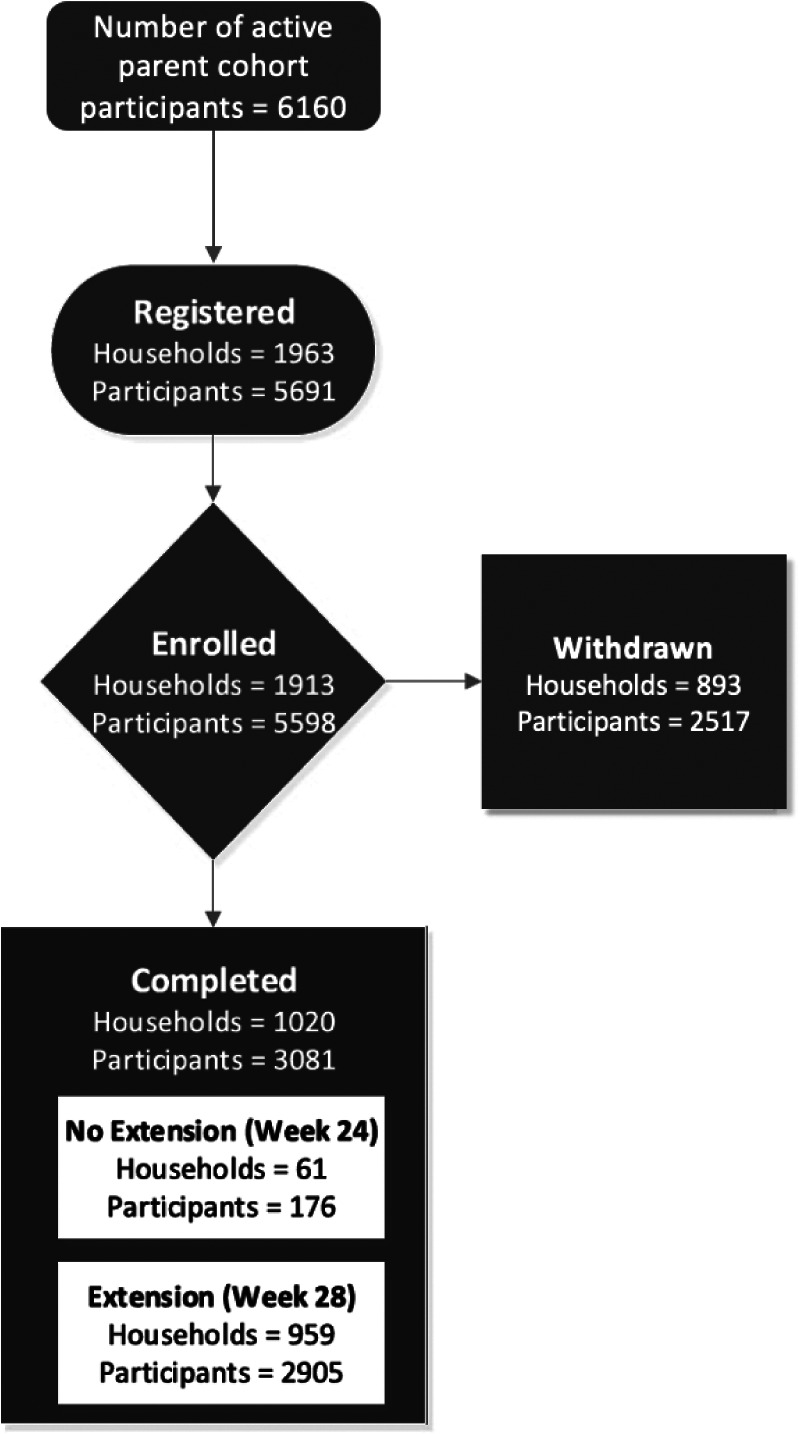
The Human Epidemiology and Response to SARS-CoV-2 (HEROS) is a prospective multi-city 6-month incidence study which was conducted from May 2020-February 2021. The objectives were to identify risk factors for SARS-CoV-2 infection and household transmission among children and people with asthma and allergic diseases, and to use the host nasal transcriptome sampled longitudinally to understand infection risk and sequelae at the molecular level. To overcome challenges of clinical study implementation due to the coronavirus pandemic, this surveillance study used direct-to-participant methods to remotely enroll and prospectively follow eligible children who are participants in other NIH-funded pediatric research studies and their household members. Households participated in weekly surveys and biweekly nasal sampling regardless of symptoms. The aim of this report is to widely share the methods and study instruments and to describe the rationale, design, execution, logistics and characteristics of a large, observational, household-based, remote cohort study of SARS-CoV-2 infection and transmission in households with children. The study enrolled a total of 5,598 individuals, including 1,913 principal participants (children), 1,913 primary caregivers, 729 secondary caregivers and 1,043 other household children. This study was successfully implemented without necessitating any in-person research visits and provides an approach for rapid execution of clinical research.
Conflict of interest statement
Conflict of interest statement The authors declare no relevant conflicts of interest.
Figures
References
-
- Gao YD, Ding M, Dong X, et al. Risk factors for severe and critically ill COVID-19 patients: A review. Allergy 2021;76(2):428–55. - PubMed
-
- 2020 Census Operational Plan. A New Design for the 21st Century. 2015. https://www2.census.gov/programs-surveys/decennial/2020/program-manageme.... U.S. Census Bureau, U.S. Department of Commerce.
-
- Yount SE, Cella D, Blozis S. PROMIS(R): Standardizing the patient voice in health psychology research and practice. Health Psychol 2019;38(5):343–6. - PubMed
Publication types
Grants and funding
LinkOut - more resources
Full Text Sources
Miscellaneous