Review
. 2022 Sep 21;35(3):e0001422.
doi: 10.1128/cmr.00014-22. Epub 2022 Jun 6.

Sensitivity to Vaccines, Therapeutic Antibodies, and Viral Entry Inhibitors and Advances To Counter the SARS-CoV-2 Omicron Variant

Affiliations
Review

Sensitivity to Vaccines, Therapeutic Antibodies, and Viral Entry Inhibitors and Advances To Counter the SARS-CoV-2 Omicron Variant

Hao Zhou et al. Clin Microbiol Rev. .

Abstract

Severe acute respiratory syndrome coronavirus 2 (SARS-CoV-2) keeps evolving and mutating into newer variants over time, which gain higher transmissibility, disease severity, and spread in communities at a faster rate, resulting in multiple waves of surge in Coronavirus Disease 2019 (COVID-19) cases. A highly mutated and transmissible SARS-CoV-2 Omicron variant has recently emerged, driving the extremely high peak of infections in almost all continents at an unprecedented speed and scale. The Omicron variant evades the protection rendered by vaccine-induced antibodies and natural infection, as well as overpowers the antibody-based immunotherapies, raising the concerns of current effectiveness of available vaccines and monoclonal antibody-based therapies. This review outlines the most recent advancements in studying the virology and biology of the Omicron variant, highlighting its increased resistance to current antibody-based therapeutics and its immune escape against vaccines. However, the Omicron variant is highly sensitive to viral fusion inhibitors targeting the HR1 motif in the spike protein, enzyme inhibitors, involving the endosomal fusion pathway, and ACE2-based entry inhibitors. Omicron variant-associated infectivity and entry mechanisms of Omicron variant are essentially distinct from previous characterized variants. Innate sensing and immune evasion of SARS-CoV-2 and T cell immunity to the virus provide new perspectives of vaccine and drug development. These findings are important for understanding SARS-CoV-2 viral biology and advances in developing vaccines, antibody-based therapies, and more effective strategies to mitigate the transmission of the Omicron variant or the next SARS-CoV-2 variant of concern.

Keywords: SARS-CoV-2 Omicron; T cell response; antibodies; booster; entry inhibitors; fusion inhibitors; immune evasion; pan-CoV vaccines; resistance.


Conflict of interest statement

The authors declare a conflict of interest. S.J. is one of the inventors in the applications of patents related to pan-sarbecovirus vaccine and pan-CoV fusion inhibitors. Other authors declare no competing interests.

Figures
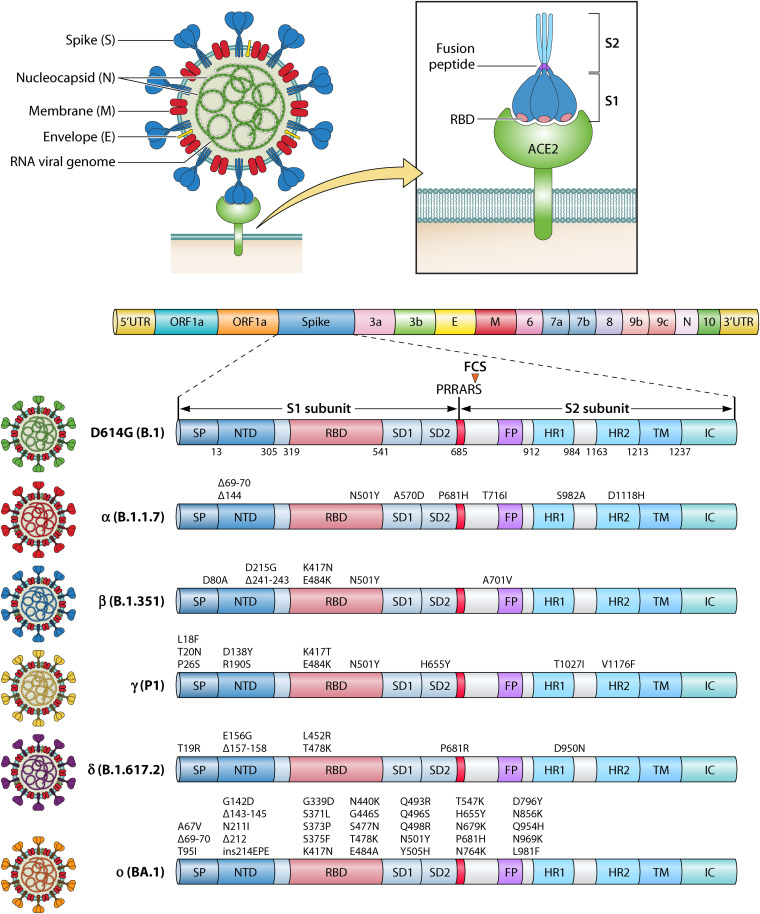
FIG 1
FIG 1
Structural depiction of SARS-CoV-2 virion and genomic domains with mutations in the spike. Mutations are shown in spikes in VOCs from the Alpha to the Omicron (BA.1) variants. Viral genomic RNA, membrane (M), spike glycoprotein (S), nucleocapsid (N), envelope (E) are shown on the left. S binds to ACE2 and primes viral fusion. Schematic genomic structures are shown on top right. Domains in WT S and mutations in all current variants of concern are shown. The furin cleavage Site (FCS) PRRAS between S1 and S2 subunit is indicated in red. SP, signal peptide; NTD, N-terminal domain; RBD, receptor-binding domain; SD1, subdomain 1; SD2, subdomain 2; FP, fusion peptide; HR1, heptad repeat 1; HR2, heptad repeat 2; TM, transmembrane region; IC, intracellular domain.
FIG 2
FIG 2
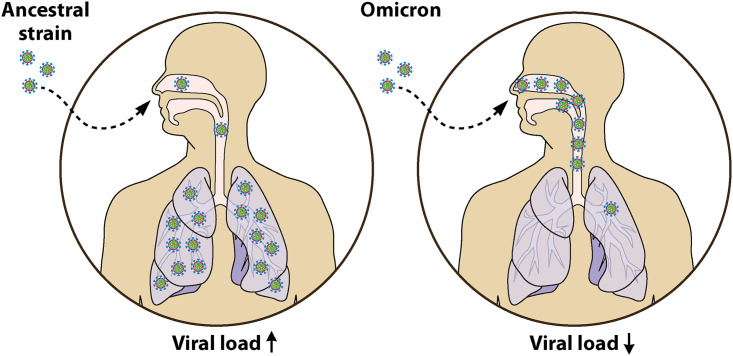
Lower replication competence of the Omicron variant in human lungs. The SARS-CoV-2 Omicron variant has evolved into an upper-airway specialist, thriving in the throat and nose but not in the lower airway system, where the lung is the main target of the other prior SARS-CoV-2 variants.
FIG 3
FIG 3
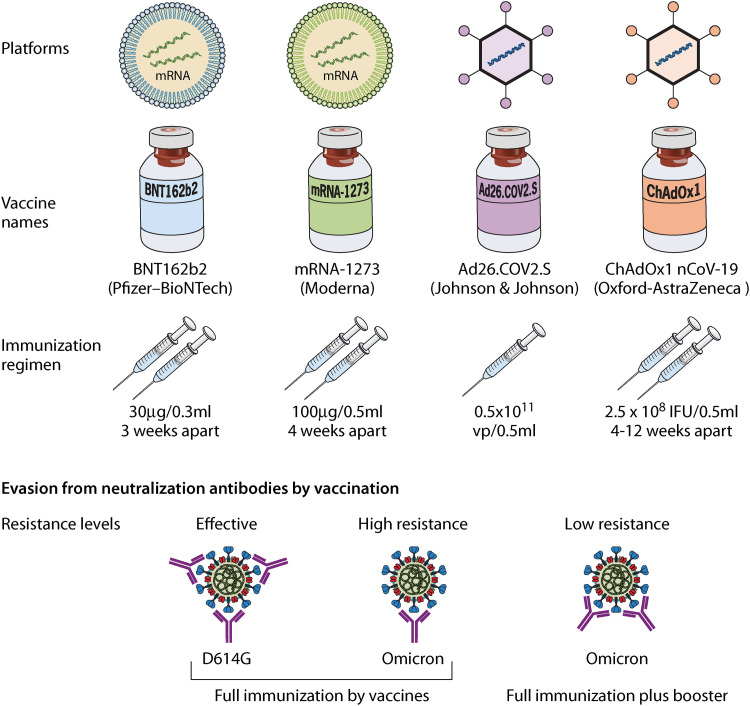
Resistance of the Omicron variant against to neutralizing antibodies elicited by COVID-19 vaccines. A representative vaccine based on mRNA and the viral vector platform and regimen of injection are shown at the top. The Omicron variant shows significant resistance against neutralization by vaccine-induced antibodies. A third booster increases the neutralization titer against the Omicron variant.
FIG 4
FIG 4
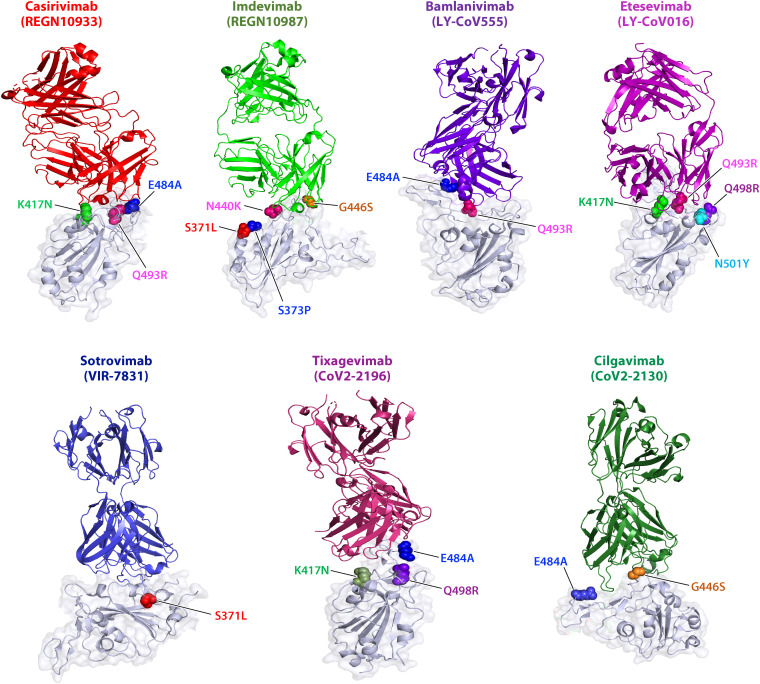
Resistance of the Omicron variant to MAbs and responsible residues that confer resistance. Regeneron Abs (Casirivimab and Imdevimab), Eli Lilly Abs (Bamlanivimab and Etesevimab), and AstraZeneca Abs (Tixagevimab/CoV2-2196 and Cilgavimab/CoV2-2130), as well as Sotrovimab (VIR-7831), with each antibody binding to S protein, are shown via three-dimensional modeling. The binding motifs that confer resistance are highlighted in color.
FIG 5
FIG 5
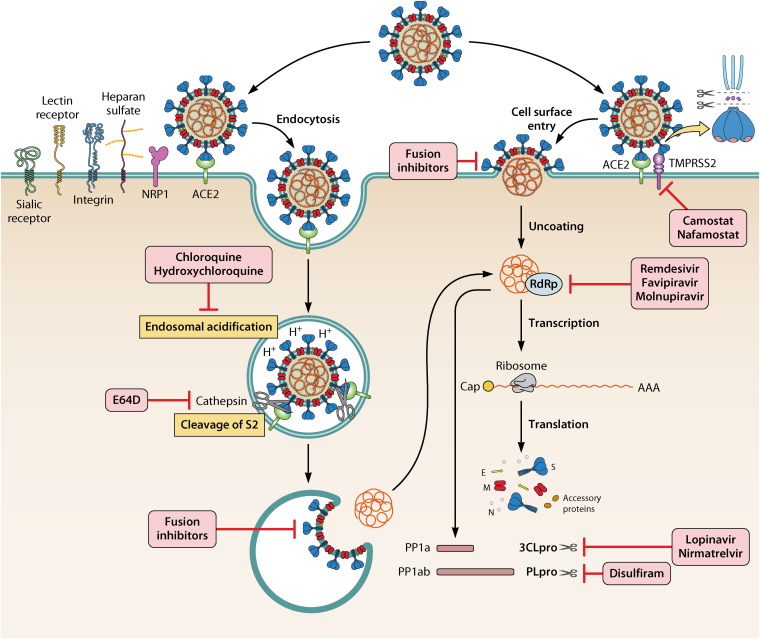
Fusion and entry mechanisms of SARS-CoV-2. SARS-CoV-2 enters the host cell via two different pathways: TMPRSS2-mediated cytoplasm membrane fusion and cathepsin-mediated endosomal membrane fusion. Peptide-based pan-CoV fusion inhibitors can inhibit both fusion pathways, while the inhibitors targeting TMPRSS2 and cathepsin L are expected to inhibit the cytoplasm and endosomal membrane fusion pathways, respectively. Chloroquine and hydroxychloroquine as agents targeting the endosomal acidification can inhibit SARS-CoV-2 S protein-mediated endosomal membrane fusion. Infection with the Omicron variant is not blocked by TMPRSS2 inhibitor (Camstat or Nafamostat) but is instead largely mediated via the endocytic pathway.
FIG 6
FIG 6
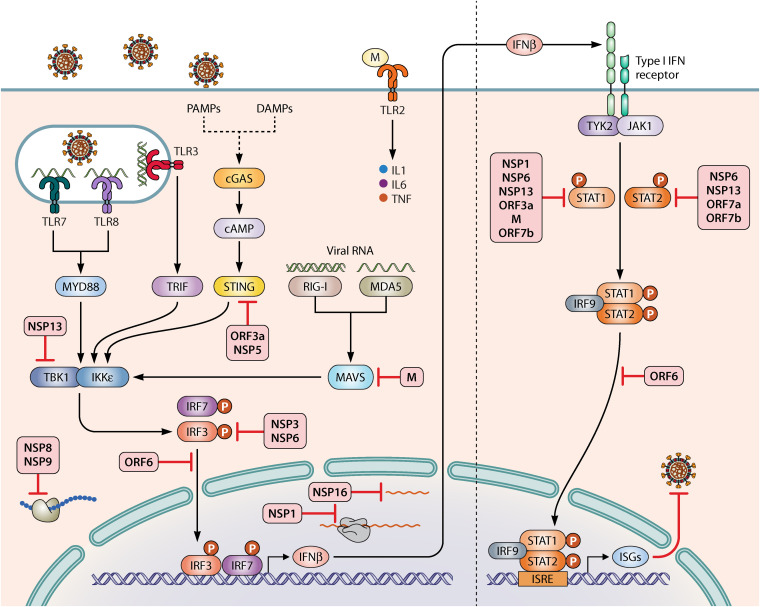
Immune sensing and antagonism of SARS-CoV-2 to inhibit IFN responses. Immune sensing of SARS-CoV-2 by host pattern recognition receptors activates IFN expression and secretion (left). Secreted IFNs bind to IFN receptors to trigger IFN-stimulated gene production in an autocrine or paracrine manner (right). SARS-CoV-2 proteins that can target each layer of IFN pathway are shown as red inhibition signs.

References

    1. Wang H, Paulson KR, Pease SA, Watson S, Comfort H, Zheng P, Aravkin AY, Bisignano C, Barber RM, Alam T, Fuller JE, May EA, Jones DP, Frisch ME, Abbafati C, Adolph C, Allorant A, Amlag JO, Bang-Jensen B, Bertolacci GJ, Bloom SS, Carter A, Castro E, Chakrabarti S, et al. 2022. Estimating excess mortality due to the COVID-19 pandemic: a systematic analysis of COVID-19-related mortality, 2020-21. Lancet 399:1513–1536. 10.1016/S0140-6736(21)02796-3. - DOI - PMC - PubMed
    1. Li X, Voorneveld M, de Koster R. 2022. Business transformation in an age of turbulence: lessons learned from COVID-19. Technol Forecast Soc Change 176:121452. 10.1016/j.techfore.2021.121452. - DOI - PMC - PubMed
    1. Amankwah-Amoah J, Khan Z, Wood G. 2021. COVID-19 and business failures: the paradoxes of experience, scale, and scope for theory and practice. Eur Management J 39:179–184. 10.1016/j.emj.2020.09.002. - DOI - PMC - PubMed
    1. Kaiser JC, Stathopoulos GT. 2020. Socioeconomic correlates of SARS-CoV-2 and influenza H1N1 outbreaks. Eur Respir J 56:2001400. 10.1183/13993003.01400-2020. - DOI - PMC - PubMed
    1. Mahase E. 2022. Covid-19: what do we know about omicron sublineages? BMJ 376:o358. 10.1136/bmj.o358. - DOI - PubMed

MeSH terms

Supplementary concepts