


The Effects of Motivational Messages Sent to Emergency Nurses During the COVID-19 Pandemic on Job Satisfaction, Compassion Fatigue, and Communication Skills: A Randomized Controlled Trial
- PMID: 35864005
- PMCID: PMC9226325
- DOI: 10.1016/j.jen.2022.06.001
The Effects of Motivational Messages Sent to Emergency Nurses During the COVID-19 Pandemic on Job Satisfaction, Compassion Fatigue, and Communication Skills: A Randomized Controlled Trial
Erratum in
-
Erratum to The Effects of Motivational Messages Sent to Emergency Nurses During the COVID-19 Pandemic on Job Satisfaction, Compassion Fatigue, and Communication Skills: A Randomized Controlled Trial [Journal of Emergency Nursing, Volume 48, Issue 5, September 2022, Pages 547-558]Sonay Goktas, PhD, RN, Elif Gezginci, PhD, RN, and Hilal Kartal, RN, Istanbul, Turkey.J Emerg Nurs. 2023 Jan;49(1):149. doi: 10.1016/j.jen.2022.10.008. Epub 2022 Oct 31. J Emerg Nurs. 2023. PMID: 36328859 Free PMC article. No abstract available.
Abstract
Introduction: During the COVID-19 pandemic, emergency nurses have been adversely affected physically, socially, and psychologically by factors such as increased workload, longer working hours, isolation from family, and limited resources. This study aimed to investigate the effect of motivational messages sent to emergency nurses during the COVID-19 pandemic on their job satisfaction, compassion fatigue, and communication skills.
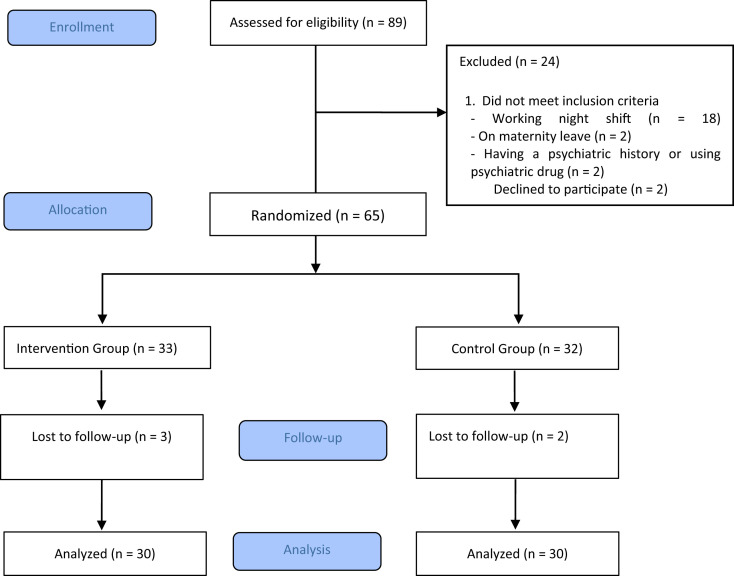
Methods: This was a randomized controlled experimental study. The study was conducted with 60 emergency nurses in 2 training and research hospitals in Istanbul between July 31 and August 31, 2021. The participants were randomly assigned to the intervention and control groups. Participants in the intervention group (n = 30) received daily motivational messages to their mobile phones by short message service for 21 days; those in the control group (n = 30) received no motivational messages. The Job Satisfaction Scale, Compassion Fatigue Scale, and Communication Skills Scale were administered before and after the intervention.
Results: The mean age was 29.8 (SD = 7.5) and 28.7 years (SD = 6.9) in the intervention and control groups, respectively. Before the intervention, there were no significant differences in the groups' scores for job satisfaction (P = .561), compassion fatigue (P = .687), or communication skills (P = .355). After the intervention, the intervention group had significantly higher scores for job satisfaction (P < .001) and communication skills (P < .001) and significantly lower compassion fatigue scores than the control group (P < .001).
Discussion: Our results suggest that motivational messages sent to emergency nurses during the COVID-19 pandemic increase job satisfaction and improve communication skills while reducing compassion fatigue.
Keywords: Communication skills; Compassion fatigue; Emergency; Job satisfaction; Motivation; Nursing.
Copyright © 2022 Emergency Nurses Association. Published by Elsevier Inc. All rights reserved.
Figures
References
-
- Aciksari K., Kinik K. Process management and outcomes of the emergency department of a training and research hospital in Turkey during the coronavirus disease 2019 pandemic. Anatol Clin. 2020;25(1):263–283. doi: 10.21673/anadoluklin.740776. - DOI
Publication types
MeSH terms
LinkOut - more resources
Full Text Sources
Medical
