


Prevalence and patterns of the concurrent use of anticholinergics for the motor symptoms of Parkinson's disease and acetylcholinesterase inhibitors in Parkinson's disease patients with dementia: a cross-sectional study using Korea National Health Insurance claims data
- PMID: 35864474
- PMCID: PMC9306150
- DOI: 10.1186/s12877-022-03296-w
Prevalence and patterns of the concurrent use of anticholinergics for the motor symptoms of Parkinson's disease and acetylcholinesterase inhibitors in Parkinson's disease patients with dementia: a cross-sectional study using Korea National Health Insurance claims data
Abstract
Background: The concurrent use of anticholinergics and acetylcholinesterase inhibitors (ACHEIs) in Parkinson's disease (PD) patients with dementia should be avoided because the opposing pharmacological actions of both drugs reduce the treatment efficacy. We aimed to investigate the prevalence of the concurrent use of these two types of drugs in Korean patients.
Methods: In the 2017 Health Insurance Review and Assessment Service-National Aged Patient Sample data, comprising insurance claims records for a 10% random sample of patients aged ≥ 65 years in Korea, "concurrent use" was defined as the overlapping of anticholinergic and ACHEI doses for at least 2 months.
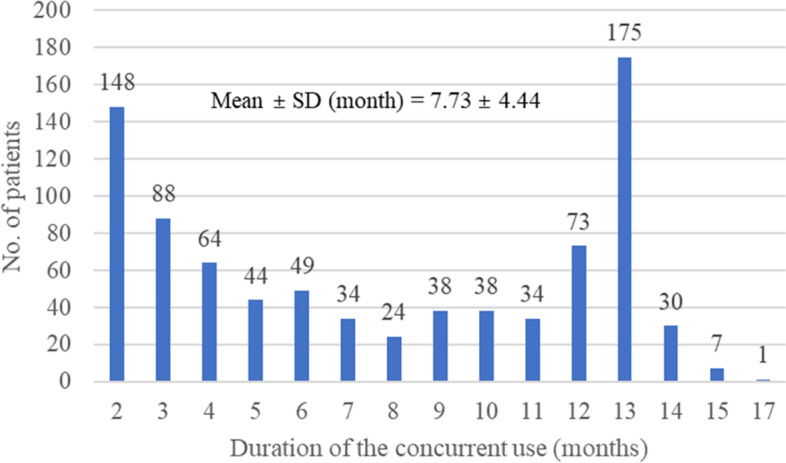
Results: Among 8,845 PD patients with dementia, 847 (9.58%) were co-administered anticholinergics, used to treat the motor symptoms of PD, and ACHEIs for a mean duration of 7.7 months. A total of 286 (33.77% of all co-administered) patients used both drug types concurrently all year. About 80% of concurrent users were prescribed each drug by the same prescriber, indicating that coadministration may not be due to a lack of information sharing between providers. Logistic regression analysis showed that patients mainly treated at clinics (odds ratio (OR), 1.541; 95% confidence interval (CI), 1.158-2.059), hospitals (OR, 2.135; 95% CI, 1.586-2.883), and general hospitals (OR, 1.568; 95% CI, 1.221-2.028) were more likely to be co-prescribed anticholinergics and ACHEIs than those mainly treated at tertiary-care hospitals. PD patients with dementia treated at healthcare organizations located in areas other than the capital city had an approximately 22% higher risk of concurrent use (OR: 1.227, 95% CI: 1.046-1.441).
Conclusions: The concurrent use of anticholinergics for the motor symptoms of PD and ACHEIs in elderly Korean PD patients with dementia cannot be ignored, and strategies that mitigate potentially inappropriate concurrent drug use are required.
Keywords: Acetylcholinesterase inhibitor; Cholinergic antagonist; Dementia; Drug utilization; Insurance claims data; Parkinson’s disease.
© 2022. The Author(s).
Conflict of interest statement
The authors declare that there is no conflict of interest.
Figures
References
-
- Purves D, Augustine GJ, Fitzpatrick D, Hall WC, Lamantia A-S, Mcnamara JO, et al. Neuroscience: Sinauer Associates, Inc.; 2004.
-
- Health Insurance Review and Assessment Service. Healthcare bigdata system. https://opendata.hira.or.kr/home.do. Accessed 10 Jan 2019.
MeSH terms
Substances
LinkOut - more resources
Full Text Sources
Medical
