


Precautionary Allergen Labelling in Serbia: Market Audit and Consumers' Perception
- PMID: 35865067
- PMCID: PMC9276614
- DOI: 10.18502/ijph.v51i3.8935
Precautionary Allergen Labelling in Serbia: Market Audit and Consumers' Perception
Abstract
Background: Precautionary allergen labels (PAL) should be used to indicate the possibility of allergen presence in the food. This study aimed to determine the prevalence and types of precautionary labeling statements on different pre-packaged food products in retail stores in Belgrade, Serbia, as well as to assess consumers' attitudes and behavior towards PAL statements.
Methods: This was a descriptive study. The following characteristics of 1404 pre-packaged foods were analyzed: prevalence of PAL, listed food allergens on PAL, and the types of the advisory terminology. In the group of 275 participants (94 with food allergies, and 181 persons who purchasing food for a household member with food allergy) reading practice of PAL, purchasing practice based on PAL, and the opinion about PAL statements credibility were evaluated.
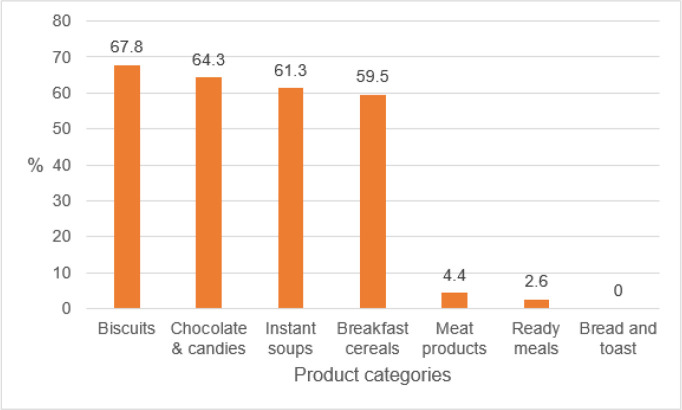
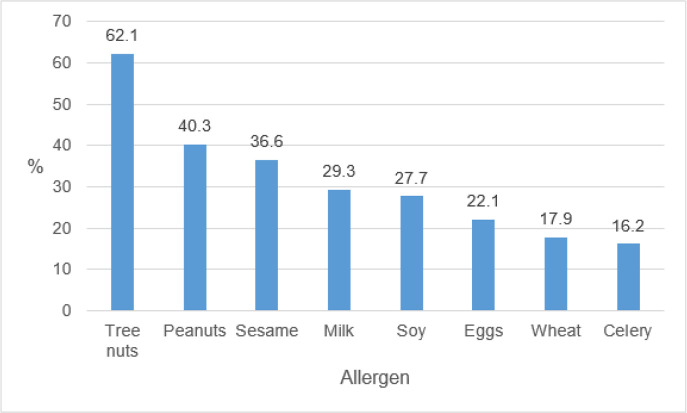
Results: Overall, 33.9% of products had precautionary statements for one or more allergens. "Tree nuts" were the most common allergens listed in the PAL. The most common type of PAL was "May contain traces of x [allergen]" (52.7%). The PAL was always read by half of the participants. Less than half (43.3%) of the participants incorrectly believed that PAL is regulated by national law. A quarter of participants thought that the PAL statements are trustworthy.
Conclusion: PAL statements frequently are not user-friendly and are not providing sufficient protection for food allergic patients. To gain buyers' confidence, protect health and provide security, the necessity for the strategies that would regulate PAL by the law exists.
Keywords: Allergen labeling; Consumer attitudes; Food safety; Precautionary allergen labeling.
Copyright © 2022 Davidović et al. Published by Tehran University of Medical Sciences.
Conflict of interest statement
Conflict of interest The authors declare that there is no conflict of interest.
Figures
References
-
- Sicherer SH, Sampson HA. (2018). Food allergy: A review and update on epidemiology, pathogenesis, diagnosis, prevention, and management. J Allergy Clin Immunol, 141 (1): 41–58. - PubMed
-
- Greenhawt M. (2016). Food allergy quality of life and living with food allergy. Curr Opin Allergy Clin Immunol, 16 (3): 284–90. - PubMed
-
- Gupta R, Holdford D, Bilaver L, et al. (2013). The Economic Impact of Childhood Food Allergy in the United States. JAMA Pediatr, 167 (11): 1026–31. - PubMed
-
- Shah F, Shi A, Ashley J, et al. (2019). Peanut Allergy: Characteristics and Approaches for Mitigation. Compr Rev Food Sci Food Saf, 18 (5): 1361–87. - PubMed
-
- National Academies of Sciences, Engineering and Medicine (2017). Finding a path to safety in food allergy: assessment of the global burden, causes, prevention, management, and public policy. The National Academies Press. Washington, DC. - PubMed
LinkOut - more resources
Full Text Sources