


Pilot production of a sensitive ELISA kit and an immunochromatographic strip for rapid detecting citrinin in fermented rice
- PMID: 35865211
- PMCID: PMC9264126
- DOI: 10.1039/d2ra02823a
Pilot production of a sensitive ELISA kit and an immunochromatographic strip for rapid detecting citrinin in fermented rice
Abstract
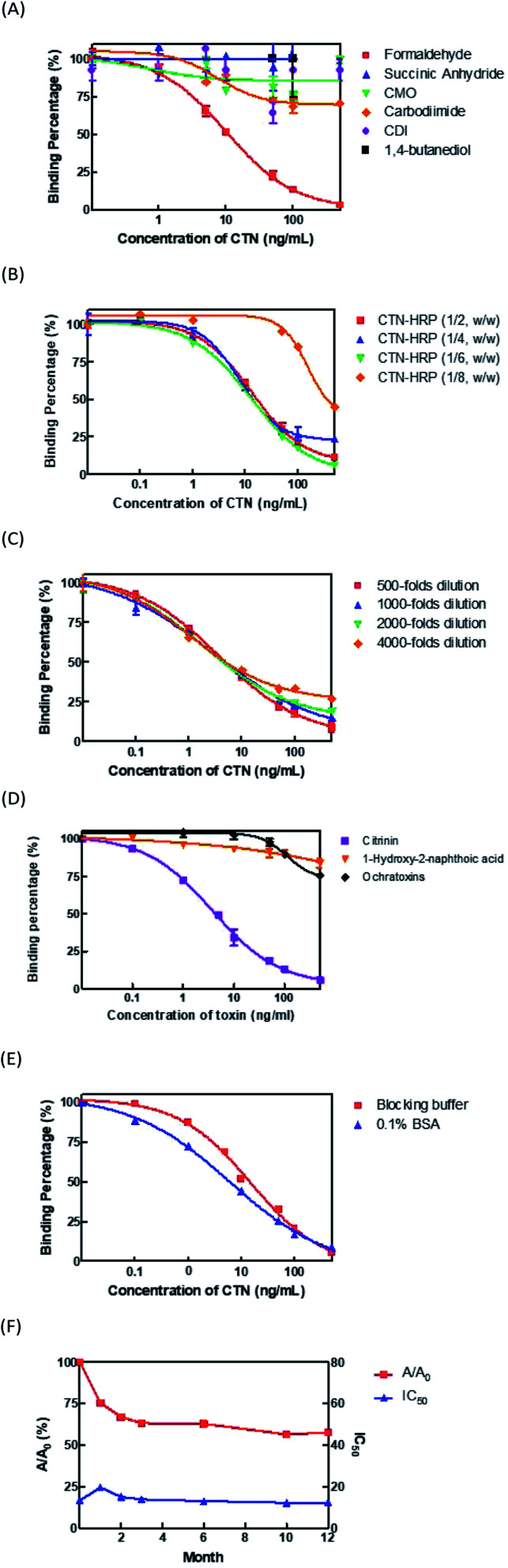
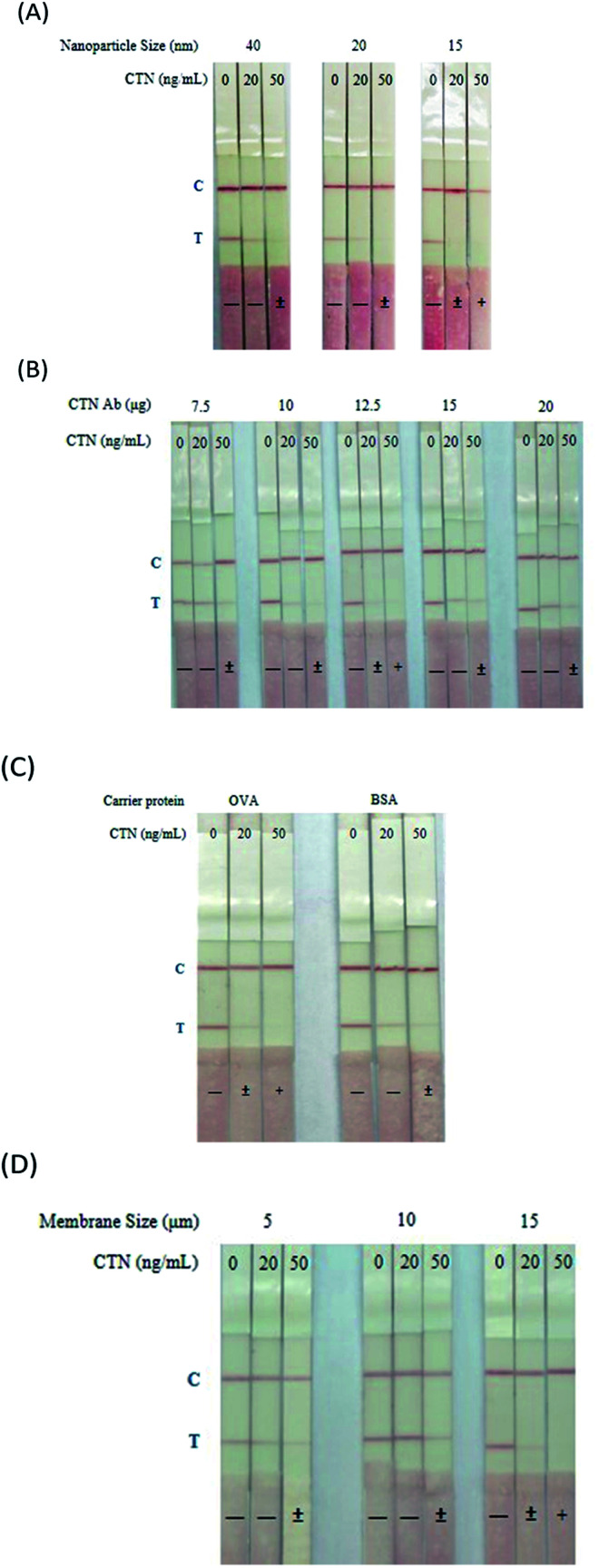
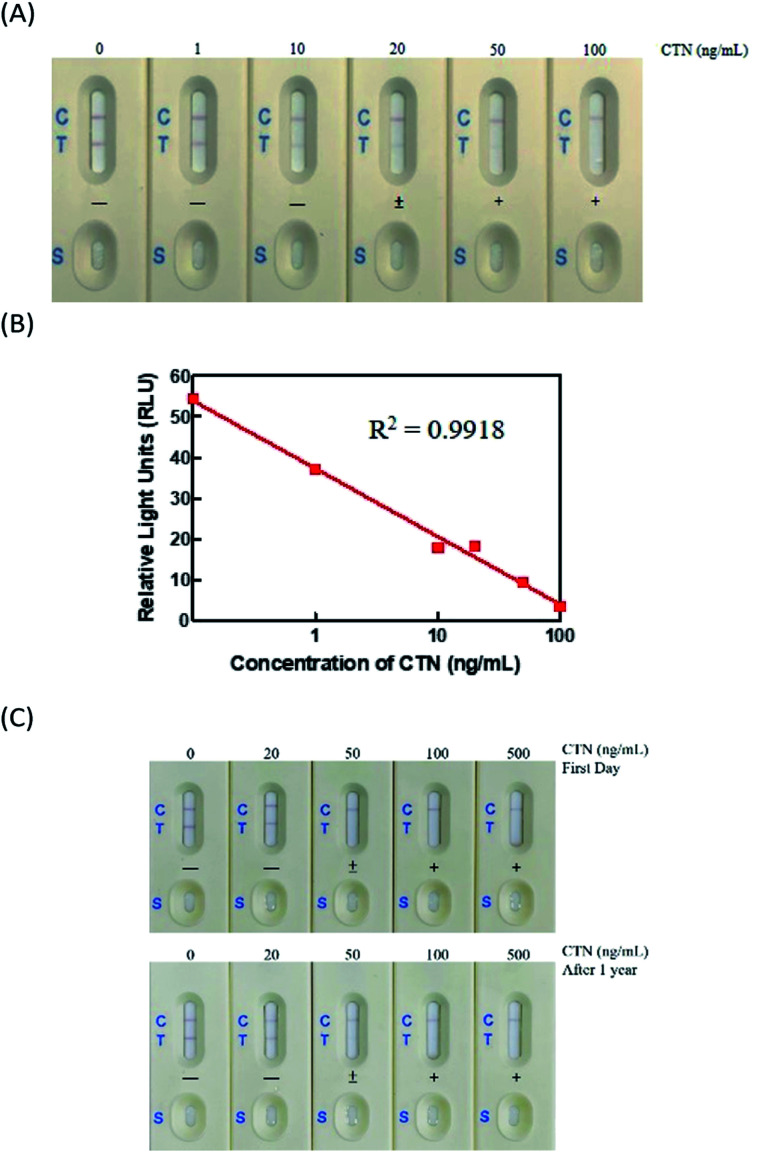
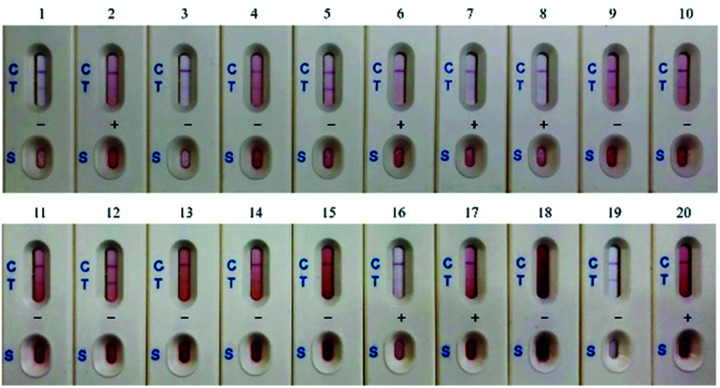
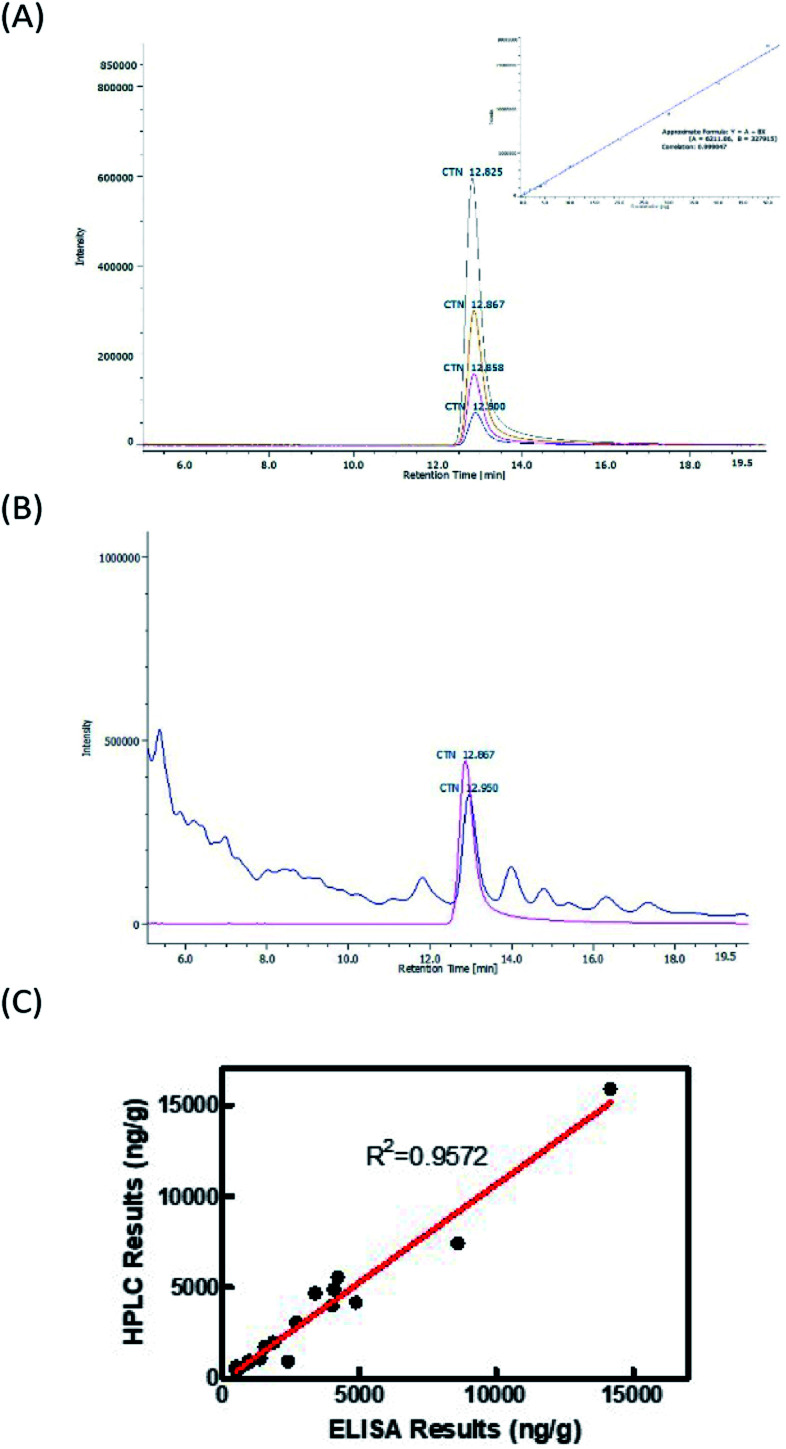
Citrinin (CTN) is a mycotoxin primarily produced by Monascus species. Excess consumption of CTN may lead to nephrotoxicity and hepatotoxicity. A pilot study for commercial production of competitive direct enzyme-linked immunosorbent assay (cdELISA) kit and an immunochromatographic strip (immunostrip) for screening CTN in red yeast rice is established in this study. The coating antibody and the CTN-horse radish peroxidase (HRP) concentrations were optimized to increase the sensitivity and specificity of cdELISA kit. The conjugation methods/ratios of CTN to HRP as well as the long-term stability of kit components were also evaluated. The IC50 and detection limit of the ELISA kit were determined to be 4.1 and 0.2 ng mL-1, respectively. Analysis of 20 red yeast rice samples using ELISA kits revealed the contamination levels of CTN from 64 to 29 404 ng g-1. The on-site rapid detection of CTN with the immunostrip showed that CTN levels in seven samples exceeded the regulatory limit of 5 ppm. Additionally, the coefficient correlation between the results of HPLC and ELISA kits of 20 samples was 0.96. Sensitive and convenient tools at commercial levels for detection of CTN contamination in food are established herein to protect the health of the public.
This journal is © The Royal Society of Chemistry.
Conflict of interest statement
The authors declare no conflict of interest.
Figures
Similar articles
-
Development of a Sensitive Enzyme-Linked Immunosorbent Assay and Rapid Gold Nanoparticle Immunochromatographic Strip for Detecting Citrinin in Monascus Fermented Food.Toxins (Basel). 2018 Sep 2;10(9):354. doi: 10.3390/toxins10090354. Toxins (Basel). 2018. PMID: 30200526 Free PMC article.
-
Sensitive enzyme-linked immunosorbent assay and rapid one-step immunochromatographic strip for fumonisin B1 in grain-based food and feed samples.J Sci Food Agric. 2010 Apr 30;90(6):1020-6. doi: 10.1002/jsfa.3911. J Sci Food Agric. 2010. PMID: 20355142
-
The Preparation and Identification of a Monoclonal Antibody against Citrinin and the Development of Detection via Indirect Competitive ELISA.Toxins (Basel). 2017 Mar 17;9(3):110. doi: 10.3390/toxins9030110. Toxins (Basel). 2017. PMID: 28304351 Free PMC article.
-
Toxicological properties of citrinin.Arh Hig Rada Toksikol. 2009 Dec;60(4):457-64. doi: 10.2478/10004-1254-60-2009-1992. Arh Hig Rada Toksikol. 2009. PMID: 20061247 Review.
-
Monascus spp. and citrinin: Identification, selection of Monascus spp. isolates, occurrence, detection and reduction of citrinin during the fermentation of red fermented rice.Int J Food Microbiol. 2022 Oct 16;379:109829. doi: 10.1016/j.ijfoodmicro.2022.109829. Epub 2022 Jul 8. Int J Food Microbiol. 2022. PMID: 35863149 Review.
Cited by
-
Development of an Enzyme-Linked Immunosorbent Assay Based on a Monoclonal Antibody for the Rapid Detection of Citrinin in Wine.Foods. 2024 Dec 25;14(1):27. doi: 10.3390/foods14010027. Foods. 2024. PMID: 39796317 Free PMC article.
-
Novel enzyme-linked aptamer-antibody sandwich assay and hybrid lateral flow strip for SARS-CoV-2 detection.J Nanobiotechnology. 2024 Jan 3;22(1):5. doi: 10.1186/s12951-023-02191-9. J Nanobiotechnology. 2024. PMID: 38169397 Free PMC article.
References
-
- Cicero A. F. G. Recenti Prog. Med. 2018;109:154–157. - PubMed
-
- Xiong Z. Cao X. Wen Q. Chen Z. Cheng Z. Huang X. Zhang Y. Long C. Zhang Y. Huang Z. Food Chem. Toxicol. 2019;131:110585–110589. - PubMed
-
- Chu F. S. Mutat. Res. 1991;259:291–306. - PubMed
-
- Sabater-Vilar M. Maas R. F. Fink-Gremmels J. Mutat. Res. 1999;444:7–16. - PubMed
LinkOut - more resources
Full Text Sources
