


Human-nature connectedness as a pathway to sustainability: A global meta-analysis
- PMID: 35865265
- PMCID: PMC9286792
- DOI: 10.1111/conl.12852
Human-nature connectedness as a pathway to sustainability: A global meta-analysis
Abstract
Internationally agreed sustainability goals are being missed. Here, we conduct global meta-analyses to assess how the extent to which humans see themselves as part of nature-known as human-nature connectedness (HNC)-can be used as a leverage point to reach sustainability. A meta-analysis of 147 correlational studies shows that individuals with high HNC had more pronature behaviours and were significantly healthier than those with low HNC. A meta-analysis of 59 experimental studies shows significant increases in HNC after manipulations involving contact with nature and mindfulness practices. Surprisingly, this same meta-analysis finds no significant effect of environmental education on HNC. Thus, HNC is positively linked to mind-sets that value sustainability and behaviours that enhance it. Further, we argue that HNC can be enhanced by targeted practices, and we identify those most likely to succeed. Our results suggest that enhancing HNC, via promotion of targeted practices, can improve sustainability and should be integrated into conservation policy.
Keywords: environmental education; human health; human–nature connectedness; meta‐analysis; nature conservation; nature‐based solutions; people and nature; proenvironmental behavior; sustainability.
© 2021 The Authors. Conservation Letters published by Wiley Periodicals LLC.
Conflict of interest statement
The authors declare no conflict of interest.
Figures
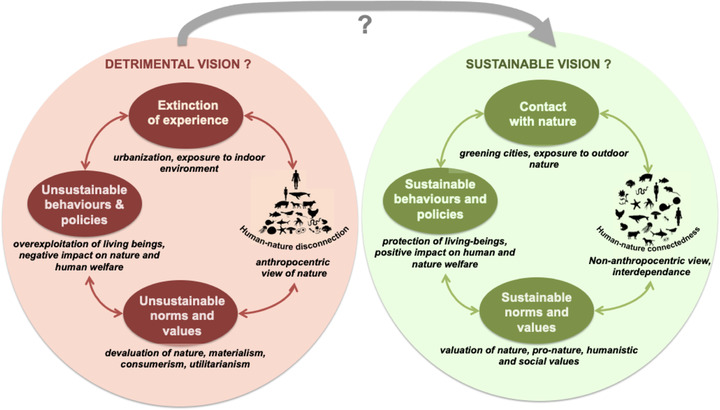
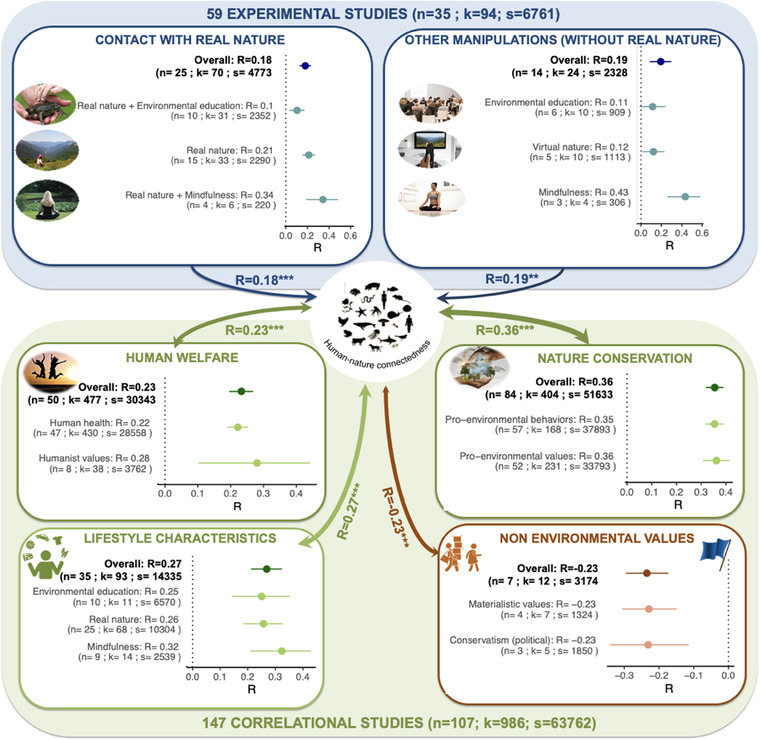
References
-
- Adenle, A. A. (2012). Failure to achieve 2010 biodiversity's target in developing countries: How can conservation help? Biodiversity Conservation, 21, 2435–2442.
-
- Atran, S. , Medin, D. , Ross, N. , Lynch, E. , Vapnarsky, V. , Ek, E. , Coley, J. , Timura, C. , Baran, M. , & GilWhite, F. (2002). Folkecology, cultural epidemiology, and the spirit of the commons: A garden experiment in the Maya Lowlands, 19912001. Current Anthropology, 43, 421–450.
-
- Balundė, A. , Jovarauskaitė, L. , & Poškus, M. S. (2019). Exploring the relationship between connectedness with nature, environmental identity, and environmental self‐identity: A systematic review and meta‐analysis. Sage Open, 9, 2158244019841925.
-
- Berenguer, J. (2007). The effect of empathy in proenvironmental attitudes and behaviors. Environment and Behavior, 39, 269–283.
-
- Brondizio, E. S. , Settele, J. , Díaz, S. , & Ngo, H. T. (2019). Global assessment report on biodiversity and ecosystem services of the Intergovernmental Science‐Policy Platform on Biodiversity and Ecosystem Services. IPBES.
LinkOut - more resources
Full Text Sources