


Target Receptors of Regenerating Nerves: Neuroma Formation and Current Treatment Options
- PMID: 35866159
- PMCID: PMC9295905
- DOI: 10.3389/fnmol.2022.859221
Target Receptors of Regenerating Nerves: Neuroma Formation and Current Treatment Options
Abstract
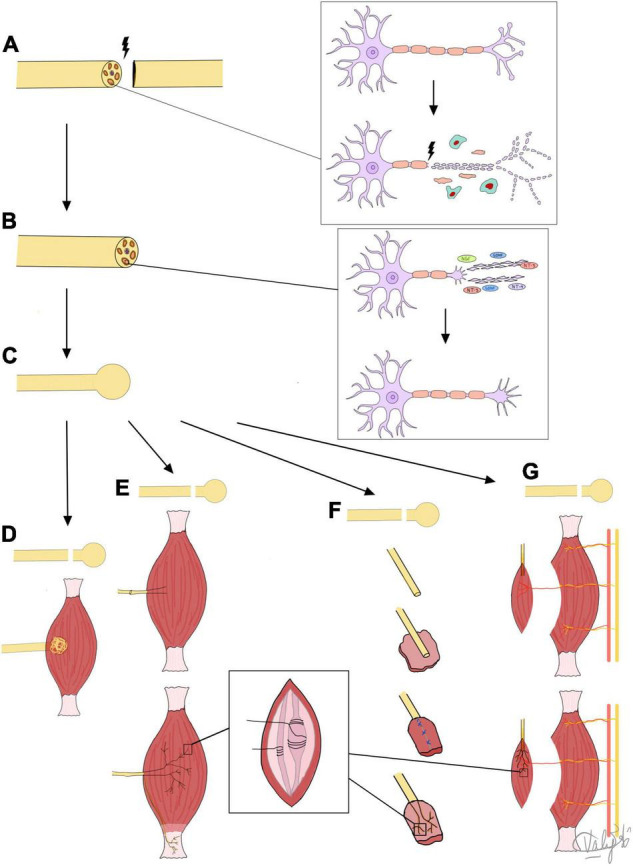
Neuromas form as a result of disorganized sensory axonal regeneration following nerve injury. Painful neuromas lead to poor quality of life for patients and place a burden on healthcare systems. Modern surgical interventions for neuromas entail guided regeneration of sensory nerve fibers into muscle tissue leading to muscle innervation and neuroma treatment or prevention. However, it is unclear how innervating denervated muscle targets prevents painful neuroma formation, as little is known about the fate of sensory fibers, and more specifically pain fiber, as they regenerate into muscle. Golgi tendon organs and muscle spindles have been proposed as possible receptor targets for the regenerating sensory fibers; however, these receptors are not typically innervated by pain fibers, as these free nerve endings do not synapse on receptors. The mechanisms by which pain fibers are signaled to cease regeneration therefore remain unknown. In this article, we review the physiology underlying nerve regeneration, the guiding molecular signals, and the target receptor specificity of regenerating sensory axons as it pertains to the development and prevention of painful neuroma formation while highlighting gaps in literature. We discuss management options for painful neuromas and the current supporting evidence for the various interventions.
Keywords: RPNI; TMR; VDMT; neuroma; peripheral nerve regeneration; target receptors; targeted reinnervation.
Copyright © 2022 Shamoun, Shamoun, Akhavan and Tuffaha.
Conflict of interest statement
The authors declare that the research was conducted in the absence of any commercial or financial relationships that could be construed as a potential conflict of interest.
Figures
References
Publication types
LinkOut - more resources
Full Text Sources
