


Neuroimaging analyses from a randomized, controlled study to evaluate plasma exchange with albumin replacement in mild-to-moderate Alzheimer's disease: additional results from the AMBAR study
- PMID: 35867135
- PMCID: PMC9606044
- DOI: 10.1007/s00259-022-05915-5
Neuroimaging analyses from a randomized, controlled study to evaluate plasma exchange with albumin replacement in mild-to-moderate Alzheimer's disease: additional results from the AMBAR study
Abstract
Purpose: This study was designed to detect structural and functional brain changes in Alzheimer's disease (AD) patients treated with therapeutic plasma exchange (PE) with albumin replacement, as part of the recent AMBAR phase 2b/3 clinical trial.
Methods: Mild-to-moderate AD patients were randomized into four arms: three arms receiving PE with albumin (one with low-dose albumin, and two with low/high doses of albumin alternated with IVIG), and a placebo (sham PE) arm. All arms underwent 6 weeks of weekly conventional PE followed by 12 months of monthly low-volume PE. Magnetic resonance imaging (MRI) volumetric analyses and regional and statistical parametric mapping (SPM) analysis on 18F-fluorodeoxyglucose positron emission tomography (18FDG-PET) were performed.
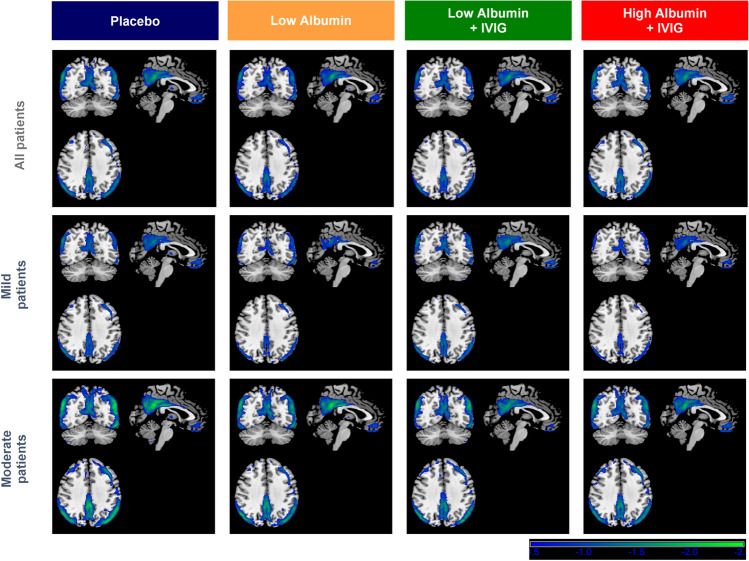
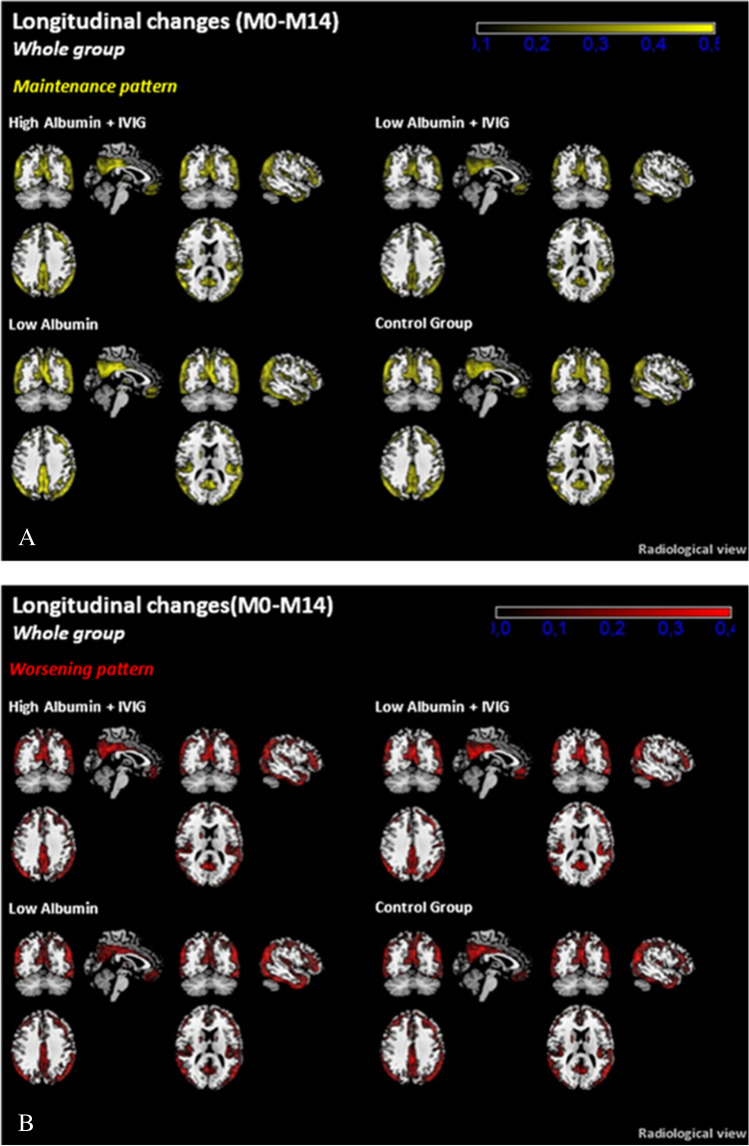
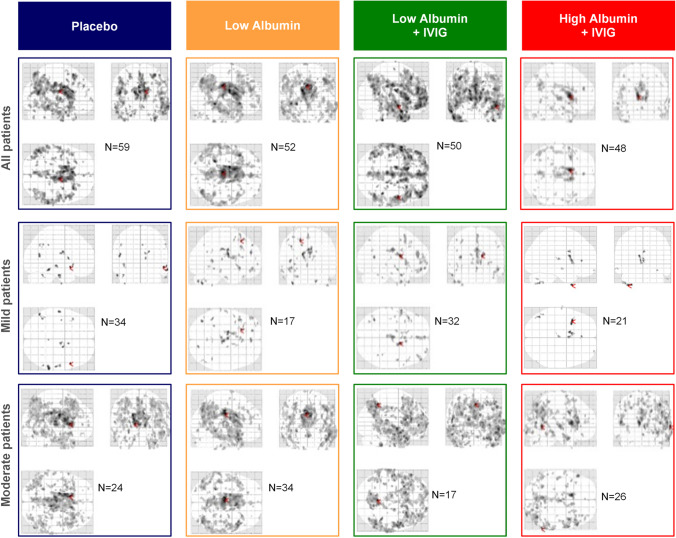
Results: MRI analyses (n = 198 patients) of selected subcortical structures showed fewer volume changes from baseline to final visit in the high albumin + IVIG treatment group (p < 0.05 in 3 structures vs. 4 to 9 in other groups). The high albumin + IVIG group showed no statistically significant reduction of right hippocampus. SPM 18FDG-PET analyses (n = 213 patients) showed a worsening of metabolic activity in the specific areas affected in AD (posterior cingulate, precuneus, and parieto-temporal regions). The high-albumin + IVIG treatment group showed the greatest metabolic stability over the course of the study, i.e., the smallest percent decline in metabolism (MaskAD), and least progression of defect compared to placebo.
Conclusions: PE with albumin replacement was associated with fewer deleterious changes in subcortical structures and less metabolic decline compared to the typical of the progression of AD. This effect was more marked in the group treated with high albumin + IVIG.
Trial registration: (AMBAR trial registration: EudraCT#: 2011-001,598-25; ClinicalTrials.gov ID: NCT01561053).
Keywords: Albumin; Alzheimer’s disease; Intravenous immunoglobulin; Plasma exchange; Plasmapheresis.
© 2022. The Author(s).
Conflict of interest statement
MBo has been a consultant for Araclon, Avid, Bayer, Elan, Grifols, Janssen/Pfizer, Lilly, Neuroptix, Nutricia, Roche, Sanofi, Biogen, and Servier; and received fees for lectures and funds for research from Araclon, Esteve, Grifols, Janssen, Novartis, Nutricia, Piramal, Pfizer-Wyett, Roche, and Servier. OLL has been a consultant for Grifols and Lundbeck. LN, MBa, CG, and AP are full-time employees of Grifols.
Figures
References
-
- Prince M, Wimo A, Guerchet M, Ali G-C, Wu Y-T, Prina M. World alzheimer report 2015 - The global impact of dementia: An analysis of prevalence, incidence, cost and trends. London: Alzheimer's Dis Int. 2015;p84.
-
- Alzheimer's disease facts and figures. Alzheimers dement. 2020. 10.1002/alz.12068.
-
- Blennow K, de Leon MJ, Zetterberg H. Alzheimer's disease. Lancet. 2006;368:387–403. - PubMed
-
- Ittner LM, Gotz J. Amyloid-beta and tau–a toxic pas de deux in Alzheimer's disease. Nat Rev Neurosci. 2011;12:65–72. - PubMed
Publication types
MeSH terms
Substances
Associated data
LinkOut - more resources
Full Text Sources
Other Literature Sources
Medical
