


Comparison Between Continuous Versus Flash Glucose Monitoring in Children, Adolescents, and Young Adults with Type 1 Diabetes: An 8-Week Prospective Randomized Trial
- PMID: 35870074
- PMCID: PMC9399330
- DOI: 10.1007/s13300-022-01297-x
Comparison Between Continuous Versus Flash Glucose Monitoring in Children, Adolescents, and Young Adults with Type 1 Diabetes: An 8-Week Prospective Randomized Trial
Abstract
Introduction: To assess the impact of real-time continuous glucose monitoring (RT-CGM) instead of first-generation flash glucose monitoring (FGM) on hypoglycaemia in children and adolescents with type 1 diabetes.
Methods: In this randomized controlled interventional study, young individuals with type 1 diabetes used RT-CGM or FGM for 8 weeks. We evaluated changes in time below range (TBR), severe hypoglycaemia (SH), HbA1c, glycaemic variability, and impaired awareness of hypoglycaemia with RT-CGM (intervention group) in comparison with FGM.
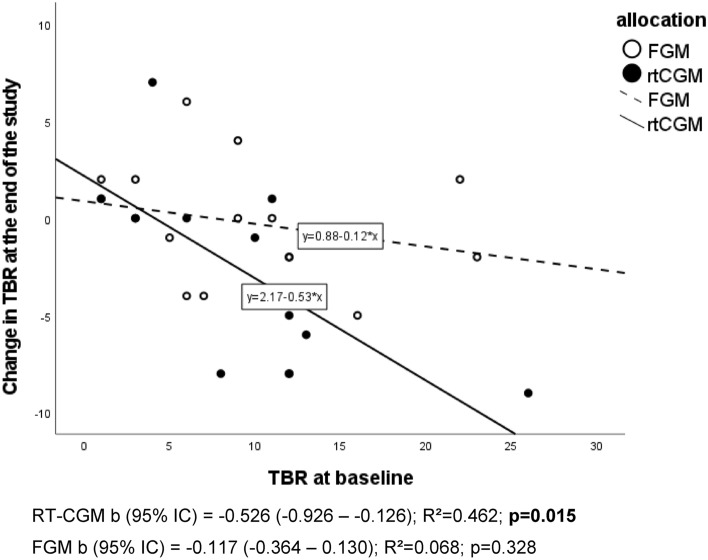
Results: We randomly assigned 37 participants to either the intervention group (n = 19) or the control group (n = 18). At 8 weeks, we did not find a decrease in TBR in either group, but there was a significant reduction in SH in the intervention group. For participants with TBR ≥ 5% at baseline, we observed significant reductions in 24-h TBR, wake TBR, sleep TBR, and glucose variability at 8 weeks in the intervention group.
Conclusions: The use of RT-CGM versus FGM decreased SH in young individuals with type 1 diabetes, and TBR and glucose variability in patients with a higher TBR at baseline. The patient's history should be taken into account when advising on the method of blood glucose monitoring, as RT-CGM could be more effective in younger patients at high risk for SH.
Trial registration: ClinicalTrials.gov NCT04249102.
Keywords: Children; Continuous glucose monitoring; Flash glucose monitoring; Hypoglycaemia; Type 1 diabetes.
© 2022. The Author(s).
Figures


References
-
- Cox D, Kovatchev B, Julian D, et al. Frequency of severe hypoglycemia in insulin-dependent diabetes mellitus can be predicted from self-monitoring blood glucose data. J Clin Endocrinol Metab. 1994;79:1659–1662. - PubMed
Associated data
LinkOut - more resources
Full Text Sources
Medical
