


Transcriptional control by HNF-1: Emerging evidence showing its role in lipid metabolism and lipid metabolism disorders
- PMID: 35873023
- PMCID: PMC9293700
- DOI: 10.1016/j.gendis.2021.06.010
Transcriptional control by HNF-1: Emerging evidence showing its role in lipid metabolism and lipid metabolism disorders
Abstract
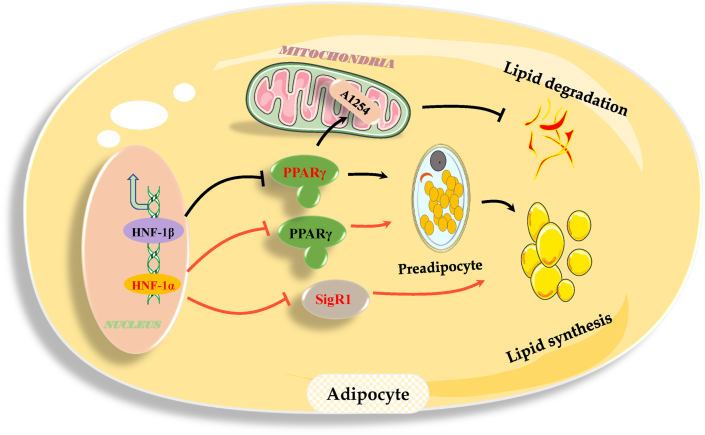
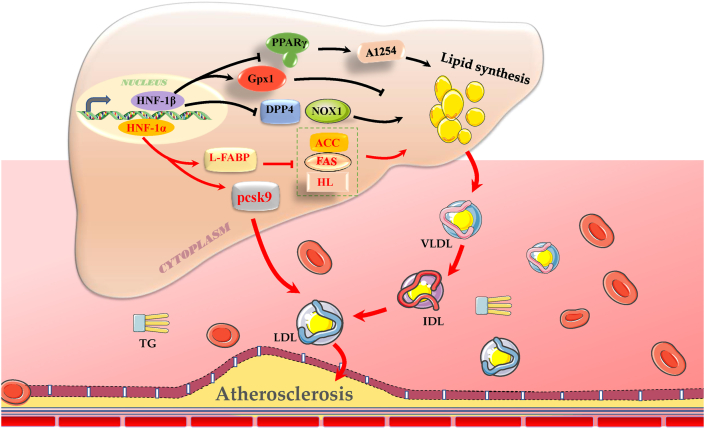
The present review focuses on the roles and underlying mechanisms of action of hepatic nuclear factor-1 (HNF-1) in lipid metabolism and the development of lipid metabolism disorders. HNF-1 is a transcriptional regulator that can form homodimers, and the HNF-1α and HNF-1β isomers can form heterodimers. Both homo- and heterodimers recognize and bind to specific cis-acting elements in gene promoters to transactivate transcription and to coordinate the expression of target lipid-related genes, thereby influencing the homeostasis of lipid metabolism. HNF-1 was shown to restrain lipid anabolism, including synthesis, absorption, and storage, by inhibiting the expression of lipogenesis-related genes, such as peroxisome proliferator-activated receptor γ (PPARγ) and sterol regulatory element-binding protein-1/2 (SREBP-1/2). Moreover, HNF-1 enhances the expression of various genes, such as proprotein convertase subtilisin/kexin type 9 (PCSK9), glutathione peroxidase 1 (GPx1), and suppressor of cytokine signaling-3 (SOCS-3) and negatively regulates signal transducer and activator of transcription (STAT) to facilitate lipid catabolism in hepatocytes. HNF-1 reduces hepatocellular lipid decomposition, which alleviates the progression of nonalcoholic fatty liver disease (NAFLD). HNF-1 impairs preadipocyte differentiation to reduce the number of adipocytes, stunting the development of obesity. Furthermore, HNF-1 reduces free cholesterol levels in the plasma to inhibit aortic lipid deposition and lipid plaque formation, relieving dyslipidemia and preventing the development of atherosclerotic cardiovascular disease (ASCVD). In summary, HNF-1 transcriptionally regulates lipid-related genes to manipulate intracorporeal balance of lipid metabolism and to suppress the development of lipid metabolism disorders.
Keywords: ASCVD; HNF-1; Lipid metabolism; NAFLD; Obesity.
© 2021 Chongqing Medical University. Production and hosting by Elsevier B.V.
Conflict of interest statement
The authors declare no potential conflicts of interest with respect to the authorship and publication of this article.
Figures
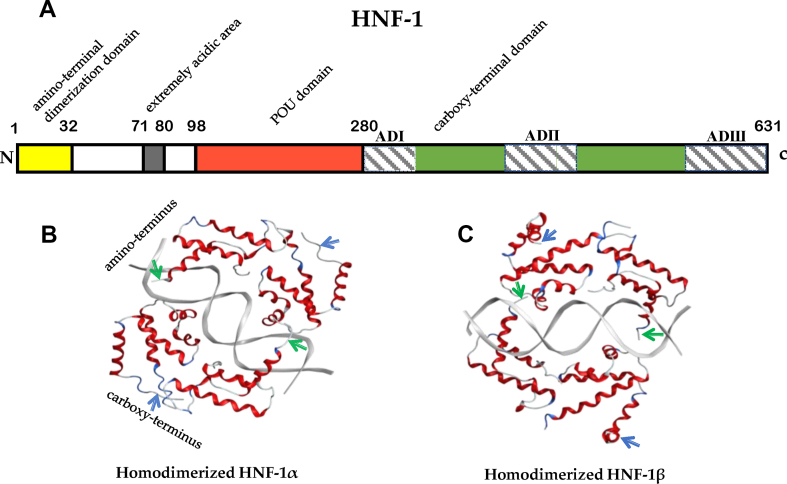
 , amino-terminus;
  , carboxy-terminus.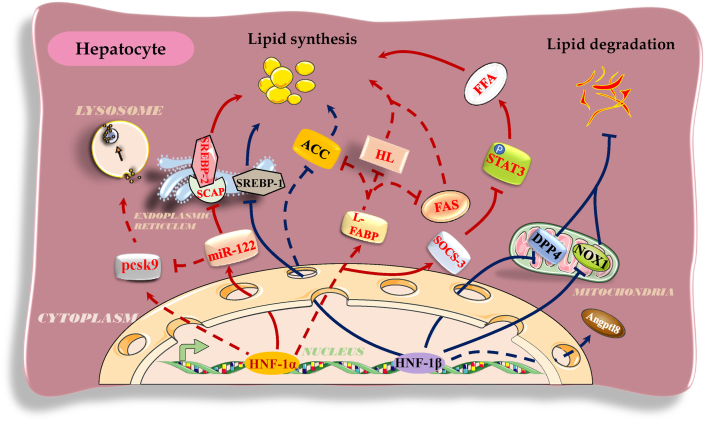
References
-
- Hegele R.A., Cao H., Harris S.B., Zinman B., Hanley A.J., Anderson C.M. Gender, obesity, hepatic nuclear factor-1alpha G319S and the age-of-onset of type 2 diabetes in Canadian Oji-Cree. Int J Obes Relat Metab Disord. 2000;24(8):1062–1064. - PubMed
-
- Reiner A.P., Gross M.D., Carlson C.S., et al. Common coding variants of the HNF1A gene are associated with multiple cardiovascular risk phenotypes in community-based samples of younger and older European-American adults: the Coronary Artery Risk Development in Young Adults Study and the Cardiovascular Health Study. Circ Cardiovasc Genet. 2009;2(3):244–254. - PMC - PubMed
-
- Frain M., Swart G., Monaci P., et al. The liver-specific transcription factor LF-B1 contains a highly diverged homeobox DNA binding domain. Cell. 1989;59(1):145–157. - PubMed
Publication types
LinkOut - more resources
Full Text Sources
Research Materials
Miscellaneous
