


Effect of standardized root extract of ashwagandha (Withania somnifera) on well-being and sexual performance in adult males: A randomized controlled trial
- PMID: 35873404
- PMCID: PMC9297375
- DOI: 10.1002/hsr2.741
Effect of standardized root extract of ashwagandha (Withania somnifera) on well-being and sexual performance in adult males: A randomized controlled trial
Abstract
Background and aim: In Ayurveda, ashwagandha is a popular plant for promoting youthful energy, longevity, and overall well-being. It is also an excellent aphrodisiac herb that aids in the improvement and maintenance of normal sexual health. The present study aims to evaluate the effect of ashwagandha root extract on improving sexual health in adult males.
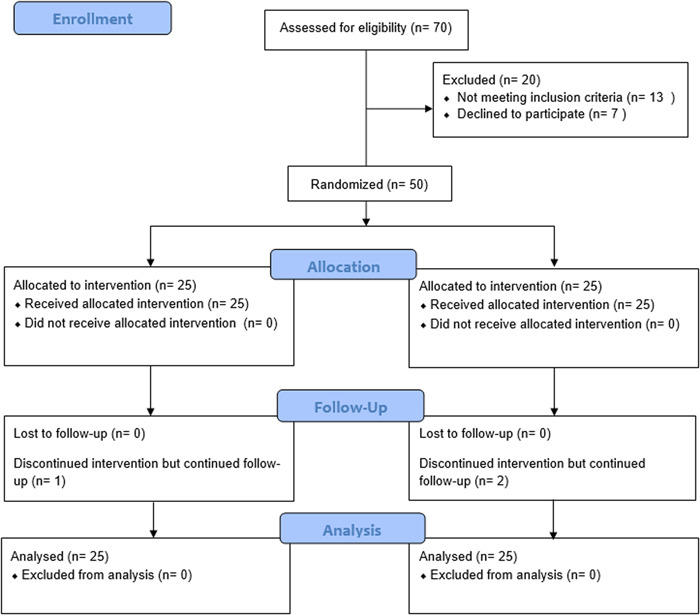
Methods: In this 8-week randomized, double-blind, placebo-controlled study, we investigated the aphrodisiac property of an ashwagandha root extract in adult males. Fifty participants with lower sexual desire were randomly allocated to take 300 mg of ashwagandha root extract or placebo capsules twice daily. Outcomes were measured using the derogatis interview for sexual functioning-male (DISF-M) questionnaire, serum testosterone, serum prolactin, and short-form survey-36 quality of life questionnaire before and after the intervention.
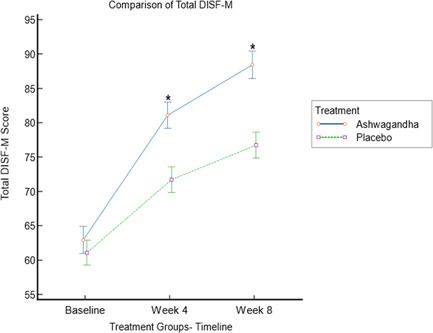
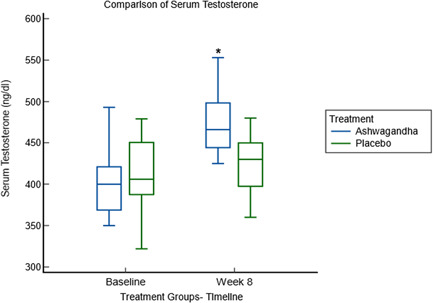
Results: Compared to placebo, ashwagandha root extract supplementation was associated with a statistically significant increase in the total DISF-M scores (mean difference -9.8; 95% confidence interval, -10.73 to -8.87; p < 0.0001; t-test). It was also associated with a statistically significant increase in serum testosterone levels (-66.52; -80.70 to -52.34; p < 0.0001; t-test). However, the prolactin level did not change after intervention in both the ashwagandha and placebo groups (-1.06; -2.78 to 0.66; p > 0.05).
Conclusion: These findings suggest that ashwagandha demonstrated a significant subjective perception of sexual well-being and assisted in increasing serum testosterone levels in the participants.
Keywords: DISF‐M; aphrodisiac; ashwagandha; male sexual wellness; prolactin; testosterone.
© 2022 The Authors. Health Science Reports published by Wiley Periodicals LLC.
Conflict of interest statement
The corresponding author declares that he had full access to the data and complete control over the analysis and publication of its results. He declares he did not receive any funding to carry out this project. However, other authors received a financial grant (clinical consultation fee) from Shri Kartikeya Pharma to recruit study volunteers.
Figures
References
-
- World Health Organization, Department of Reproductive Health and Research . Defining Sexual Health: Report of a Technical Consultation on Sexual Health; 2006. https://www.who.int/reproductivehealth/publications/sexual_health/defini...
-
- American Psychological Association . Stress in America™ 2020: a National Mental Health Crisis; 2020. https://www.apa.org/news/press/releases/stress/2020/sia-mental-health-cr...
-
- Chen L, Shi GR, Huang DD, et al. Male sexual dysfunction: a review of literature on its pathological mechanisms, potential risk factors, and herbal drug intervention. Biomed Pharmacother. 2019;112:108585. - PubMed
LinkOut - more resources
Full Text Sources
