


A Meta-Analysis on Vitamin D Supplementation and Asthma Treatment
- PMID: 35873428
- PMCID: PMC9300755
- DOI: 10.3389/fnut.2022.860628
A Meta-Analysis on Vitamin D Supplementation and Asthma Treatment
Abstract
Background: Vitamin D, as an immunomodulator, may be related to the therapeutic effect of asthma patients, but the research in this area is still controversial. The aim of this meta-analysis was to analyze the role of vitamin D supplementation in the treatment of asthma patients.
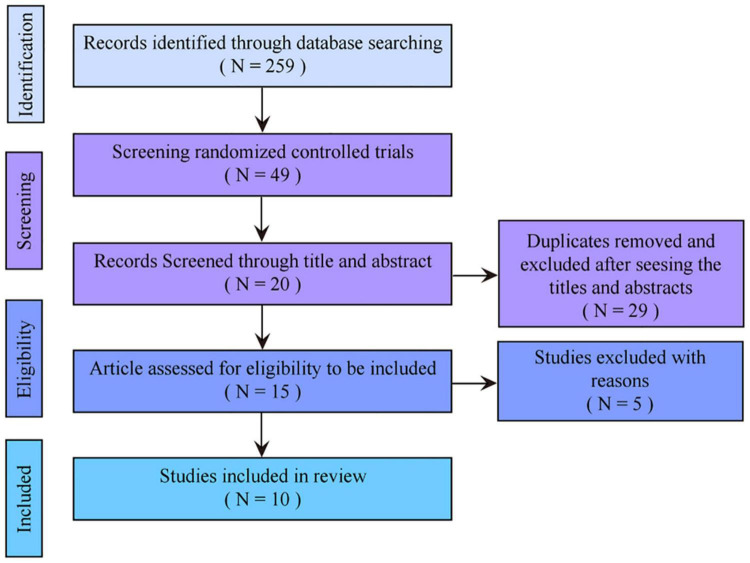
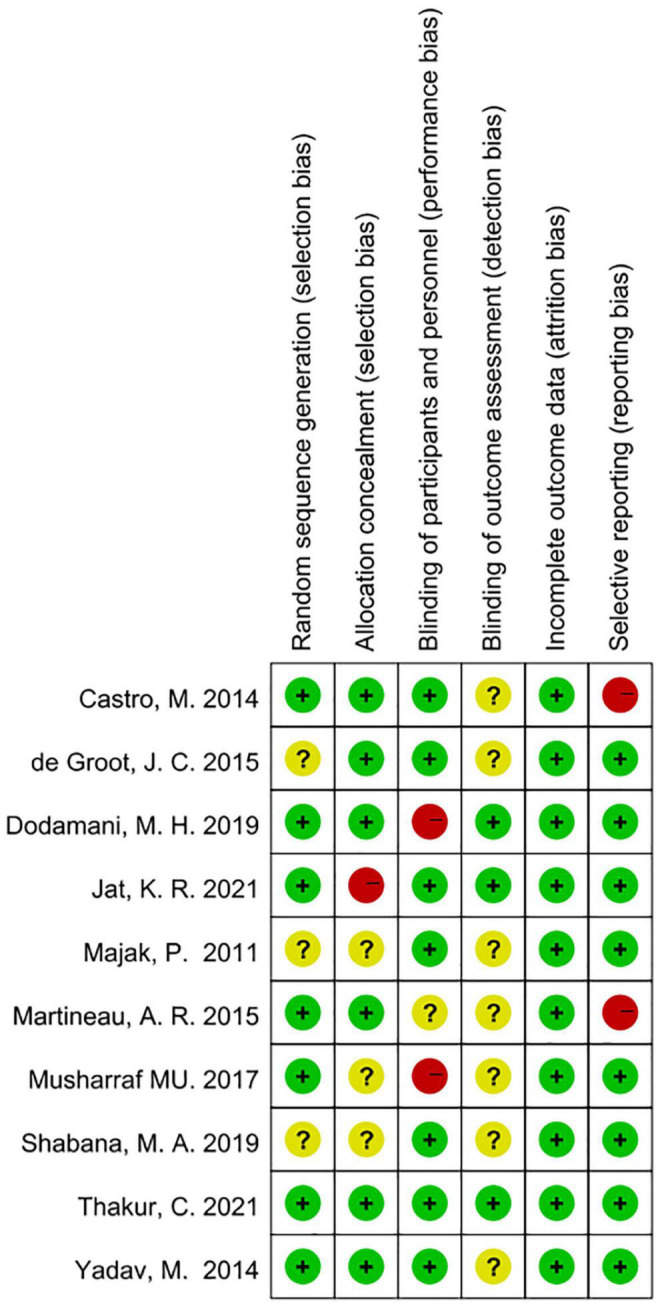
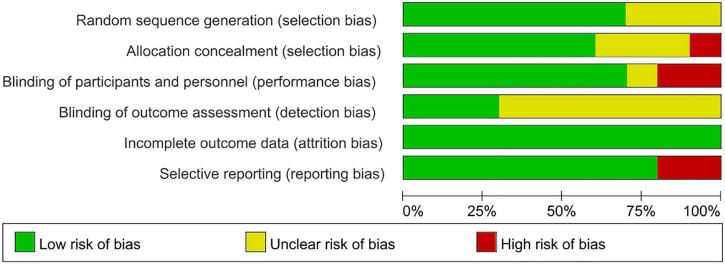
Materials and methods: Randomized Controlled Trials (RCTs) of vitamin D supplementation in asthma were searched in PubMed, EMBASE, and the Cochrane library. Primary outcomes were forced expiratory volume in one second (FEV1), asthma exacerbations, Asthma Control Test scores (ACT scores), and fractional exhaled nitric oxide (FENO).
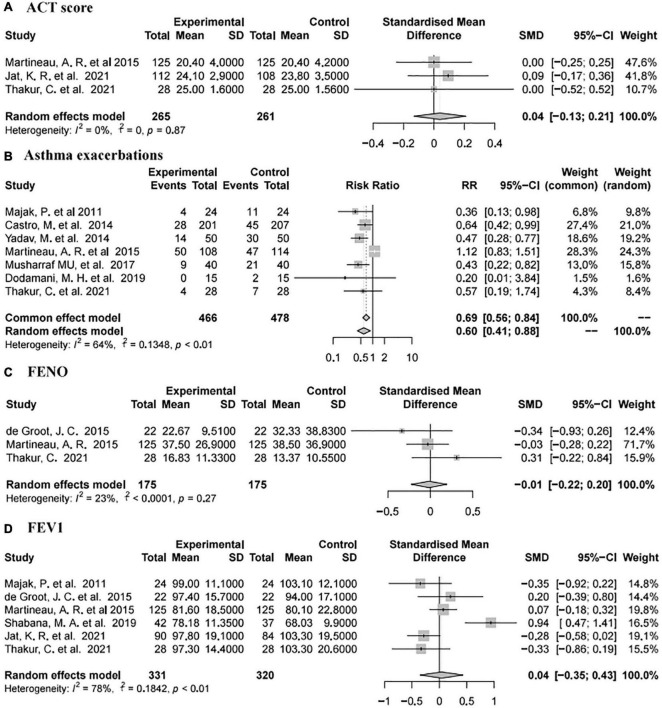
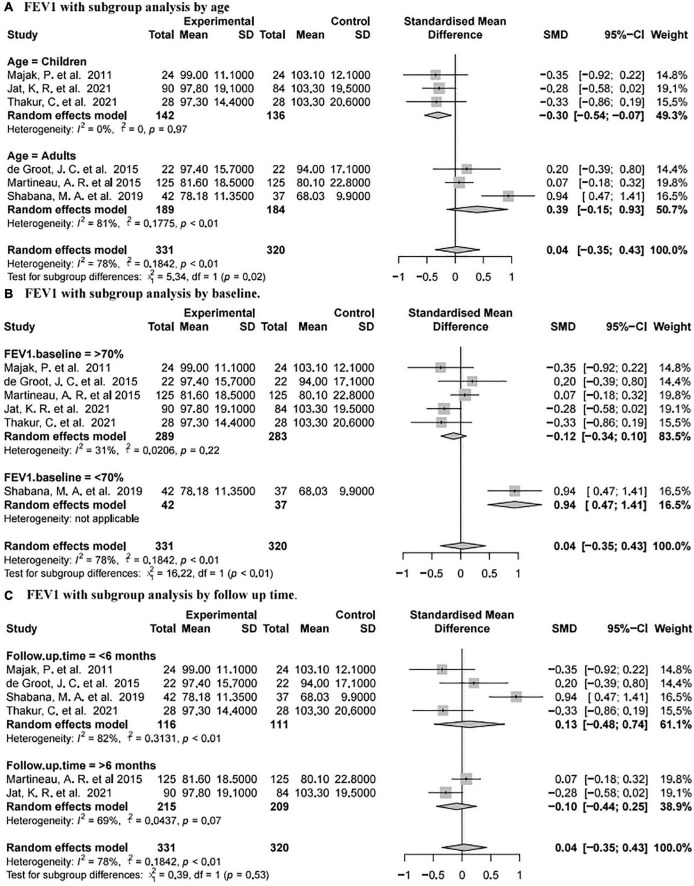
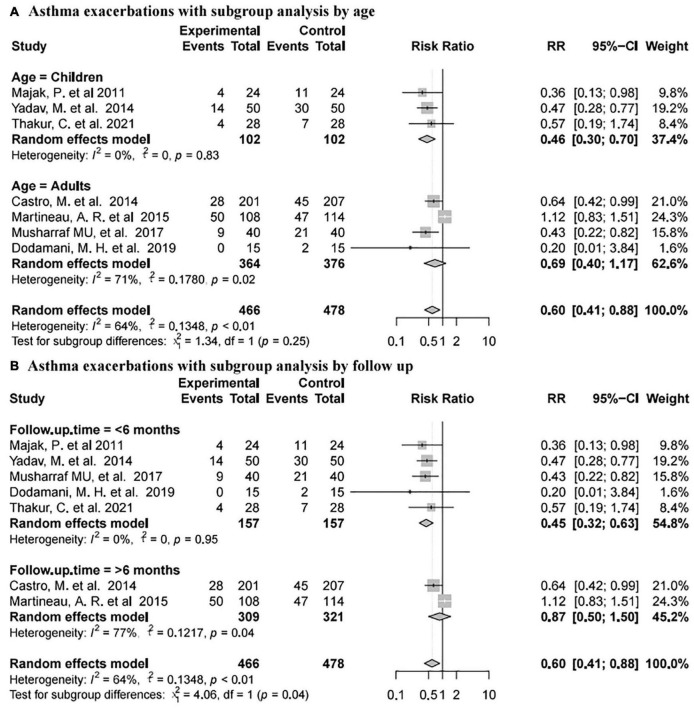
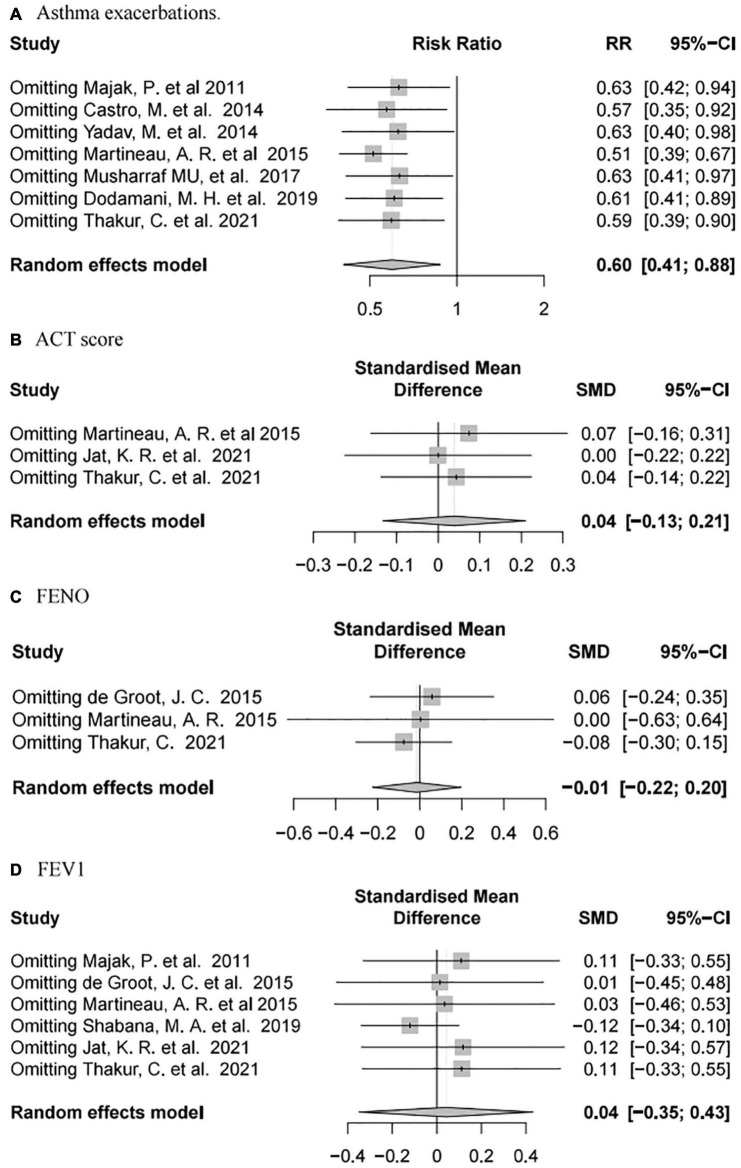
Results: A total of 10 RCTs were included, including 1,349 patients. Vitamin D supplementation didn't affect the ACT scores (SMD = 0.04, 95% CI = -0.13 to 0.21, P = 0.87), FEV1 (SMD = 0.04, 95% CI = -0.35 to 0.43, P < 0.01) and FENO (SMD = -0.01, 95% CI = -0.22 to 0.20, P = 0.27), but reduced the rate of asthma exacerbations (RR = 0.69, 95% CI = 0.41 to 0.88, P < 0.01), especially in subgroups of children (RR = 0.46, 95% CI = 0.30 to 0.70, P = 0.83) and follow up time less than 6 months (RR = 0.45, 95% CI = 0.32 to 0.63, P = 0.95). Additionally, though there was only one study included in the subgroup, it significantly enhanced FEV1 at the last visit for patients whose FEV1 baseline value was less than 70% (SMD = 0.94, 95% CI = 0.47 to 1.41).
Conclusion: Vitamin D supplementation can reduce asthma exacerbations, especially in children, and within 6 months of follow up time. In addition, vitamin D has a positive effect on improving FEV1 of patients whose FEV1 baseline value is less than 70%, but more RCTs are still needed to support this conclusion.
Systematic review registration: [https://inplasy.com], identifier [10.37766/inplasy20 22.6.0049].
Keywords: FEV1; asthma; asthma exacerbations; children; vitamin D.
Copyright © 2022 Liu, Wang and Sun.
Conflict of interest statement
The authors declare that the research was conducted in the absence of any commercial or financial relationships that could be construed as a potential conflict of interest.
Figures
References
-
- Vos T, Flaxman AD, Naghavi M, Lozano R, Michaud C, Ezzati M, et al. Years lived with disability (YLDs) for 1160 sequelae of 289 diseases and injuries 1990-2010: a systematic analysis for the global burden of disease study 2010. Lancet. (2012) 15:2163–96. 10.1016/S0140-6736(12)61729-2 - DOI - PMC - PubMed
-
- National Asthma Education and Prevention Program. Expert panel report 3 (EPR-3): guidelines for the diagnosis and management of asthma–summary report 2007. J Allergy Clin Immunol. (2007) 120:S94–138. - PubMed
-
- Papi A, Brightling C, Pedersen SE, Reddel HK. Asthma. Lancet. (2018) 391:783–800. - PubMed
-
- Stern J, Pier J, Litonjua AA. Asthma epidemiology and risk factors. Semin Immunopathol. (2020) 42:5–15. - PubMed
-
- Moorman JE, Akinbami LJ, Bailey CM, Zahran HS, King ME, Johnson CA, et al. National surveillance of asthma: United States, 2001-2010. Vital Health Stat 3. (2012) 35:1–58. - PubMed
Publication types
LinkOut - more resources
Full Text Sources
