


Frontiers Review: Severe Asthma in Adolescents
- PMID: 35874577
- PMCID: PMC9300996
- DOI: 10.3389/fped.2022.930196
Frontiers Review: Severe Asthma in Adolescents
Abstract
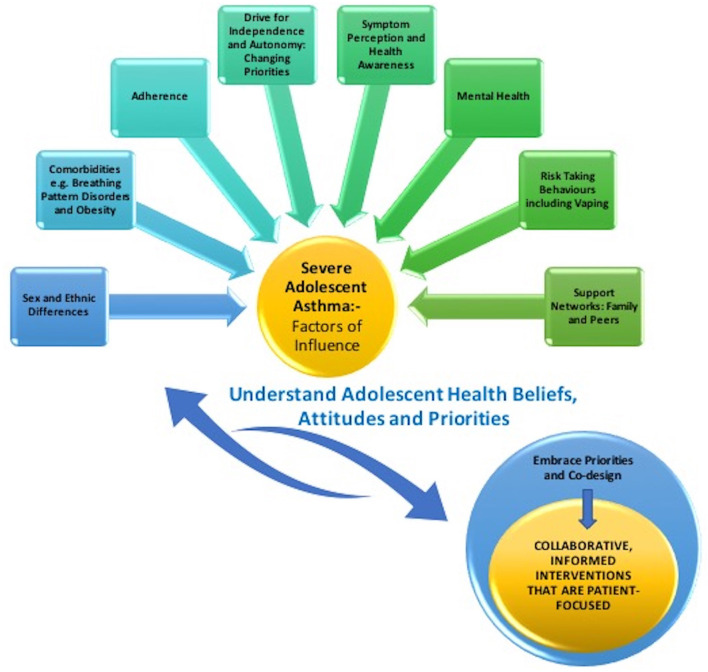
Asthma remains the most prevalent chronic respiratory disease of childhood. Severe asthma accounts for a minority group of patients but with substantial morbidity burden. It may reflect disease which is resistant to treatment or that which is difficult to treat, or a combination of both. The adolescent patient cohort denote a unique group and are the focus of this review. This group of patients embody transitioning priorities and evolving health beliefs, all of which may influence the management and burden of disease. Factors of importance include the influence of physiological parameters such as sex and race, which have confer implications for medical management and non-physiological factors, such as adherence, risk-taking behavior, and vaping. The holistic approach to management of severe asthma within this group of patients must acknowledge the evolving patient independence and desire for autonomy and strive for a collaborative, patient tailored approach. This review will focus on the factors that may pose a challenge to the management of severe adolescent asthma whilst offering suggestions for changes in practice that might harness patient priorities and shared clinical decision-making.
Keywords: collaborative working; holistic management; severe adolescent asthma; severe childhood asthma; transition.
Copyright © 2022 Warraich and Sonnappa.
Conflict of interest statement
The authors declare that the research was conducted in the absence of any commercial or financial relationships that could be construed as a potential conflict of interest.
Figures
References
-
- World Health Organization . Asthma: Key Facts. (2022). Available online at: https://www.who.int/news-room/fact-sheets/detail/asthma (accessed March 21, 2022).
-
- Healthcare Quality Improvement Partnership Royal Royal College of Physicians of London . Why Asthma Still Kills: The National Review of Asthma Deaths (NRAD). Confidential Enquiry Report May 2014 Confidential Enquiry Report May 2014. London: Royal College of Physicians; (2014). Available online at: https://www.asthma.org.uk/support-us/campaigns/publications/national-rev... (accessed March 9, 2022).
Publication types
LinkOut - more resources
Full Text Sources
