


Clinical Efficacy of SARS-CoV-2 Vaccination in Hemodialysis Patients
- PMID: 35874643
- PMCID: PMC9287586
- DOI: 10.1016/j.ekir.2022.07.007
Clinical Efficacy of SARS-CoV-2 Vaccination in Hemodialysis Patients
Abstract
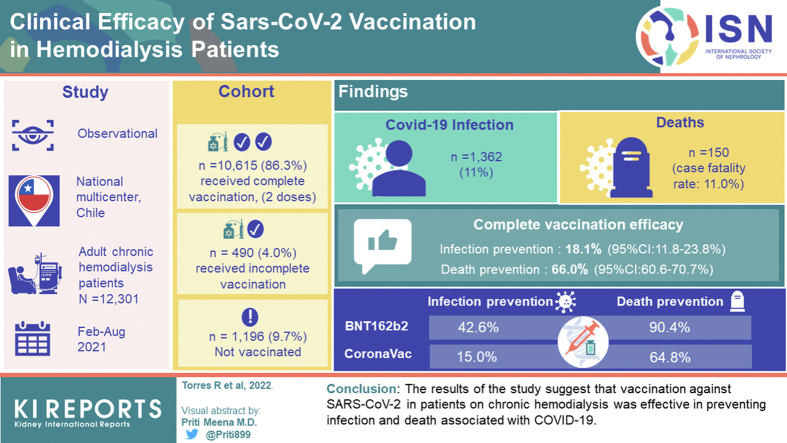
Introduction: The COVID-19 pandemic is a global public health problem. Patients with end-stage renal disease on hemodialysis are at a higher risk of infection and mortality than the general population. Worldwide, a vaccination campaign has been developed that has been shown to reduce severe infections and deaths in the general population. However, there are currently limited data on the clinical efficacy of vaccinations in the hemodialysis population.
Methods: A national multicenter observational cohort was performed in Chile to evaluate the clinical efficacy of anti-SARS-CoV-2 vaccination in end-stage renal disease patients on chronic hemodialysis from February 2021 to August 2021. In addition, the BNT162b2 (Pfizer-BioNTech) and CoronaVac (Sinovac) vaccines were evaluated. The efficacy of vaccination in preventing SARS-CoV-2 infection, hospitalizations, and deaths associated with COVID-19 was determined.
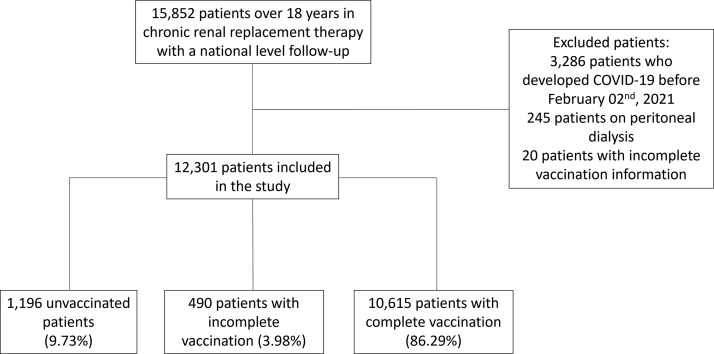
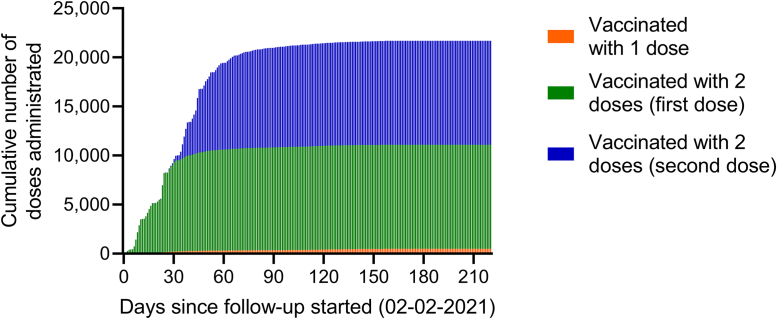
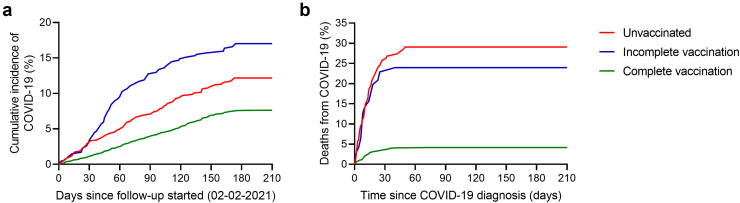
Results: A total of 12,301 patients were evaluated; 10,615 (86.3%) received a complete vaccination (2 doses), 490 (4.0%) received incomplete vaccination, and 1196 (9.7%) were not vaccinated. During follow-up, 1362 (11.0%) patients developed COVID-19, and 150 died (case fatality rate: 11.0%). The efficacy of the complete vaccination in preventing infection was 18.1% (95% confidence interval [CI]:11.8-23.8%), and prevention of death was 66.0% (95% CI:60.6-70.7%). When comparing both vaccines, BNT162b2 and CoronaVac were effective in reducing infection and deaths associated with COVID-19. Nevertheless, the BNT162b2 vaccine had higher efficacy in preventing infection (42.6% vs. 15.0%) and deaths (90.4% vs. 64.8%) compared to CoronaVac.
Conclusion: The results of our study suggest that vaccination against SARS-CoV-2 in patients on chronic hemodialysis was effective in preventing infection and death associated with COVID-19.
Keywords: COVID-19; SARS-CoV-2; epidemiology; hemodialysis; mortality; renal dialysis.
© 2022 International Society of Nephrology. Published by Elsevier Inc.
Figures
References
-
- Hopkins University and Medicine John. John Hopkins University School of Medicine; 2022. Coronavirus Resource Center. COVID-19 map.https://coronavirus.jhu.edu/map.html
LinkOut - more resources
Full Text Sources
Miscellaneous
