


Circulating Carnitine Levels and Breast Cancer: A Matched Retrospective Case-Control Study
- PMID: 35875107
- PMCID: PMC9300951
- DOI: 10.3389/fonc.2022.891619
Circulating Carnitine Levels and Breast Cancer: A Matched Retrospective Case-Control Study
Abstract
Introduction: Epidemiological studies investigating the association between carnitine and breast cancer are scarce.
Materials and methods: This 1:1 age-matched retrospective case-control study identified 991 female breast cancer cases and 991 female controls without breast cancer using pathological testing. We used targeted metabolomics technology to measure 16 types of whole blood carnitine compounds, such as free carnitine (C0) and octadecanoylcarnitine (C18).
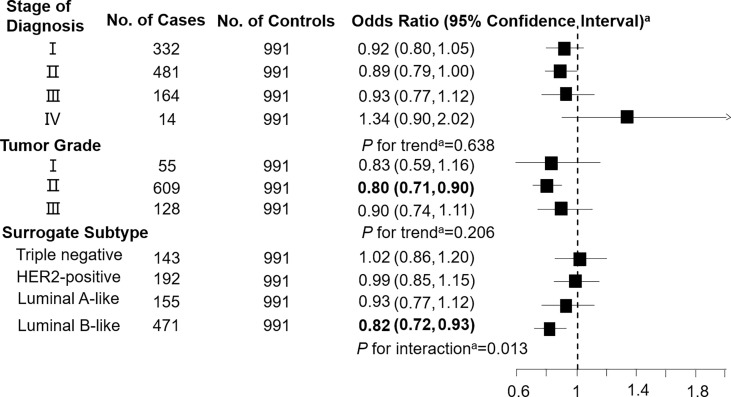
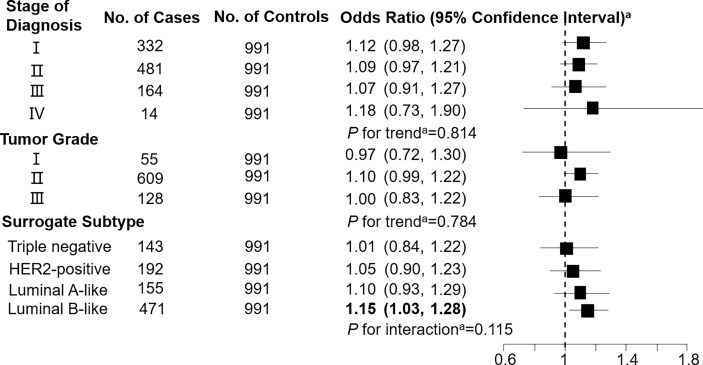
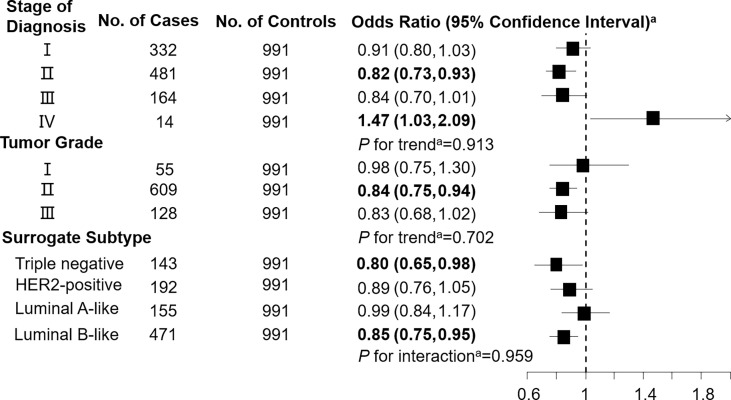
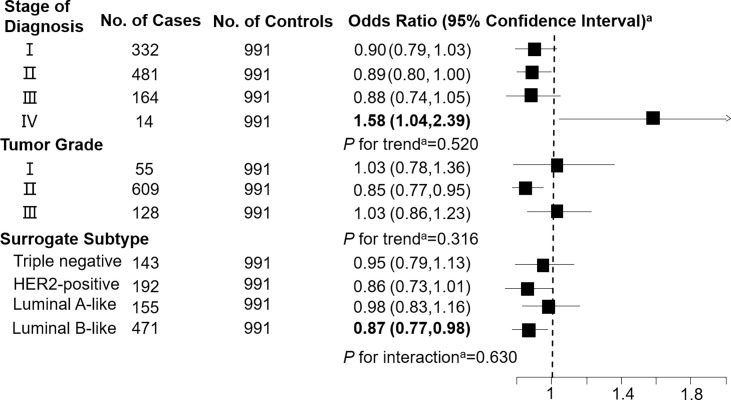
Results: The average age for cases and controls was approximately 50 ± 8.7 years. After adjusting for covariates, each standard deviation (SD) increase in malonylcarnitine (C3DC; OR 0.91; 95% CI 0.83-1.00), decenoylcarnitine (C10:1; OR 0.87; 95% CI 0.79-0.96), and decadienoylcarnitine (C10:2; OR 0.90; 95% CI 0.82-0.99) level was associated with decreased odds of breast cancer. However, higher butyrylcarnitine (C4) levels were associated with increased odds of breast cancer (OR 1.12; 95% CI 1.02-1.23). No statistically significant relationship was noted between other carnitine compounds and breast cancer. The false discovery rates for C3DC, C4, C10:1 and C10:2 were 0.172, 0.120, 0.064 and 0.139, respectively.
Conclusions: Higher levels of C3DC, C10:1, and C10:2 were protective factors for breast cancer, whereas increased C4 levels were a risk factor for the disease.
Keywords: breast cancer; carnitine; metabolites; risk assessment; women.
Copyright © 2022 Zhang, Wu, Zhu, Yang, Yang, Vuong, Li, Zhu, Sun and Tao.
Conflict of interest statement
The authors declare that the research was conducted in the absence of any commercial or financial relationships that could be construed as a potential conflict of interest.
Figures
References
LinkOut - more resources
Full Text Sources
Miscellaneous
