


Fungal Infection in Co-infected Patients With COVID-19: An Overview of Case Reports/Case Series and Systematic Review
- PMID: 35875562
- PMCID: PMC9298665
- DOI: 10.3389/fmicb.2022.888452
Fungal Infection in Co-infected Patients With COVID-19: An Overview of Case Reports/Case Series and Systematic Review
Abstract
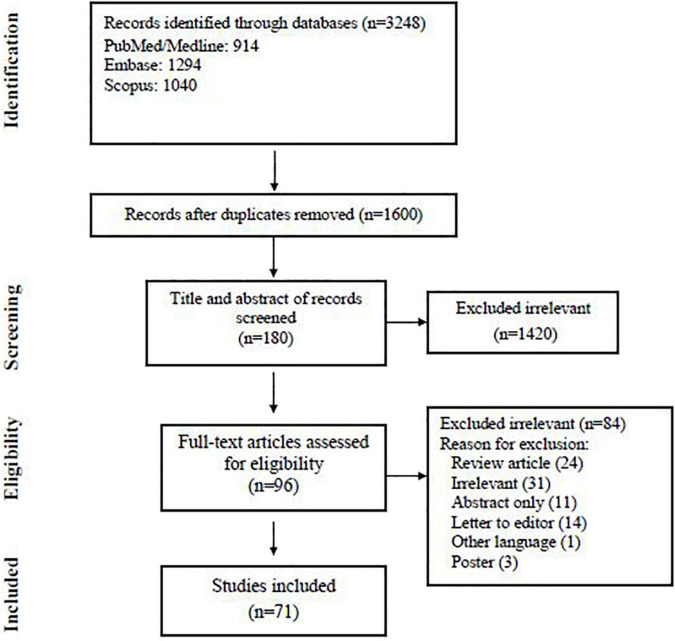
Fungal co-infections are frequent in patients with coronavirus disease 2019 (COVID-19) and can affect patient outcomes and hamper therapeutic efforts. Nonetheless, few studies have investigated fungal co-infections in this population. This study was performed to assess the rate of fungal co-infection in patients with COVID-19 as a systematic review. EMBASE, MEDLINE, and Web of Science were searched considering broad-based search criteria associated with COVID-19 and fungal co-infection. We included case reports and case series studies, published in the English language from January 1, 2020 to November 30, 2021, that reported clinical features, diagnosis, and outcomes of fungal co-infection in patients with Severe Acute Respiratory Syndrome Coronavirus 2 (SARS-CoV-2). Totally, 54 case reports and 17 case series were identified, and 181 patients (132 men, 47 women, and 2 not mentioned) co-infected with COVID-19 and fungal infection enrolled. The frequency of fungal co-infection among patients with COVID-19 was 49.7, 23.2, 19.8, 6.6, and 0.5% in Asia, America, Europe, Africa, and Australia, respectively. Diabetes (59.6%) and hypertension (35.9%) were found as the most considered comorbidities in COVID-19 patients with fungal infections. These patients mainly suffered from fever (40.8%), cough (30.3%), and dyspnea (23.7%). The most frequent findings in the laboratory results of patients and increase in C-reactive protein (CRP) (33.1%) and ferritin (18.2%), and lymphopenia (16%) were reported. The most common etiological agents of fungal infections were Aspergillus spp., Mucor spp., Rhizopus spp., and Candida spp. reported in study patients. The mortality rate was 54.6%, and the rate of discharged patients was 45.3%. Remdesivir and voriconazole were the most commonly used antiviral and antifungal agents for the treatment of patients. The global prevalence of COVID-19-related deaths is 6.6%. Our results showed that 54.6% of COVID-19 patients with fungal co-infections died. Thus, this study indicated that fungal co-infection and COVID-19 could increase mortality. Targeted policies should be considered to address this raised risk in the current pandemic. In addition, fungal infections are sometimes diagnosed late in patients with COVID-19, and the severity of the disease worsens, especially in patients with underlying conditions. Therefore, patients with fungal infections should be screened regularly during the COVID-19 pandemic to prevent the spread of the COVID-19 patients with fungal co-infection.
Keywords: Aspergillus; COVID-19; co-infection; fungal infection; systematic review.
Copyright © 2022 Seyedjavadi, Bagheri, Nasiri, Razzaghi-Abyaneh and Goudarzi.
Conflict of interest statement
The authors declare that the research was conducted in the absence of any commercial or financial relationships that could be construed as a potential conflict of interest.
Figures
References
-
- Al Osta S., Atwi G., El Ahmar N., Bejjani N., Abillama F., Matli K. (2021). Coronavirus disease (COVID-19) associated rhinocerebral mucormycosis and complications: a case report. Int. J. Clin. Res. 2 93–99. 10.38179/ijcr.v2i1.102 - DOI
-
- Aldaas M. B., Goldsmith D., Arnold F. W. (2021). COVID-19-associated pulmonary aspergillosis: a case report from the COVID-19 surveillance program. Univ. Louisville J. Respir. Infect. 5:31. 10.18297/jri/vol5/iss1/31 - DOI
Publication types
LinkOut - more resources
Full Text Sources
Research Materials
Miscellaneous
