Upper cervical spine instability systematic review: a bibliometric analysis of the 100 most influential publications
- PMID: 35875624
- PMCID: PMC9263731
- DOI: 10.21037/jss-21-132
Upper cervical spine instability systematic review: a bibliometric analysis of the 100 most influential publications
Abstract
Background: Instability in the upper cervical spine, although rare, can be devastating. This spectrum of conditions includes occipitocervical instability, atlantoaxial instability and atlantoaxial rotatory displacement. Knowledge of the literature can provide better understanding of disease processes and management, and aid in clinical decision making. The objective of this study was to perform a bibliometric analysis to formulate a comprehensive review of the most cited publications.
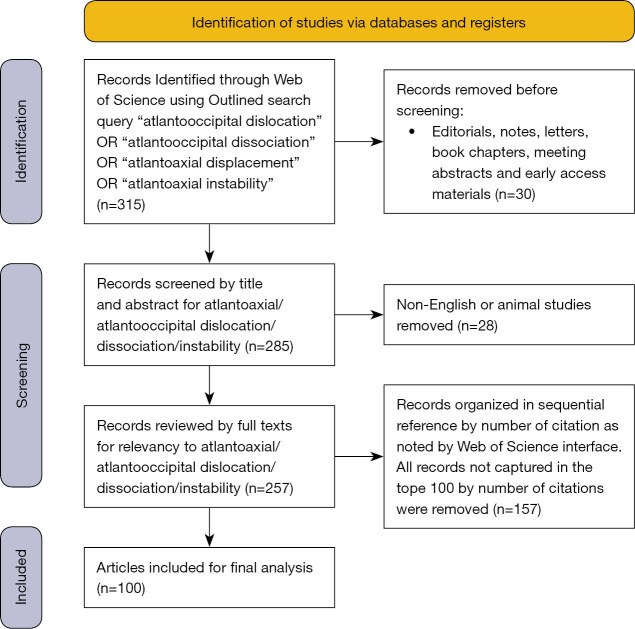
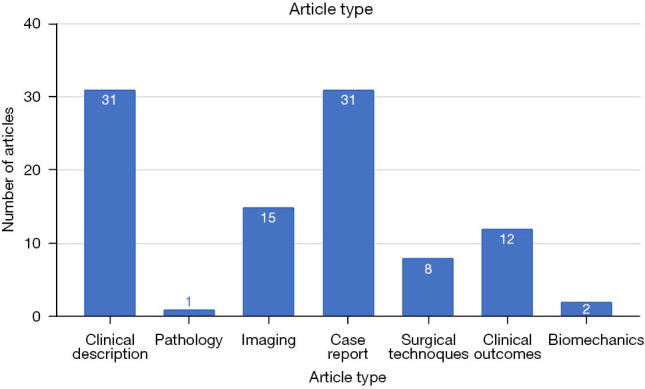
Methods: A systematic search of the literature was conducted using the Clarivate Web of Science database. The search query was '"Atlanto-occipital dislocation" OR "atlanto-occipital dissociation" OR "atlantoaxial rotatory displacement" OR "atlantoaxial instability"'. The top 100 articles based on frequency of citation were included in our study. Data extracted from articles included frequency of citation, year of publication, country of origin, journal of publication, level of evidence and article type.
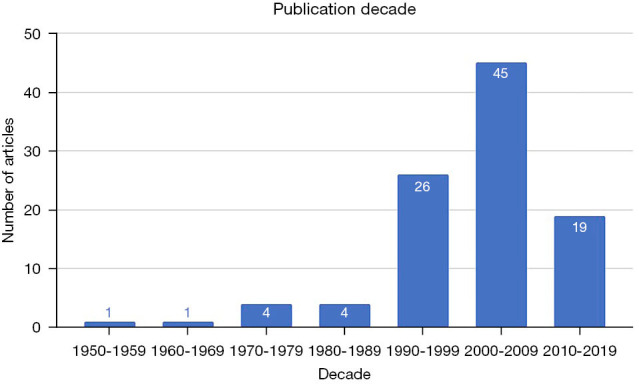
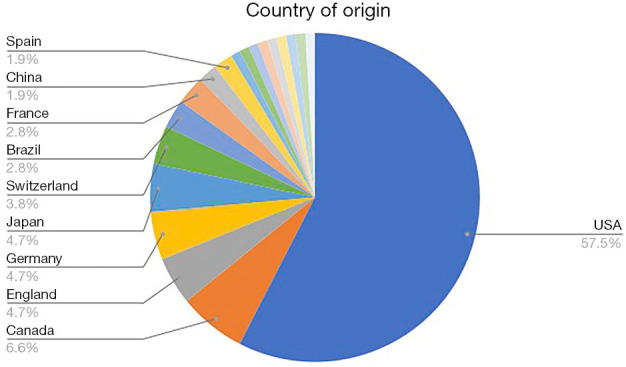
Results: Our initial search yielded 257 results that met the criteria. Articles not pertaining to atlanto-occipital instability were removed. Citation frequency ranged from 15 to 195. The most cited article was "Traumatic Anterior Atlanto-Occipital Dislocation" published by Powers et al. in 1979. The most productive decade was 2000-2009 with 45 publications. All decades showed a progressive increase in the number of papers published except for 2010-2019. Overall, 19 countries contributed and the most productive was the United States (n=61). The articles found in our search were cited a total of 4,095 times (3,463 without self-citations) averaging 40.95 citations per publication.
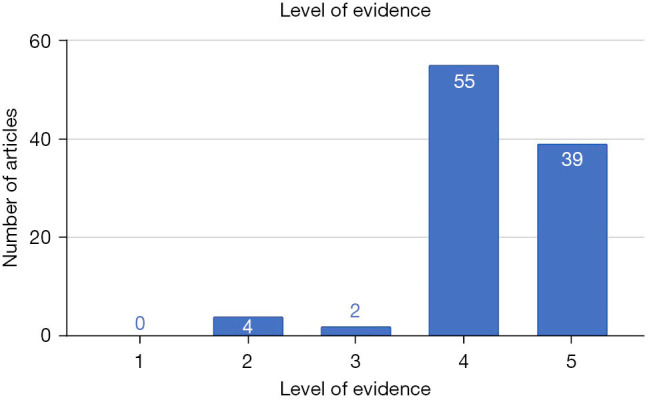
Discussion: The goal of a bibliometric study is to assess trends in a specific field of study, provide evidence for the impact of an individual or field of study's research, and highlight potential areas for future research. While the number of citations does not necessarily reflect publication quality, it reflects overall influence based on recognition by peers in the field. Publications from the last 20 years have emphasized the use of newer technologies such as computed tomography (CT) and magnetic resonance imaging (MRI) to aid in diagnosis. Our study highlights the lack of high-level evidence articles and underscores that our understanding of these conditions in both pediatric and adult patients is maturing.
Keywords: Upper; atlantoaxial; cervical; instability; occipitocervical.
2022 Journal of Spine Surgery. All rights reserved.
Conflict of interest statement
Conflicts of Interest: All authors have completed the ICMJE uniform disclosure form (available at https://jss.amegroups.com/article/view/10.21037/jss-21-132/coif). The authors have no conflicts of interest to declare.
Figures
References
-
- Sun PP, Poffenbarger GJ, Durham S, et al. Spectrum of occipitoatlantoaxial injury in young children. J Neurosurg 2000;93:28-39. - PubMed
Publication types
LinkOut - more resources
Full Text Sources
Miscellaneous