


Development of the Extended Infusion Set and Its Mechanism of Action
- PMID: 35876264
- PMCID: PMC10973872
- DOI: 10.1177/19322968221112120
Development of the Extended Infusion Set and Its Mechanism of Action
Abstract
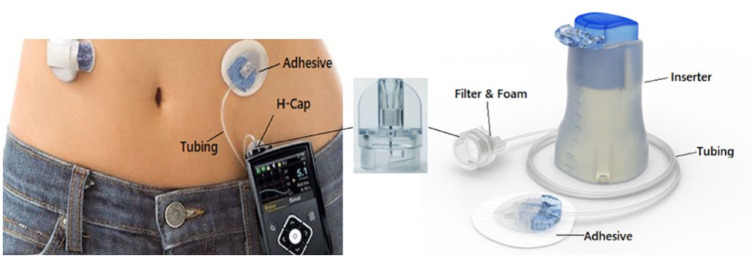
Continuous subcutaneous insulin infusion (CSII, or insulin pump) and continuous glucose monitoring (CGM) sensors have been increasingly used and associated with improved glycemic control by people with type 1 diabetes and insulin-requiring type 2 diabetes. Commonly used infusion sets in most CSII systems are limited to a wear time of 3 days. In contradistinction, CGM sensors are currently approved for seven and more days of wear. With the motivation to provide a 7-day infusion set that matches the CGM wear time and to improve patient experience, the recently CE-marked and FDA 510k-cleared Medtronic extended infusion set (EIS) was designed.s The EIS offers enhanced new features that include use for up to 7 days, improved convenience, comfort, and better quality of life for insulin pump users.
Keywords: CSII; extended wear; insulin infusion set; unexplained hyperglycemia.
Conflict of interest statement
Declaration of Conflicting InterestsThe author(s) declared the following potential conflicts of interest with respect to the research, authorship, and/or publication of this article: The authors are all Medtronic employees.
Figures
References
-
- Hoogma RP, Hammond PJ, Gomis R, et al. Comparison of the effects of continuous subcutaneous insulin infusion (CSII) and NPH-based multiple daily insulin injections (MDI) on glycaemic control and quality of life: results of the 5-nations trial. Diabet Med. 2006;23(2):141-147. - PubMed
-
- Pickup JC, Sutton AJ. Severe hypoglycaemia and glycaemic control in type 1 diabetes: meta-analysis of multiple daily insulin injections compared with continuous subcutaneous insulin infusion. Diabet Med. 2008;25:765-774. - PubMed
MeSH terms
Substances
LinkOut - more resources
Full Text Sources
Medical
