. 2022 Jul 13;10(7):132.
doi: 10.3390/dj10070132.

Clinical Behavior of the Gingival Margin following Conservative "Coronally Dynamic" Restorations in the Presence of Non-Carious Cervical Lesions Associated with Gingival Recession: A Pilot Study

Affiliations

Clinical Behavior of the Gingival Margin following Conservative "Coronally Dynamic" Restorations in the Presence of Non-Carious Cervical Lesions Associated with Gingival Recession: A Pilot Study

Felice Femiano et al. Dent J (Basel). .

Abstract

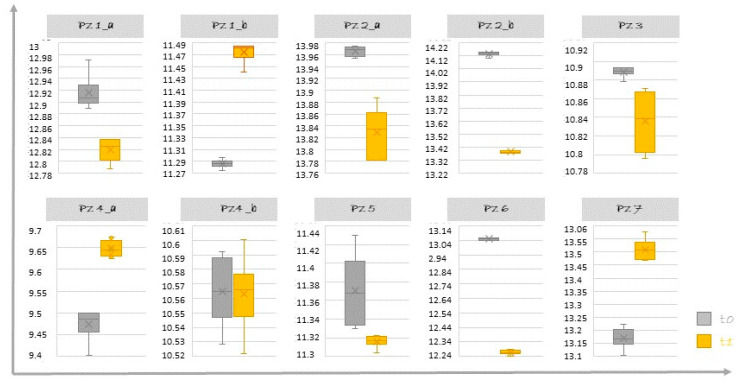
Gingival recessions (GR) are often associated with the presence of non-carious cervical lesions (NCCL). The latter result in the disappearance of the cement-enamel junction (CEJ), with consequent difficulties both in measuring the recession itself and in performing root coverage techniques. The restoration of cervical lesions is consequently an important aspect in the treatment of GR, with the re-establishment of a "new" CEJ. This pilot study aimed to verify whether restorative therapy alone, with the execution of a restoration that mimics the convexity of the natural CEJ and thanks to a slight horizontal over-contour, can stabilize a clot in the intrasulcular site and consequently is able to change the position of the gingival margin in a coronal direction. In periodontally healthy patients, with a non-thin gingival phenotype, 10 GR-associated NCCL restorations were performed using a protocol inspired by concepts of prosthetic conditioning, with a progressively reduced convexity ("coronally dynamic restoration") and de-epithelialization of the gingival sulcus. We observed that 70% of the treated teeth showed a reduction in crown length after 15 days (-0.267 mm), without an increase in probing depth. While considering the limitations of the sample and the need to evaluate the different parameters that can affect the result, the coronally dynamic restoration of NCCL with GR was able to influence the position of the gingival margin in a coronal direction.

Keywords: BOPT; creeping attachment; gingival recession; non-carious cervical lesion.


Conflict of interest statement

The authors declare no conflict of interest.

Figures
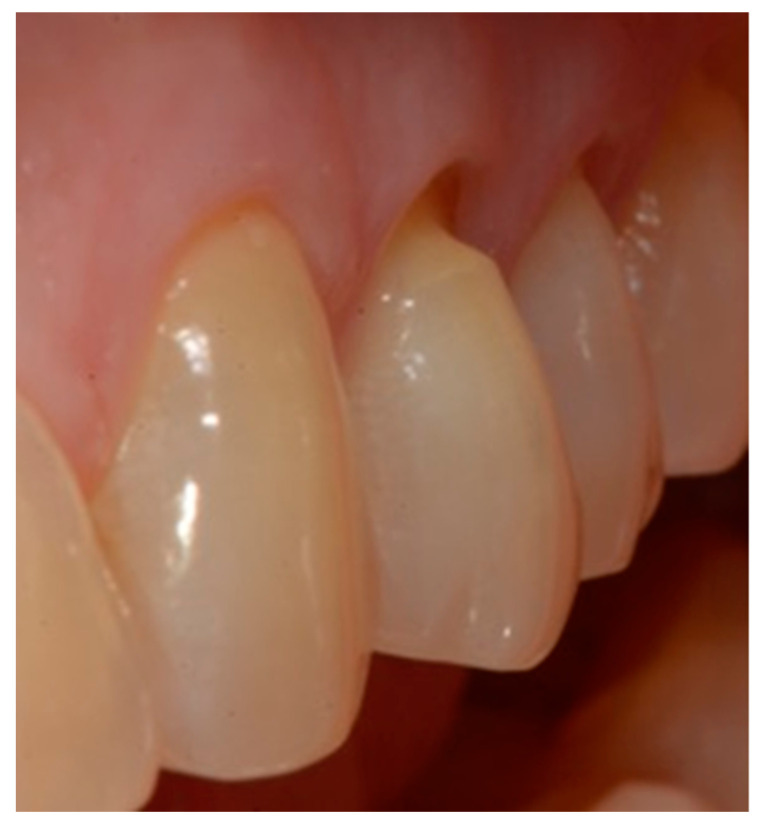
Figure 1
Figure 1
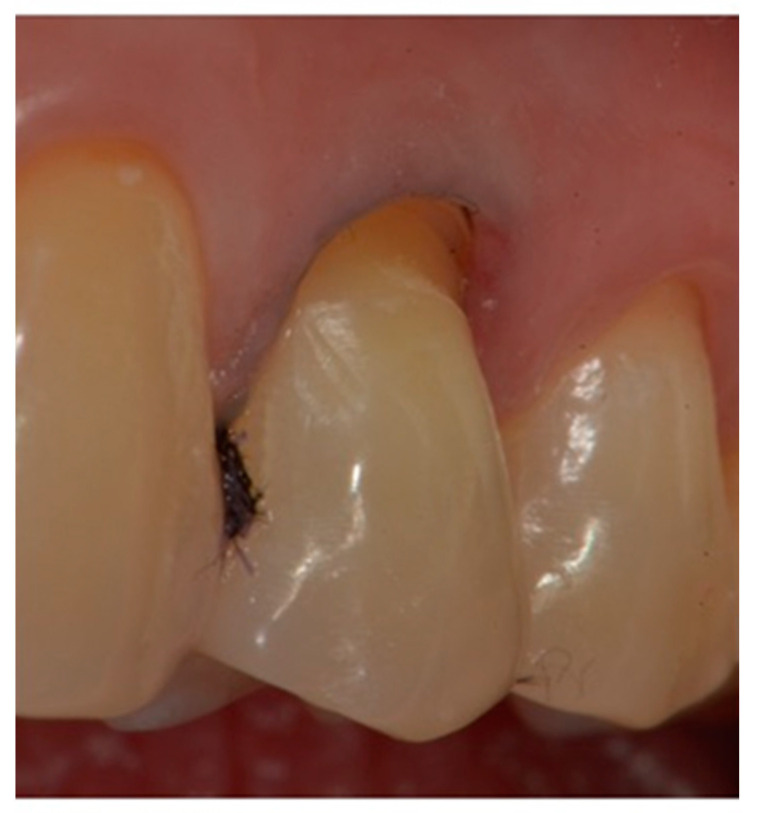
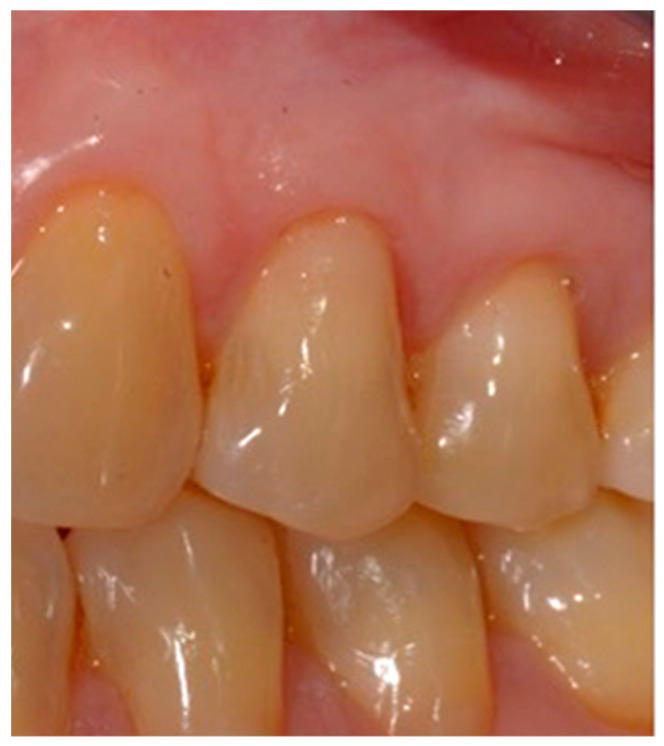
Tooth before restoration.
Figure 2
Figure 2
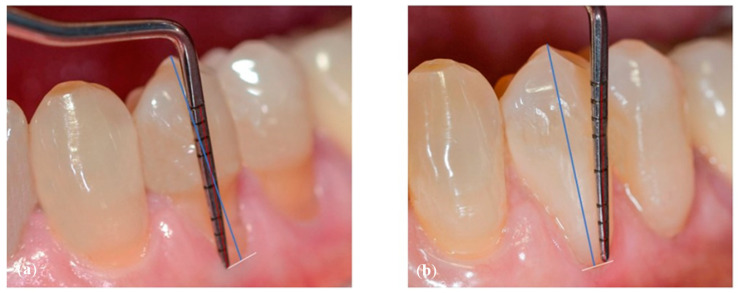
Crown Length (CL) measurement (a) at baseline (t0) and (b) at reevaluation (t1).
Figure 3
Figure 3
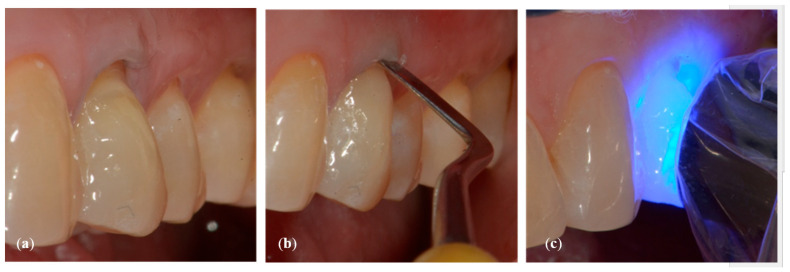
A retraction cord inserted in the gingival sulcus to expose the apical margin.
Figure 4
Figure 4
A small bevel was performed on the coronal margin of the NCCL.
Figure 5
Figure 5
NCCL after etching.
Figure 6
Figure 6
(a) A thin layer of flowable composite was applied; (b) a paste composite was applied with a convex profile; (c) every layer of the composite was polymerized for 20 s.
Figure 7
Figure 7
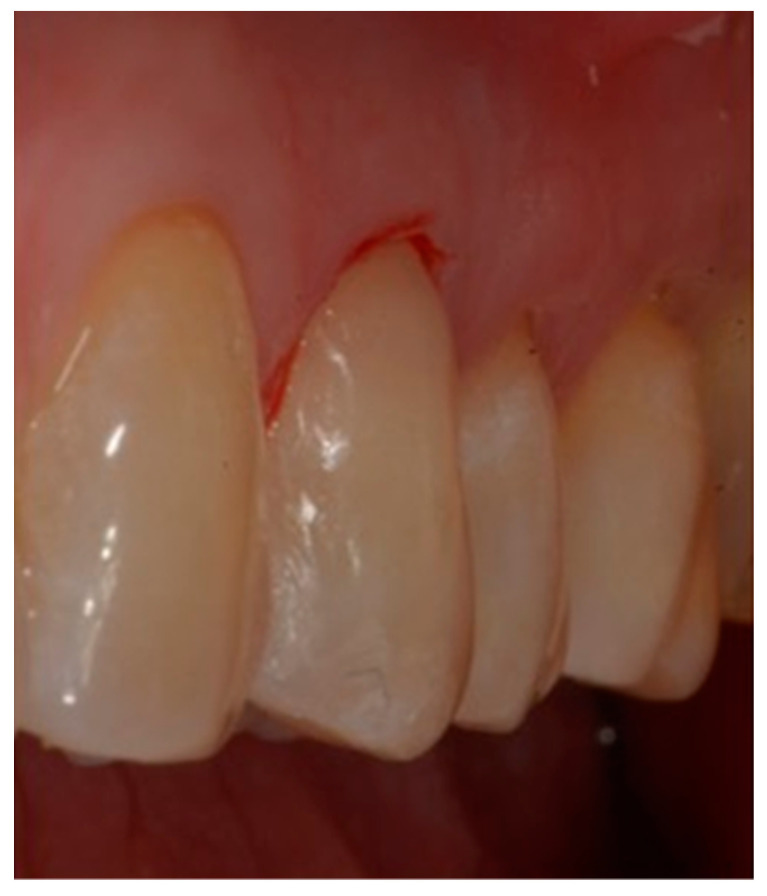
First refinement of the restoration and removal of the retraction cord.
Figure 8
Figure 8
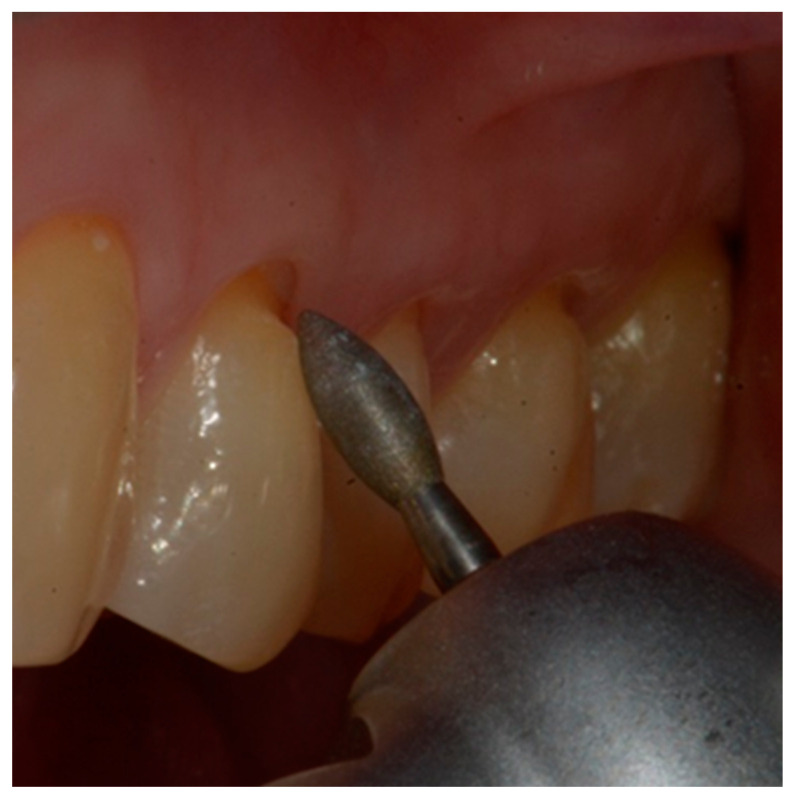
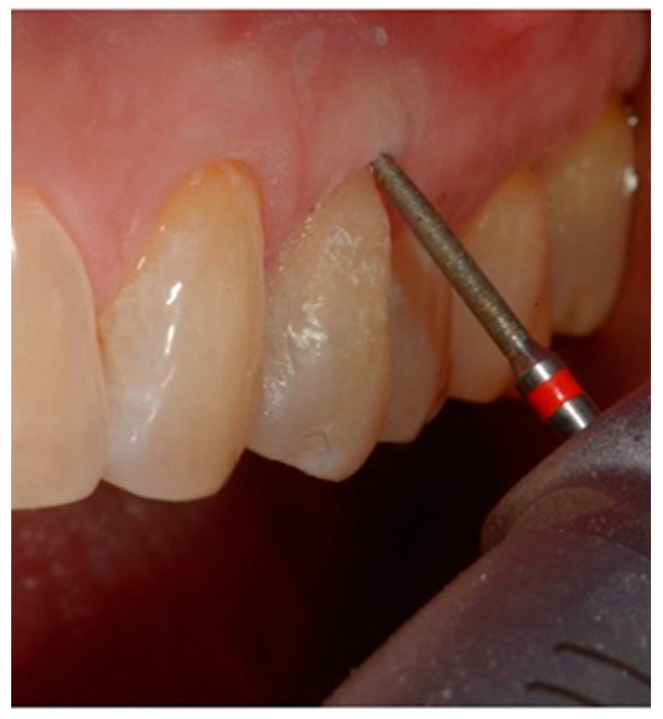
Finishing of the restoration with a flame bur with a 45° angle.
Figure 9
Figure 9
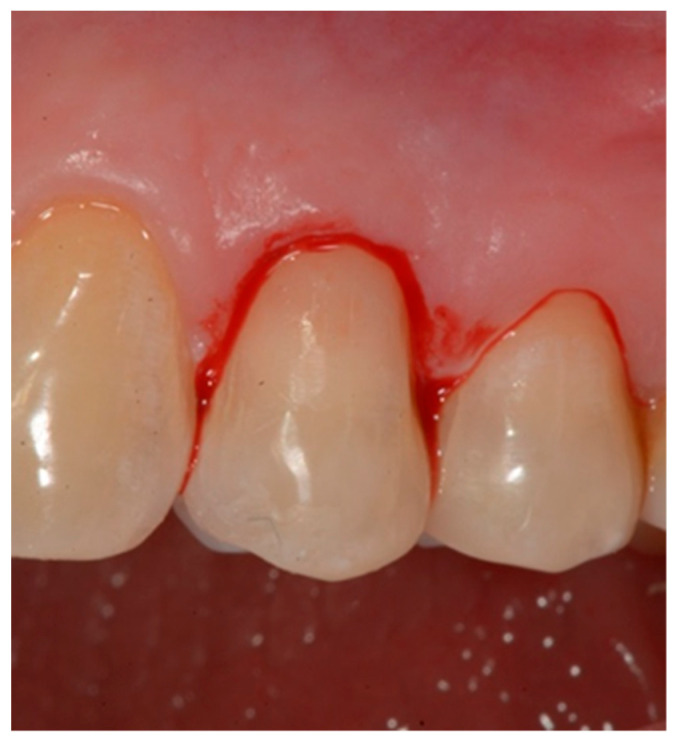
De-epithelization of the sulcus until bleeding was performed.
Figure 10
Figure 10
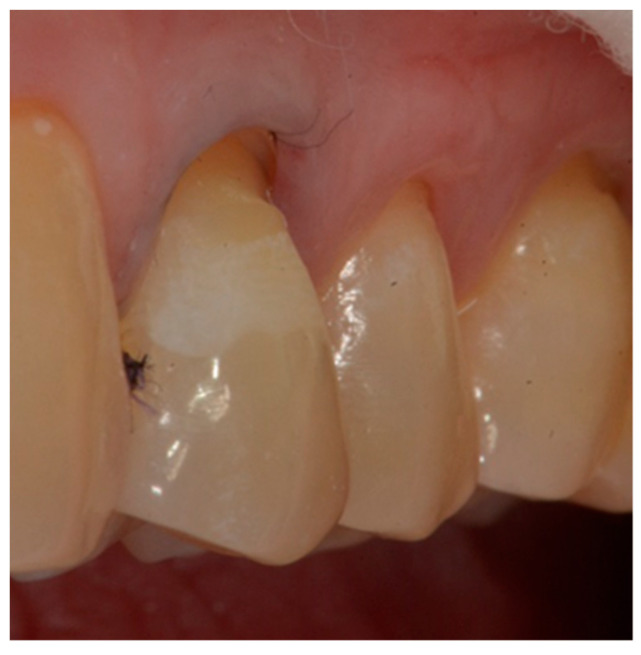
After 15 days from the restoration, the profile was reduced to allow a more coronal gingival adaptation.
Figure 11
Figure 11
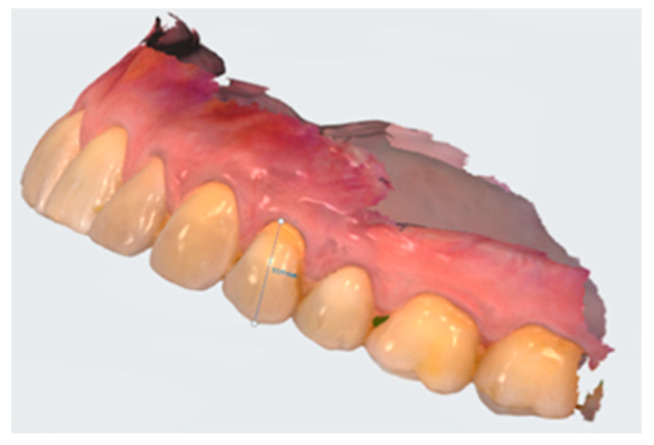
Digital measuring of the crown length on the digital intraoral scan.
Figure 12
Figure 12
Comparison at t0 (baseline) and t1 (15 days post final restoration) of Crown Lengths (CL) distribution. On the ordinate axis, CL is expressed in millimeters.

References

    1. Levitch L.C., Bader J.D., Shugars D.A., Heymann H.O. Non-Carious Cervical Lesions. J. Dent. 1994;22:195–207. doi: 10.1016/0300-5712(94)90107-4. - DOI - PubMed
    1. Aw T.C., Lepe X., Johnson G.H., Mancl L. Characteristics of Non-carious Cervical Lesions: A Clinical Investigation. J. Am. Dent. Assoc. 2002;133:725–733. doi: 10.14219/jada.archive.2002.0268. - DOI - PubMed
    1. Bartlett D.W., Shah P. A Critical Review of Non-Carious Cervical (Wear) Lesions and the Role of Abfraction, Erosion, and Abrasion. J. Dent. Res. 2006;85:306–312. doi: 10.1177/154405910608500405. - DOI - PubMed
    1. Grippo J.O., Simring M., Schreiner S. Attrition, abrasion, corrosion and abfraction revisited: A new perspective on tooth surface lesions. J. Am. Dent. Assoc. 2004;135:1105–1109. doi: 10.14219/jada.archive.2004.0369. - DOI - PubMed
    1. Grippo J.O., Simring M., Coleman T.A. Abfraction, abrasion, biocorrosion, and the enigma of noncarious cervical lesions: A 20-year perspective. J. Esthet. Restor. Dent. 2012;24:10–23. doi: 10.1111/j.1708-8240.2011.00487.x. - DOI - PubMed

LinkOut - more resources