


«Salivaomics» of Different Molecular Biological Subtypes of Breast Cancer
- PMID: 35877435
- PMCID: PMC9319144
- DOI: 10.3390/cimb44070211
«Salivaomics» of Different Molecular Biological Subtypes of Breast Cancer
Abstract
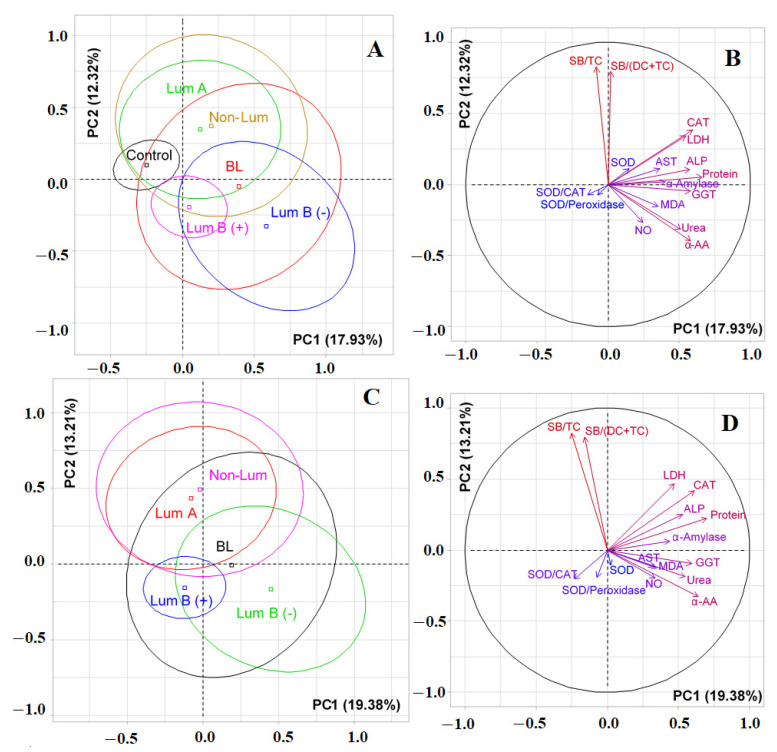
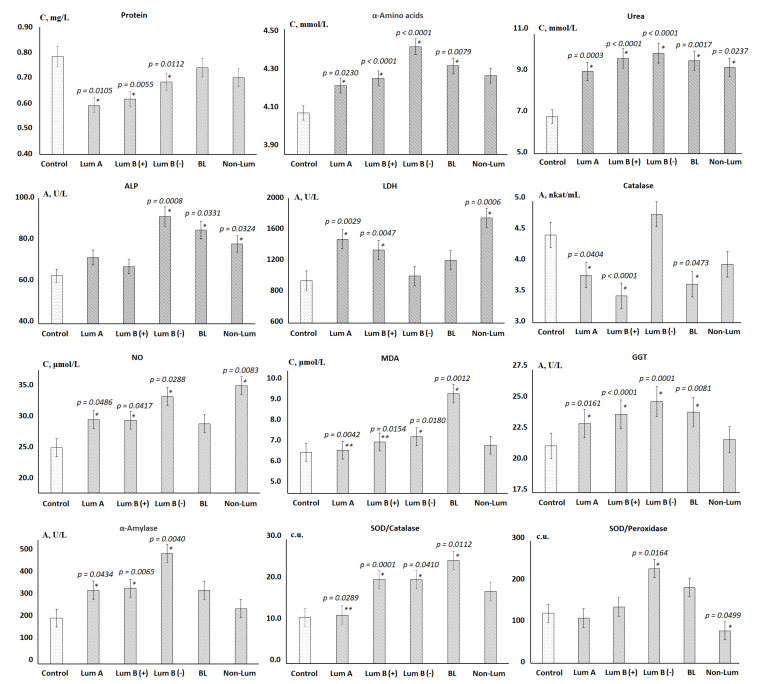
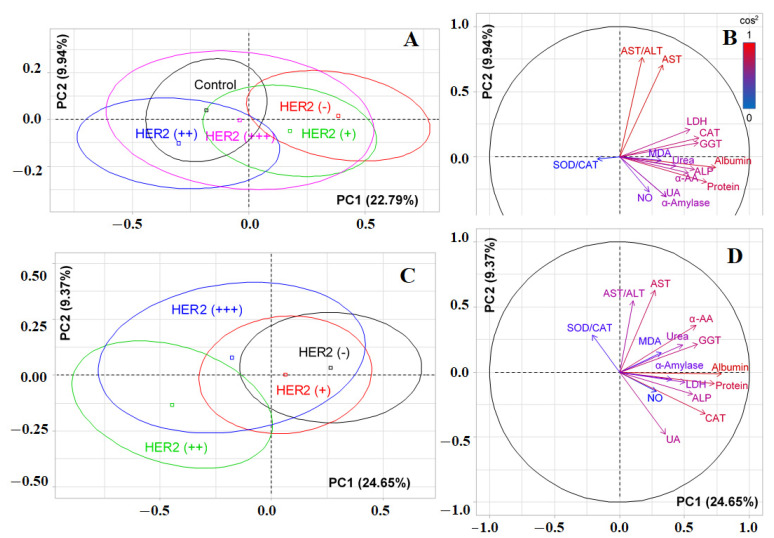
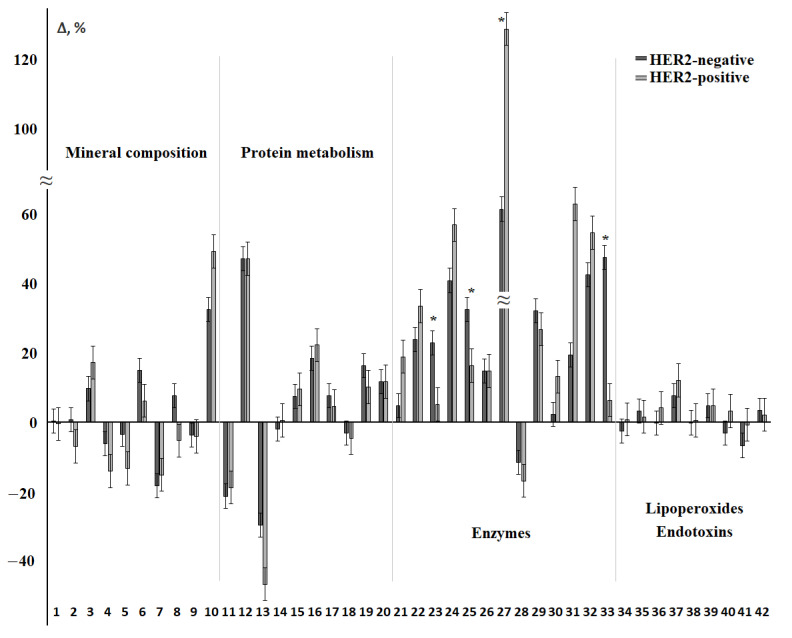
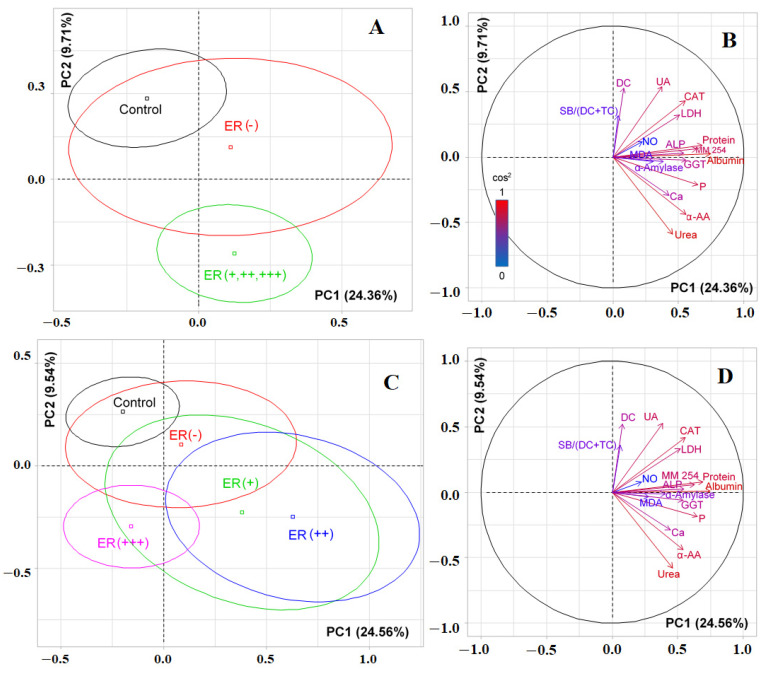
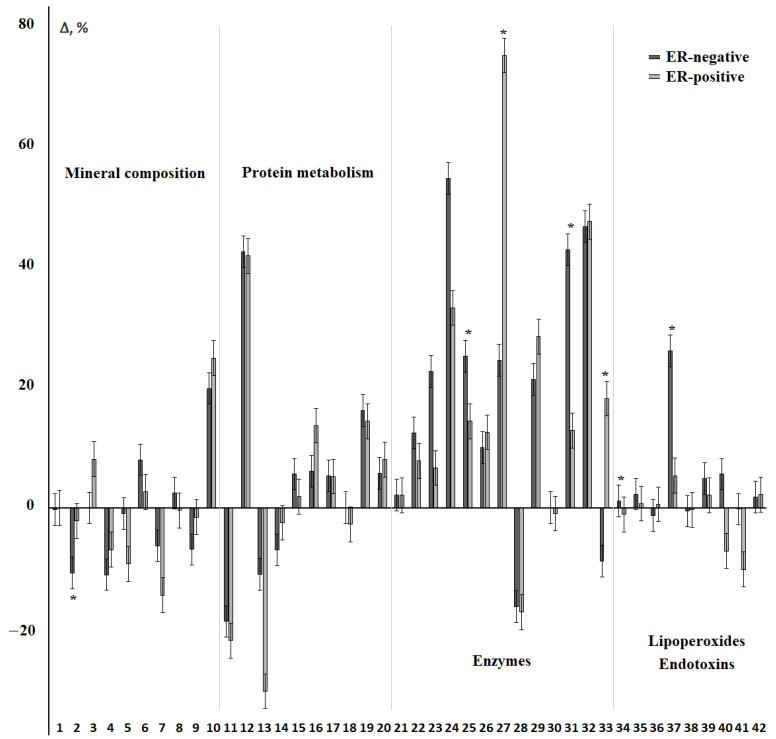
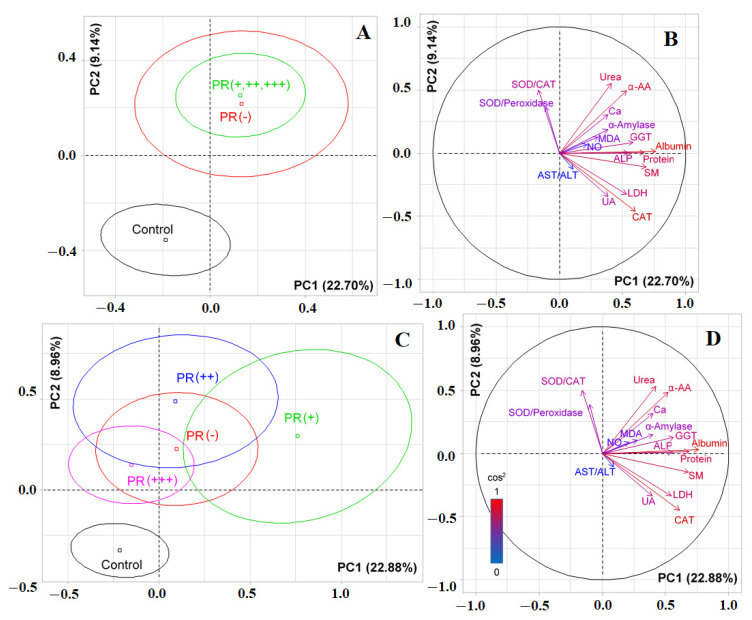
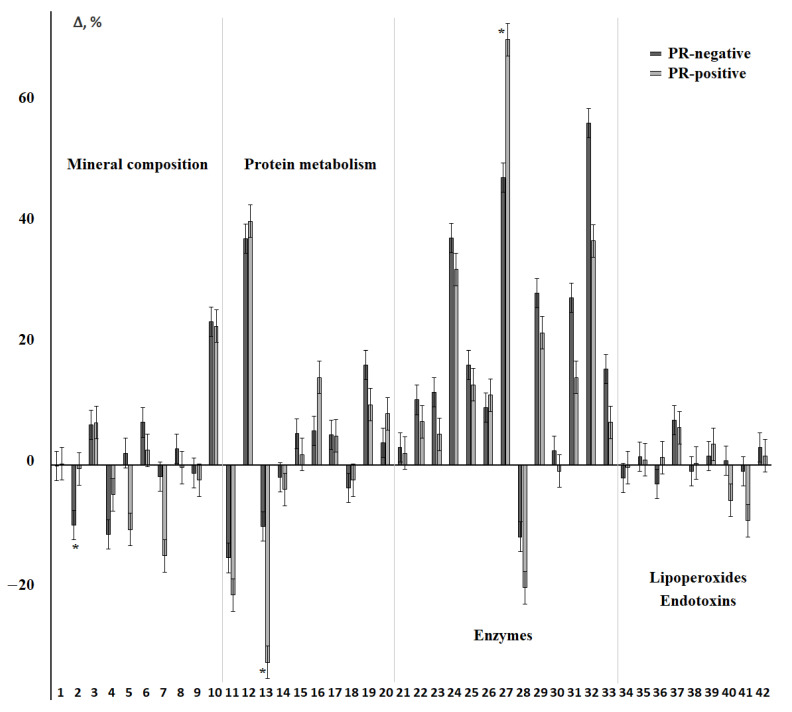
The aim of the study was to determine the metabolic characteristics of saliva depending on the molecular biological subtype of breast cancer, as well as depending on the expression levels of HER2, estrogen receptors (ER), and progesterone receptors (PR). The study included 487 patients with morphologically verified breast cancer and 298 volunteers without breast pathologies. Saliva samples were obtained from all patients strictly before the start of treatment and the values of 42 biochemical indicators were determined. It has been established that the saliva of healthy volunteers and patients with various molecular biological subtypes of breast cancer differs in 12 biochemical indicators: concentrations of protein, urea, nitric oxide, malondialdehyde, total amino acid content, and activity of lactate dehydrogenase, alkaline phosphatase, gamma-glutamyltransferase, catalase, amylase, superoxide dismutase, and peroxidases. The saliva composition of patients with basal-like breast cancer differs from other subtypes in terms of the maximum number of indicators. Changes in biochemical indicators indicated an increase in the processes of lipid peroxidation and endogenous intoxication and a weakening of antioxidant protection, which correlates with the severity of the disease and the least favorable prognosis for this subtype of breast cancer. An analysis was made of the individual contribution of the expression level of HER2, estrogen, and progesterone receptors to changes in the biochemical composition of saliva. The HER2 (-)/HER2 (+) group, which should be considered as a single group, as well as ER-positive breast cancer, differ statistically significantly from the control group. For ER/PR-positive breast cancer, a more favorable ratio of saliva biochemical indicators was also noted compared to ER/PR-negative breast cancer.
Keywords: HER2 status; biomarkers; breast cancer; estrogen receptors; molecular biological subtype; progesterone receptors; saliva; salivaomics.
Conflict of interest statement
The authors declare no conflict of interest.
Figures
References
-
- Global Burden of Disease Cancer Collaboration Global, Regional, and National Cancer Incidence, Mortality, Years of Life Lost, Years Lived with Disability and Disability-Adjusted Life-Years for 29 Cancer Groups, 1990 to 2017. A Systematic Analysis for the Global Burden of Disease Study. JAMA Oncol. 2019;5:1749–1768. doi: 10.1001/jamaoncol.2019.2996. - DOI - PMC - PubMed
-
- Veronesi U., Boyle P. International Encyclopedia of Public Health. 2nd ed. Academic Press; Cambridge, MA, USA: 2017. Breast Cancer; pp. 272–280. Reference Module in Biomedical Sciences.
-
- Wark P.A., Peto J. Cancer Epidemiology. 2nd ed. Academic Press; Oxford, UK: 2017. pp. 339–346. Reference Module in Biomedical Sciences International Encyclopedia of Public Health.
LinkOut - more resources
Full Text Sources
Research Materials
Miscellaneous
