


A Population-Based Study of the Long-Term Risk of Infections Associated With Hospitalization in Childhood Cancer Survivors
- PMID: 35878085
- PMCID: PMC9839247
- DOI: 10.1200/JCO.22.00230
A Population-Based Study of the Long-Term Risk of Infections Associated With Hospitalization in Childhood Cancer Survivors
Abstract
Purpose: Infections pose a significant risk during therapy for childhood cancer. However, little is known about the risk of infection in long-term survivors of childhood cancer.
Methods: We performed a retrospective observational study of children and adolescents born in Washington State diagnosed with cancer before age 20 years and who survived at least 5 years after diagnosis. Survivors were categorized as having a hematologic or nonhematologic malignancy and were matched to individuals without cancer in the state birth records by birth year and sex with a comparator:survivor ratio of 10:1. The primary outcome was incidence of any infection associated with a hospitalization using diagnostic codes from state hospital discharge records. Incidence was reported as a rate (IR) per 1,000 person-years. Multivariate Poisson regression was used to calculate incidence rate ratios (IRR) for cancer survivors versus comparators.
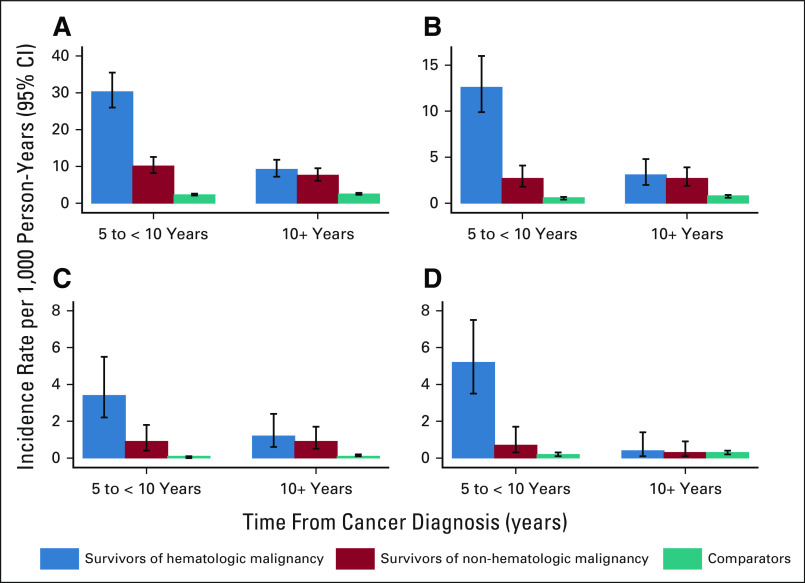
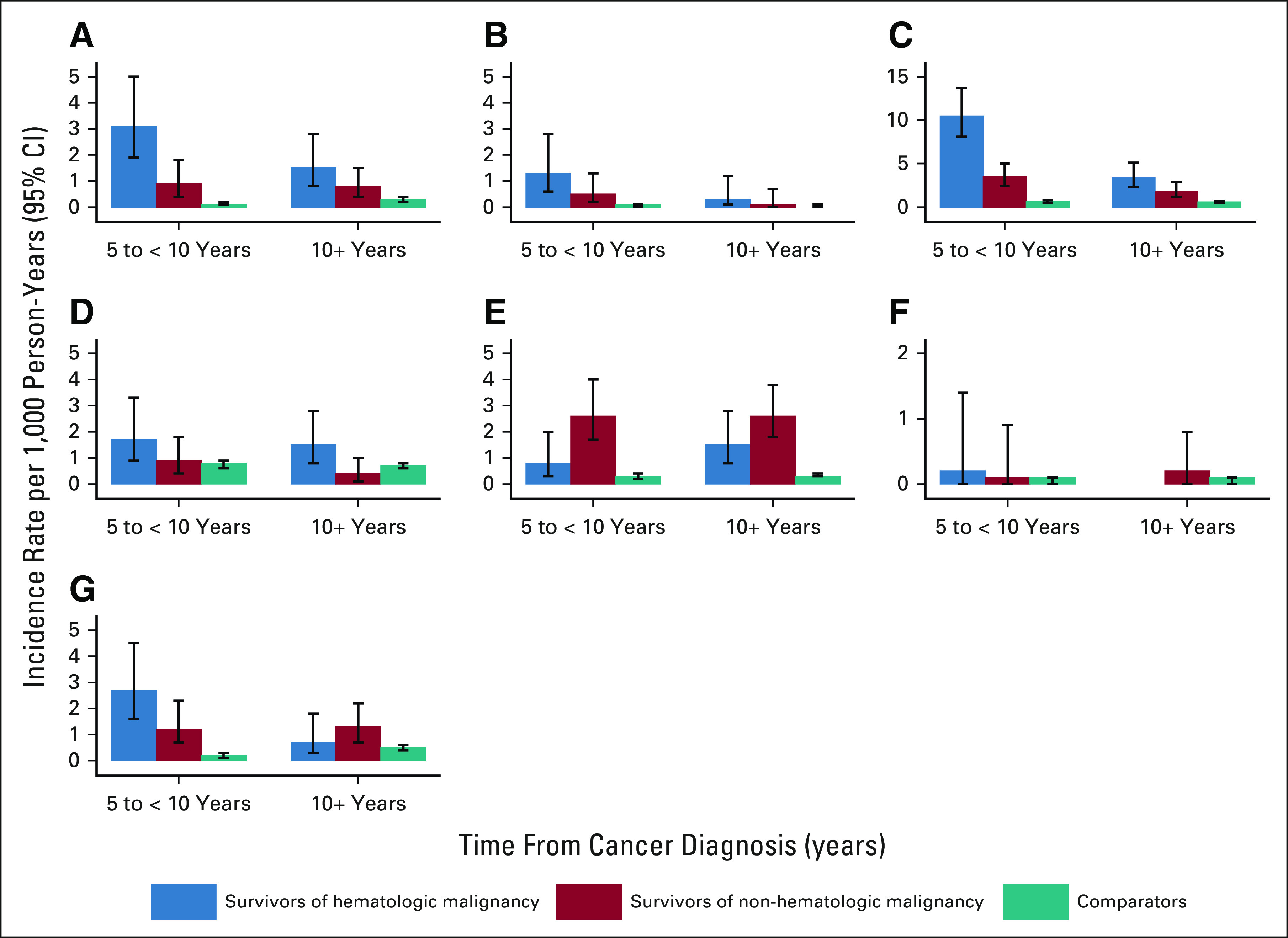
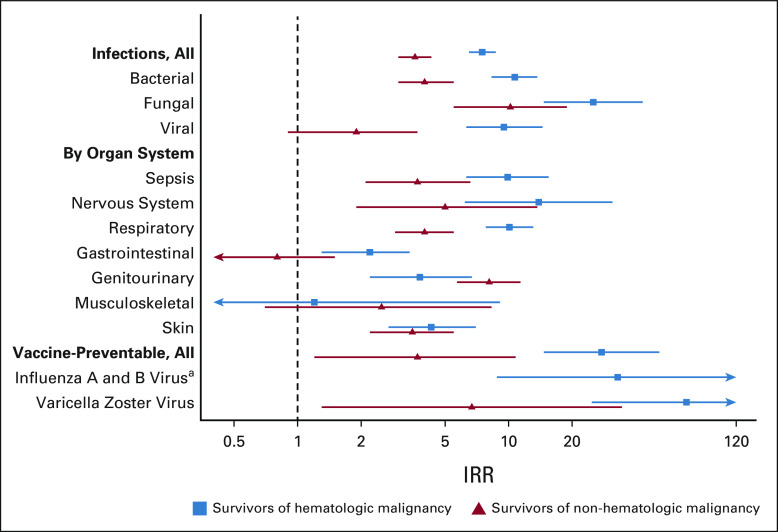
Results: On the basis of 382 infection events among 3,152 survivors and 771 events among 31,519 comparators, the IR of all hospitalized infections starting 5 years after cancer diagnosis was 12.6 (95% CI, 11.4 to 13.9) and 2.4 (95% CI, 2.3 to 2.6), respectively, with an IRR 5.1 (95% CI, 4.5 to 5.8). The survivor IR during the 5- to 10-year (18.1, 95% CI, 15.9 to 20.5) and > 10-year postcancer diagnosis (8.3, 95% CI, 7.0 to 9.7) periods remained greater than comparison group IRs for the same time periods (2.3, 95% CI, 2.1 to 2.6 and 2.5, 95% CI, 2.3 to 2.8, respectively). When potentially vaccine-preventable infections were evaluated, survivors had a greater risk of infection relative to comparators (IRR, 13.1; 95% CI, 7.2 to 23.9).
Conclusion: Infectious complications continue to affect survivors of childhood cancer many years after initial diagnosis. Future studies are needed to better understand immune reconstitution to determine specific factors that may mitigate this risk.
Conflict of interest statement
No other potential conflicts of interest were reported.
Figures
Comment in
-
Infection risk among long-term pediatric cancer survivors: conceptual framework for health promotion and call for inquiry.Transl Pediatr. 2023 Dec 26;12(12):2103-2106. doi: 10.21037/tp-23-411. Epub 2023 Nov 23. Transl Pediatr. 2023. PMID: 38197099 Free PMC article. No abstract available.
References
-
- Howlader N, Noone AM, Krapcho M, et al. (eds): SEER Cancer Statistics Review, 1975-2018. Bethesda, MD, National Cancer Institute, 2021. https://seer.cancer.gov/csr/1975_2018/
-
- van Tilburg CM, van Gent R, Bierings MB, et al. : Immune reconstitution in children following chemotherapy for haematological malignancies: A long-term follow-up. Br J Haematol 152:201-210, 2011 - PubMed
