


CDC6 is a prognostic biomarker and correlated with immune infiltrates in glioma
- PMID: 35879762
- PMCID: PMC9316328
- DOI: 10.1186/s12943-022-01623-8
CDC6 is a prognostic biomarker and correlated with immune infiltrates in glioma
Abstract
Background: Cell division cycle 6 (CDC6) has been proven to be associated with the initiation and progression of human multiple tumors. However, it's role in glioma, which is ranked as one of the common primary malignant tumor in the central nervous system and is associated with high morbidity and mortality, is unclear.
Methods: In this study, we explored CDC6 gene expression level in pan-cancer. Furthermore, we focused on the relationships between CDC6 expression, its prognostic value, potential biological functions, and immune infiltrates in glioma patients. We also performed vitro experiments to assess the effect of CDC6 expression on proliferative, apoptotic, migrant and invasive abilities of glioma cells.
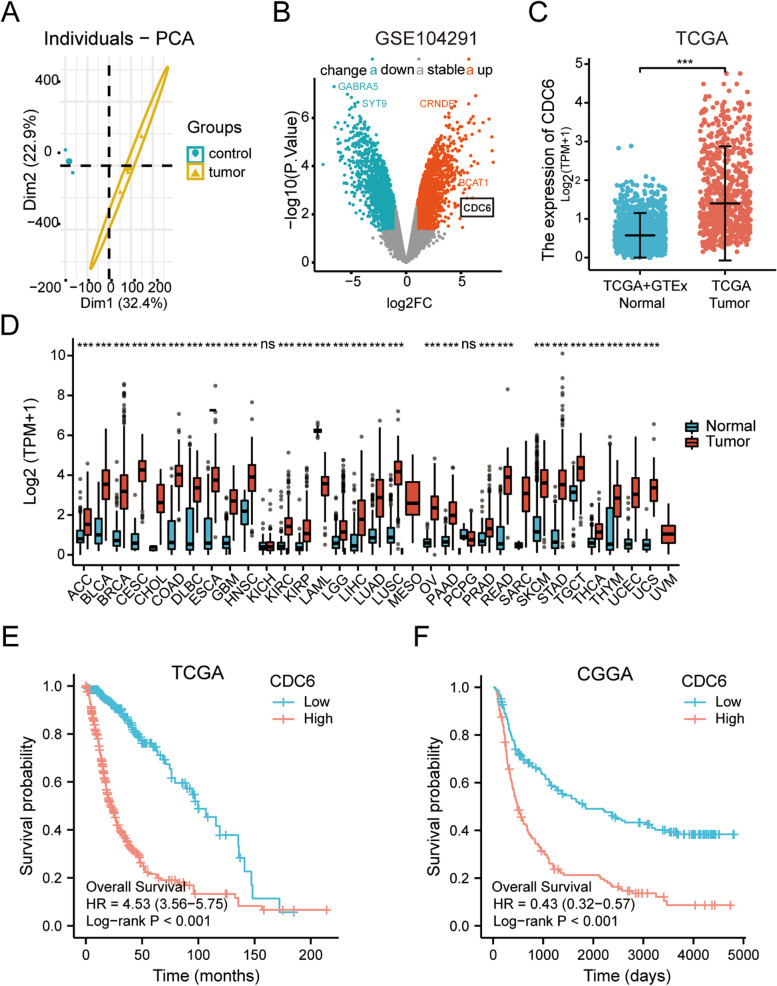
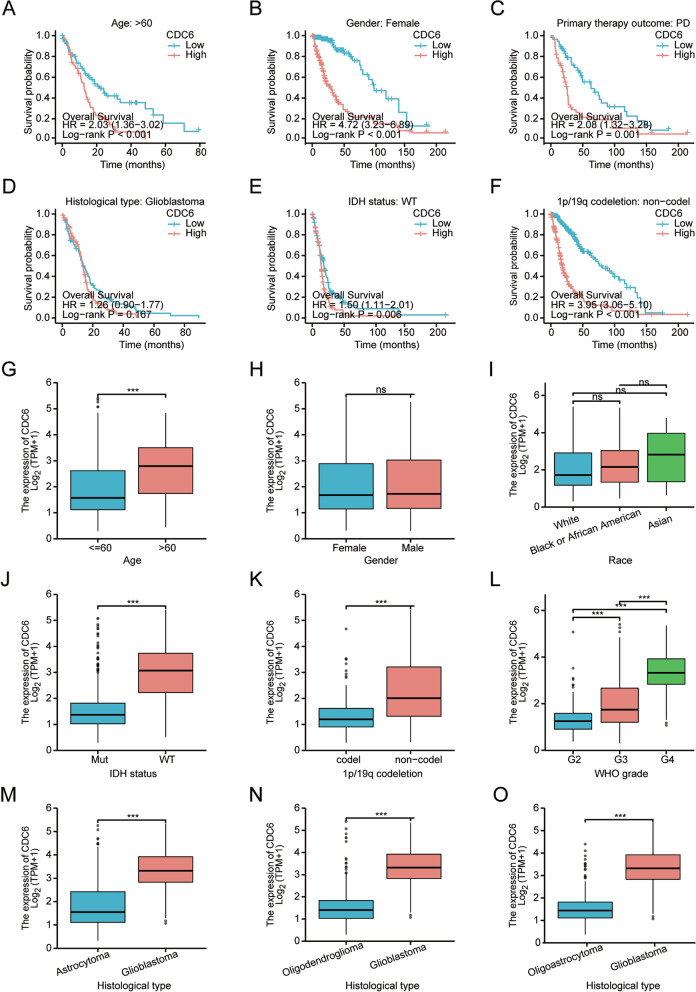
Results: As a result, CDC6 expression was upregulated in multiple types of cancer, including glioma. Moreover, high expression of CDC6 was significantly associated with age, IDH status, 1p/19q codeletion status, WHO grade and histological type in glioma (all p < 0.05). Meanwhile, high CDC6 expression was associated with poor overall survival (OS) in glioma patients, especially in different clinical subgroups. Furthermore, a univariate Cox analysis showed that high CDC6 expression was correlated with poor OS in glioma patients. Functional enrichment analysis indicated that CDC6 was mainly involved in pathways related to DNA transcription and cytokine activity, and Gene Set Enrichment Analysis (GSEA) revealed that MAPK pathway, P53 pathway and NF-κB pathway in cancer were differentially enriched in glioma patients with high CDC6 expression. Single-sample gene set enrichment analysis (ssGSEA) showed CDC6 expression in glioma was positively correlated with Th2 cells, Macrophages and Eosinophils, and negative correlations with plasmacytoid dendritic cells, CD8 T cells and NK CD56bright cells, suggesting its role in regulating tumor immunity. Finally, CCK8 assay, flow cytometry and transwell assays showed that silencing CDC6 could significantly inhibit proliferation, migration, invasion, and promoted apoptosis of U87 cells and U251 cells (p < 0.05).
Conclusion: In conclusion, high CDC6 expression may serve as a promising biomarker for prognosis and correlated with immune infiltrates, presenting to be a potential immune therapy target in glioma.
Keywords: Biomarker; CDC6; Glioma; Immune infiltrates; Prognosis.
© 2022. The Author(s).
Conflict of interest statement
The authors declare no competing interests.
Figures
References
Publication types
MeSH terms
Substances
LinkOut - more resources
Full Text Sources
Medical
Molecular Biology Databases
Research Materials
Miscellaneous
