


Galactosemia: Biochemistry, Molecular Genetics, Newborn Screening, and Treatment
- PMID: 35883524
- PMCID: PMC9313126
- DOI: 10.3390/biom12070968
Galactosemia: Biochemistry, Molecular Genetics, Newborn Screening, and Treatment
Abstract
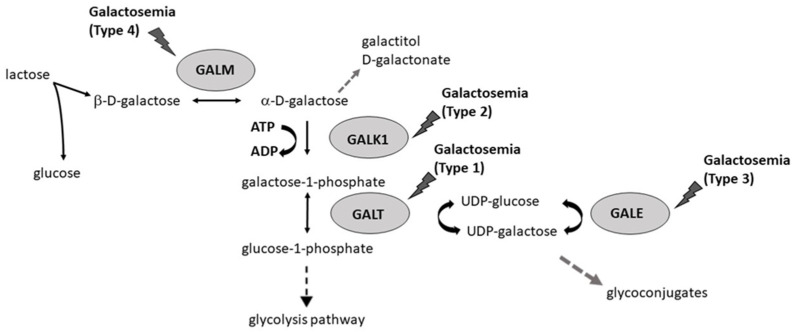
Galactosemia is an inborn disorder of carbohydrate metabolism characterized by the inability to metabolize galactose, a sugar contained in milk (the main source of nourishment for infants), and convert it into glucose, the sugar used by the body as the primary source of energy. Galactosemia is an autosomal recessive genetic disease that can be diagnosed at birth, even in the absence of symptoms, with newborn screening by assessing the level of galactose and the GALT enzyme activity, as GALT defect constitutes the most frequent cause of galactosemia. Currently, galactosemia cannot be cured, but only treated by means of a diet with a reduced content of galactose and lactose. Although the diet is able to reverse the neonatal clinical picture, it does not prevent the development of long-term complications. This review provides an overview of galactose metabolism, molecular genetics, newborn screening and therapy of galactosemia. Novel treatments for galactosemia currently being investigated in (pre)clinical studies and potentially able to prevent long-term complications are also presented.
Keywords: classical galactosemia; galactose metabolism; galactosemia; gene-based therapies; newborn screening; small molecules therapies.
Conflict of interest statement
The authors declare no conflict of interest.
Figures
References
-
- Fanconi G. Marked galactose intolerance (galactose diabetes) in a child with neuronbromatosis Eecklinghausen. Jahrb. Kinderheilkd. 1933;138:1–8.
Publication types
MeSH terms
Substances
LinkOut - more resources
Full Text Sources
