


Cell-Specific Immune Regulation by Glucocorticoids in Murine Models of Infection and Inflammation
- PMID: 35883569
- PMCID: PMC9324070
- DOI: 10.3390/cells11142126
Cell-Specific Immune Regulation by Glucocorticoids in Murine Models of Infection and Inflammation
Abstract
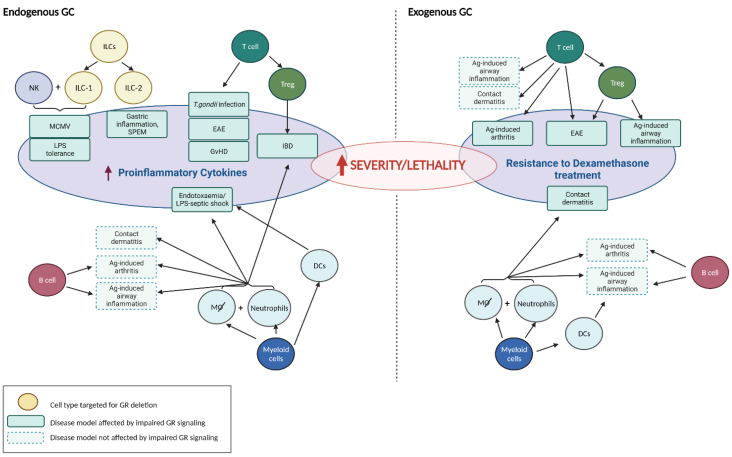
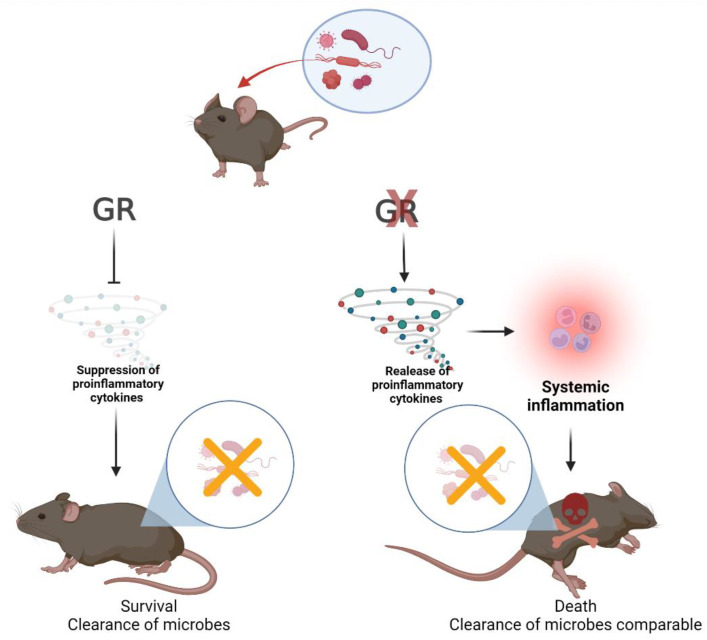
Glucocorticoids (GC) are highly potent negative regulators of immune and inflammatory responses. Effects of GC are primarily mediated by the glucocorticoid receptor (GR) which is expressed by all cell types of the immune system. It is, therefore, difficult to elucidate how endogenous GC mediate their effects on immune responses that involve multiple cellular interactions between various immune cell subsets. This review focuses on endogenous GC targeting specific cells of the immune system in various animal models of infection and inflammation. Without the timed release of these hormones, animals infected with various microbes or challenged in inflammatory disease models succumb as a consequence of overshooting immune and inflammatory responses. A clearer picture is emerging that endogenous GC thereby act in a cell-specific and disease model-dependent manner, justifying the need to develop techniques that target GC to individual immune cell types for improved clinical application.
Keywords: B cell; T cell; glucocorticoid; glucocorticoid receptor; innate lymphoid cell; macrophage; myeloid cell; regulatory T cell.
Conflict of interest statement
The authors declare no conflict of interest.
Figures
Comment in
-
Immune Modulations by Glucocorticoids: From Molecular Biology to Clinical Research.Cells. 2022 Dec 13;11(24):4032. doi: 10.3390/cells11244032. Cells. 2022. PMID: 36552795 Free PMC article.
References
-
- Sapolsky R.M., Romero L.M., Munck A.U. How do glucocorticoids influence stress responses? Integrating permissive, suppressive, stimulatory, and preparative actions. Endocr. Rev. 2000;21:55–89. - PubMed
Publication types
MeSH terms
Substances
LinkOut - more resources
Full Text Sources
Medical
Miscellaneous
