


The Role of Natural Products and Their Multitargeted Approach to Treat Solid Cancer
- PMID: 35883653
- PMCID: PMC9318484
- DOI: 10.3390/cells11142209
The Role of Natural Products and Their Multitargeted Approach to Treat Solid Cancer
Abstract
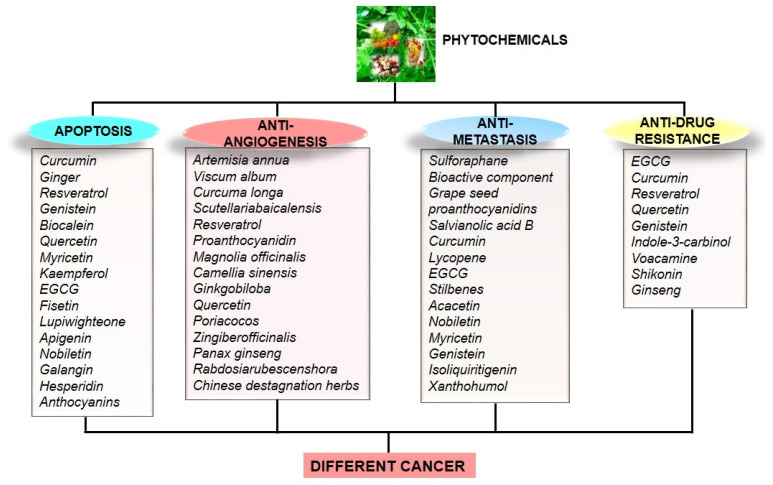
Natural products play a critical role in the discovery and development of numerous drugs for the treatment of various types of cancer. These phytochemicals have demonstrated anti-carcinogenic properties by interfering with the initiation, development, and progression of cancer through altering various mechanisms such as cellular proliferation, differentiation, apoptosis, angiogenesis, and metastasis. Treating multifactorial diseases, such as cancer with agents targeting a single target, might lead to limited success and, in many cases, unsatisfactory outcomes. Various epidemiological studies have shown that the steady consumption of fruits and vegetables is intensely associated with a reduced risk of cancer. Since ancient period, plants, herbs, and other natural products have been used as healing agents. Likewise, most of the medicinal ingredients accessible today are originated from the natural resources. Regardless of achievements, developing bioactive compounds and drugs from natural products has remained challenging, in part because of the problem associated with large-scale sequestration and mechanistic understanding. With significant progress in the landscape of cancer therapy and the rising use of cutting-edge technologies, we may have come to a crossroads to review approaches to identify the potential natural products and investigate their therapeutic efficacy. In the present review, we summarize the recent developments in natural products-based cancer research and its application in generating novel systemic strategies with a focus on underlying molecular mechanisms in solid cancer.
Keywords: medicinal plants; natural products; phytochemicals and solid cancer.
Conflict of interest statement
The authors declare no conflict of interest.
Figures
References
-
- World Health Organization . International Agency for Research on Cancer. World Health Organization; Geneva, Switzerland: 2019.
Publication types
MeSH terms
Substances
LinkOut - more resources
Full Text Sources
Medical
