


Effects of Air Pollution on Cellular Senescence and Skin Aging
- PMID: 35883663
- PMCID: PMC9320051
- DOI: 10.3390/cells11142220
Effects of Air Pollution on Cellular Senescence and Skin Aging
Abstract
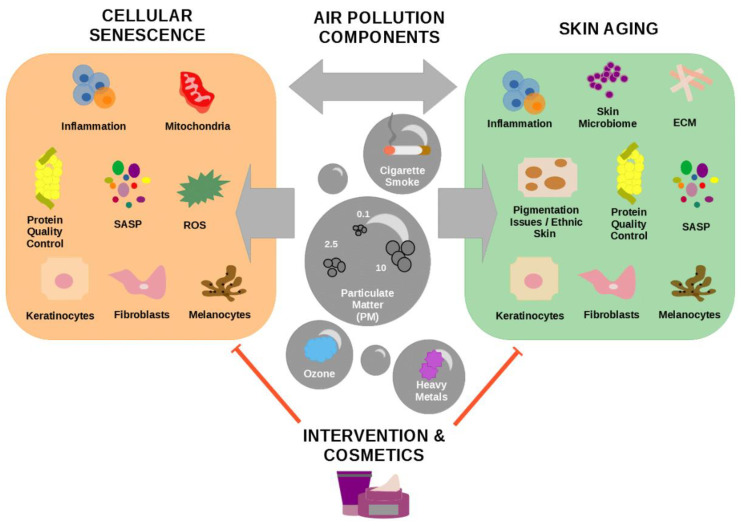
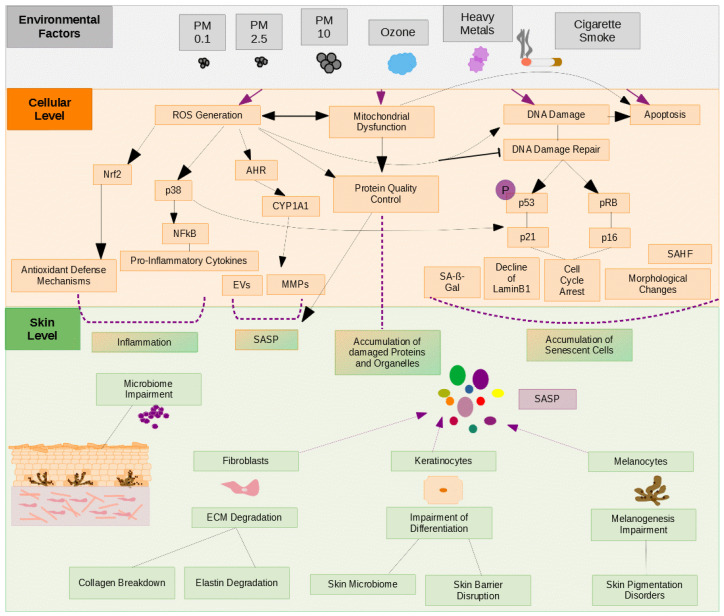
The human skin is exposed daily to different environmental factors such as air pollutants and ultraviolet (UV) light. Air pollution is considered a harmful environmental risk to human skin and is known to promote aging and inflammation of this tissue, leading to the onset of skin disorders and to the appearance of wrinkles and pigmentation issues. Besides this, components of air pollution can interact synergistically with ultraviolet light and increase the impact of damage to the skin. However, little is known about the modulation of air pollution on cellular senescence in skin cells and how this can contribute to skin aging. In this review, we are summarizing the current state of knowledge about air pollution components, their involvement in the processes of cellular senescence and skin aging, as well as the current therapeutic and cosmetic interventions proposed to prevent or mitigate the effects of air pollution in the skin.
Keywords: air pollution; cosmetics; senescence; skin aging.
Conflict of interest statement
The authors declare no conflict of interest.
Figures
References
-
- Cavinato M. Cosmetics and Cosmeceuticals. In: Ratan S.I., editor. Reference Module in Biomedical Sciences. Elsevier; Amsterdam, The Netherlands: 2020. pp. 446–461.
-
- Cavinato M., Wedel S., Jansen-Dürr P. Reference Module in Biomedical Sciences. Elsevier; Amsterdam, The Netherlands: 2019. Aging of Cells In Vitro; pp. 138–148.
Publication types
MeSH terms
Substances
Grants and funding
LinkOut - more resources
Full Text Sources
Other Literature Sources
Medical
